

Published work / STRATA
QUINQUE
From the STRATA series
- Medium
- Pintura acrílica y óleo
- Size
- 31.5 × 47.2 in / 80 × 120 cm
- Series
-
STRATA
 Painting series
STRATA
STRATA brings together abstract paintings in which the surface becomes a territory of pressure, cutting and duration. Amid dense chromatic fields, compact blocks and incisions, Maurizio Valch situates memory as a material trace rather than a decipherable narrative. View series
- Orientation
- Vertical
- Context studies
- 18
Conceptual Note
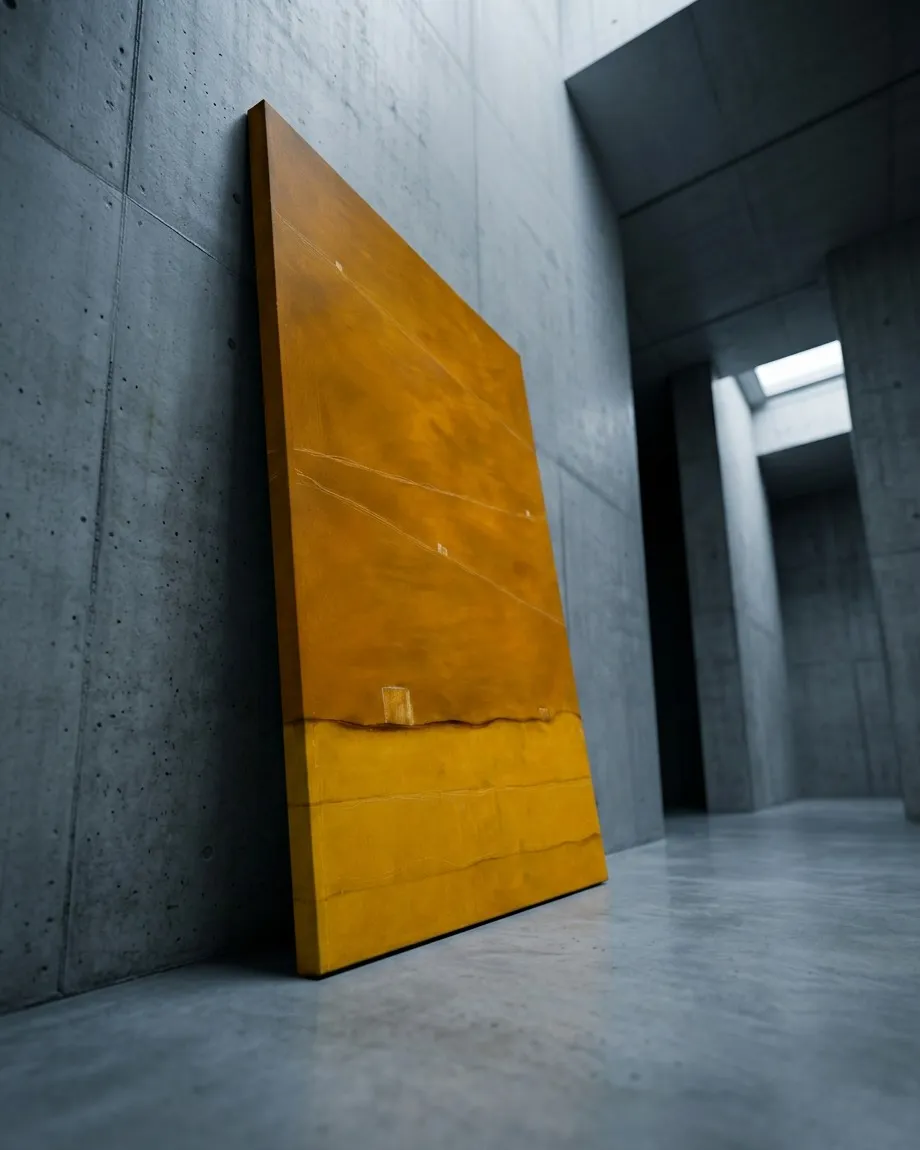
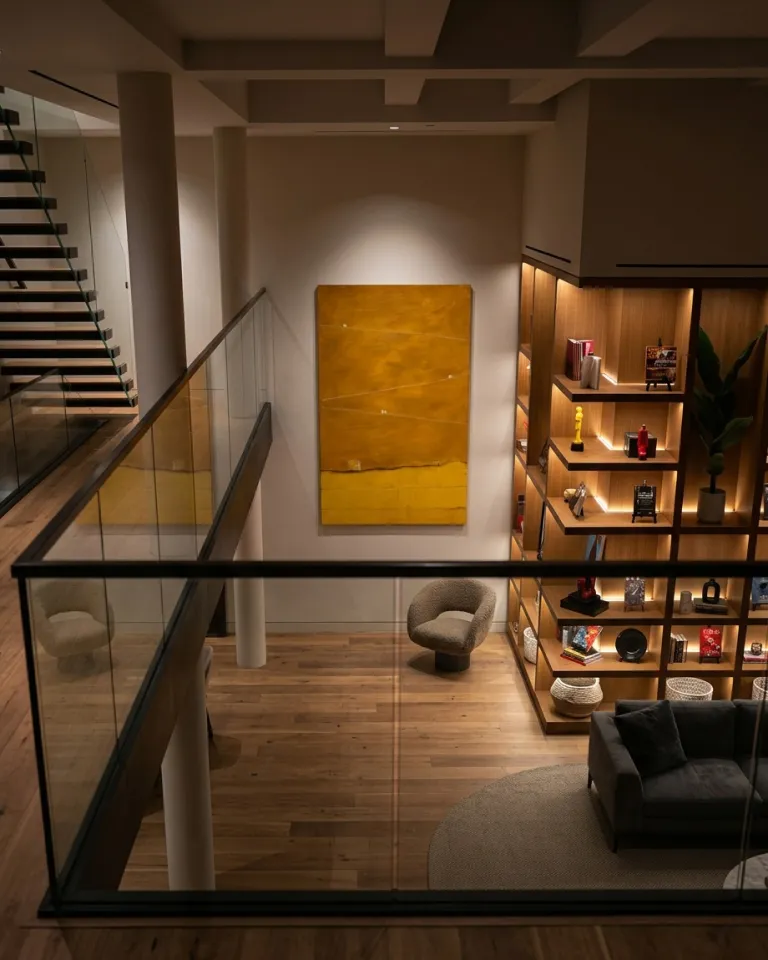
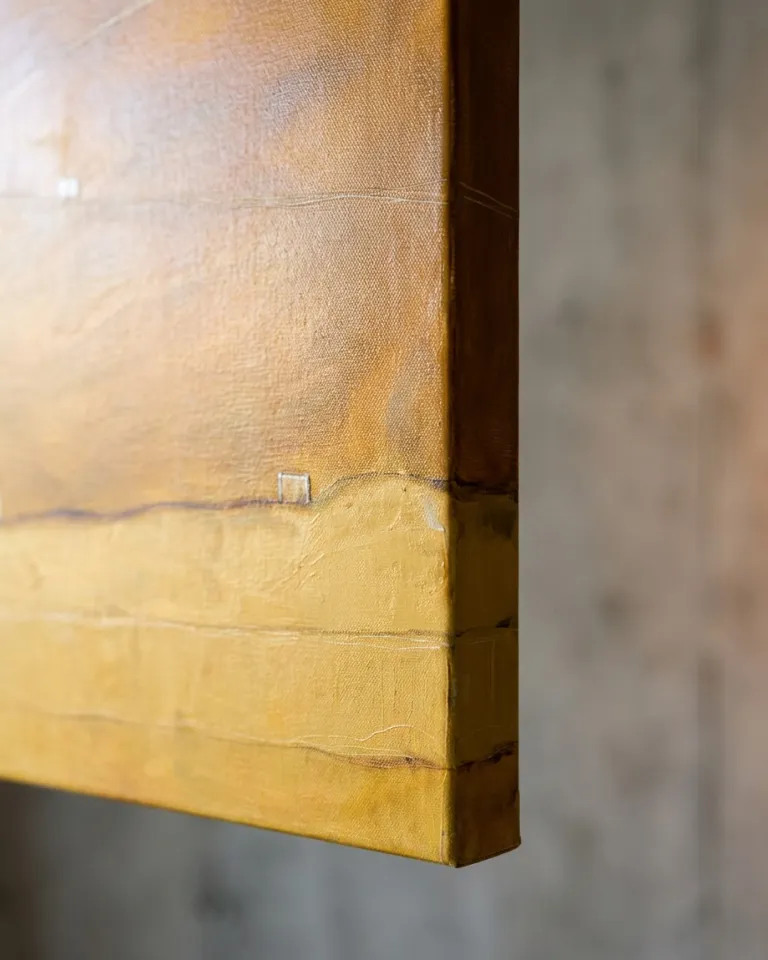
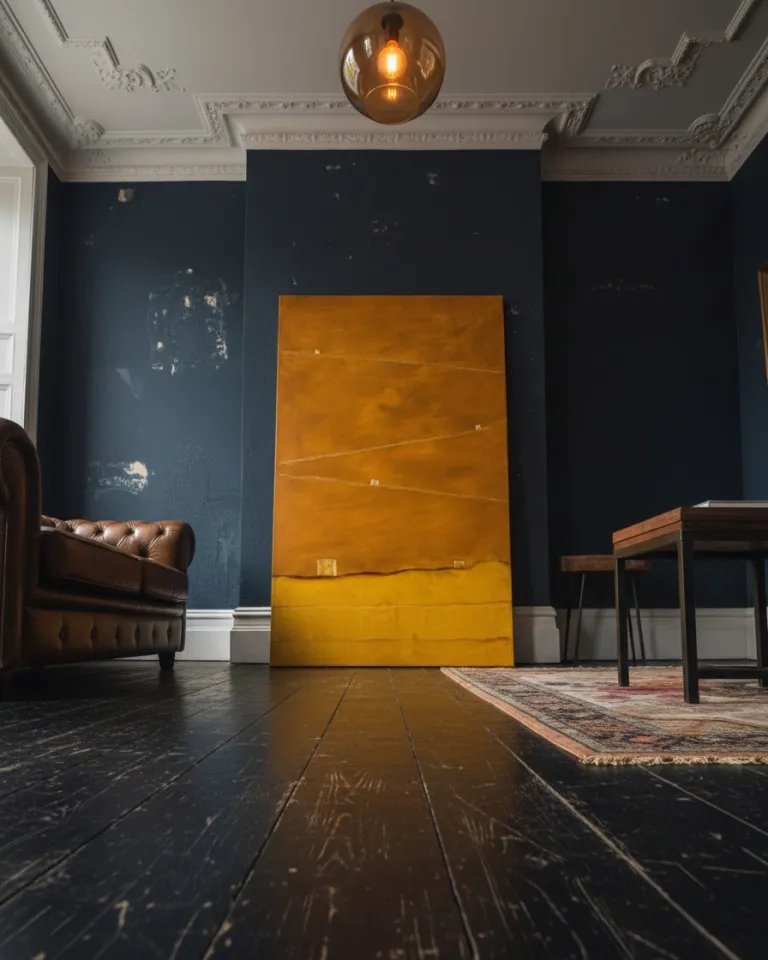
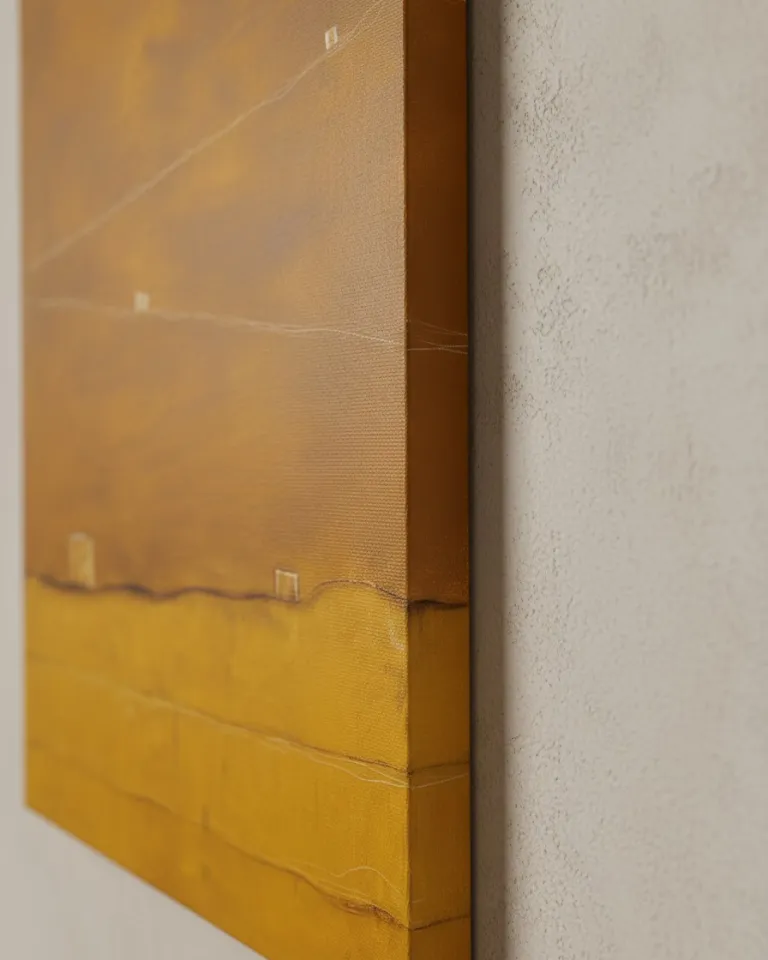
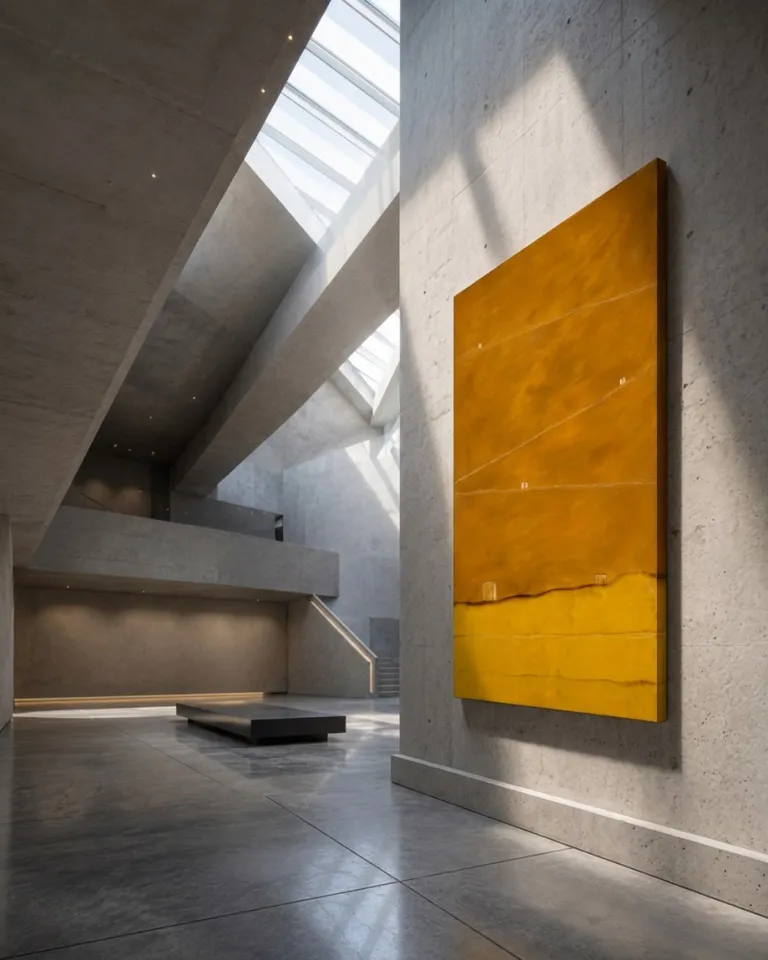
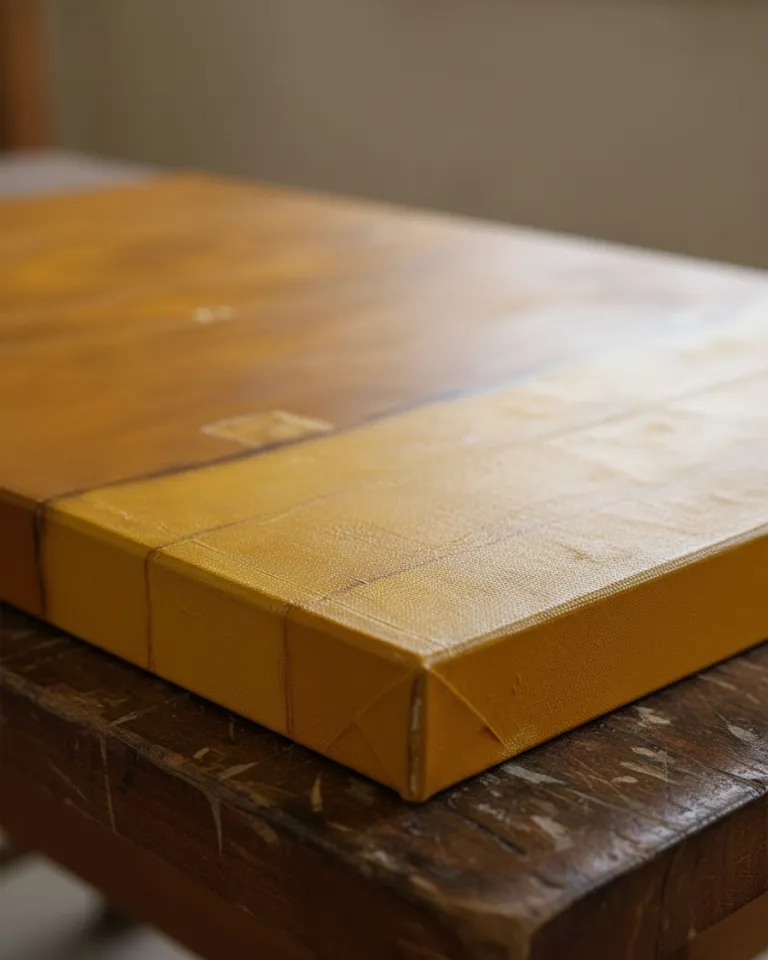
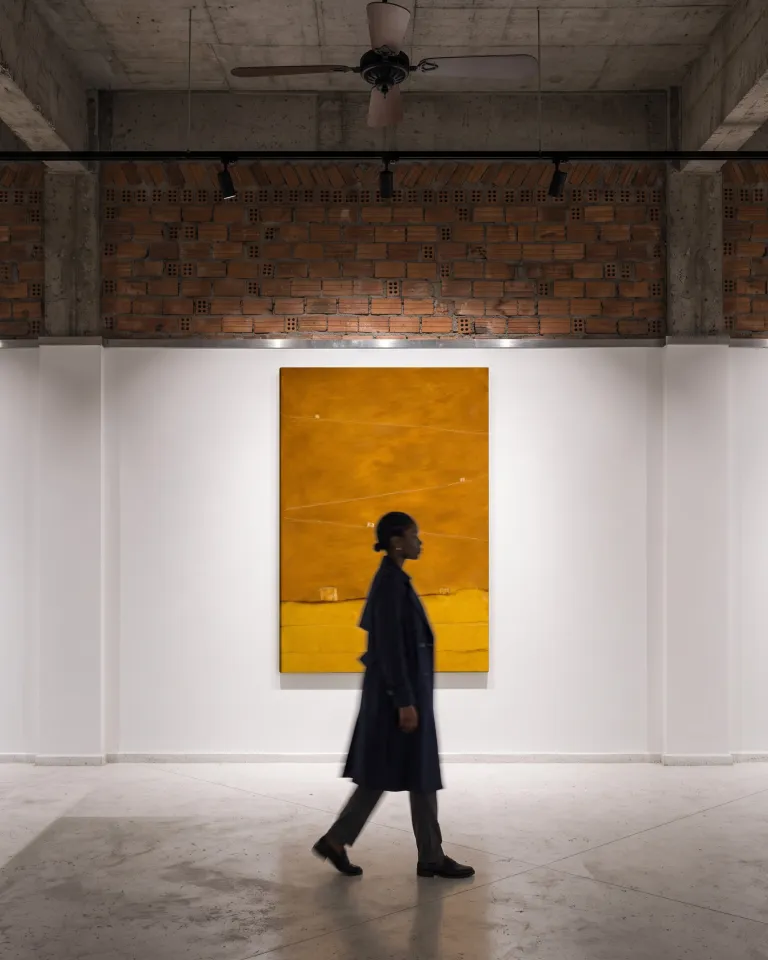
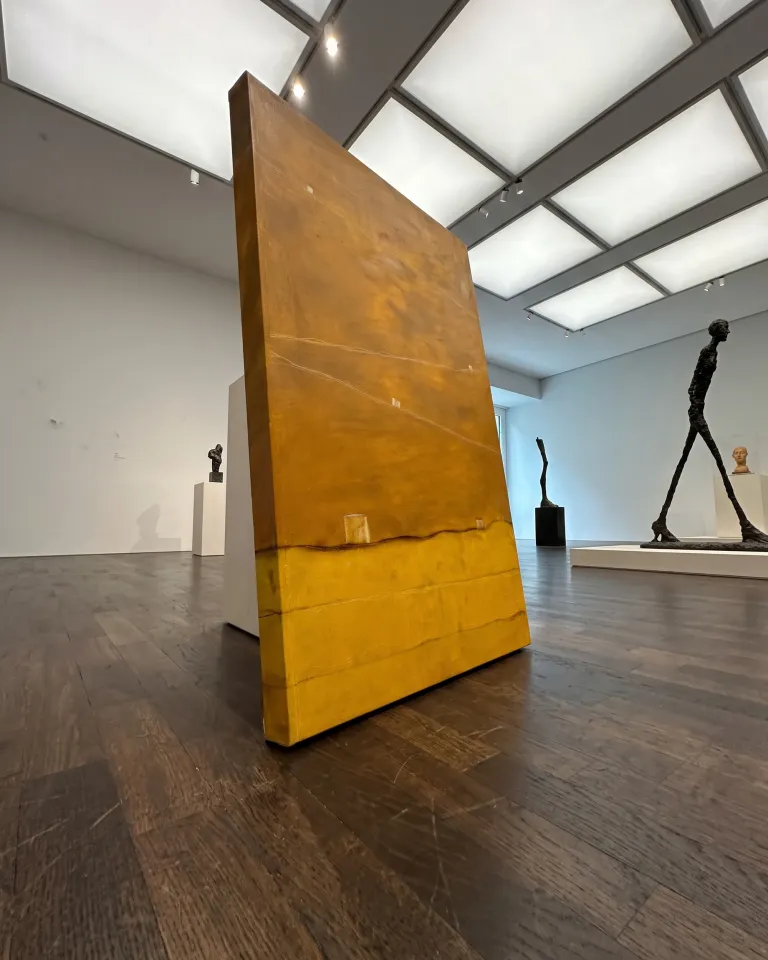
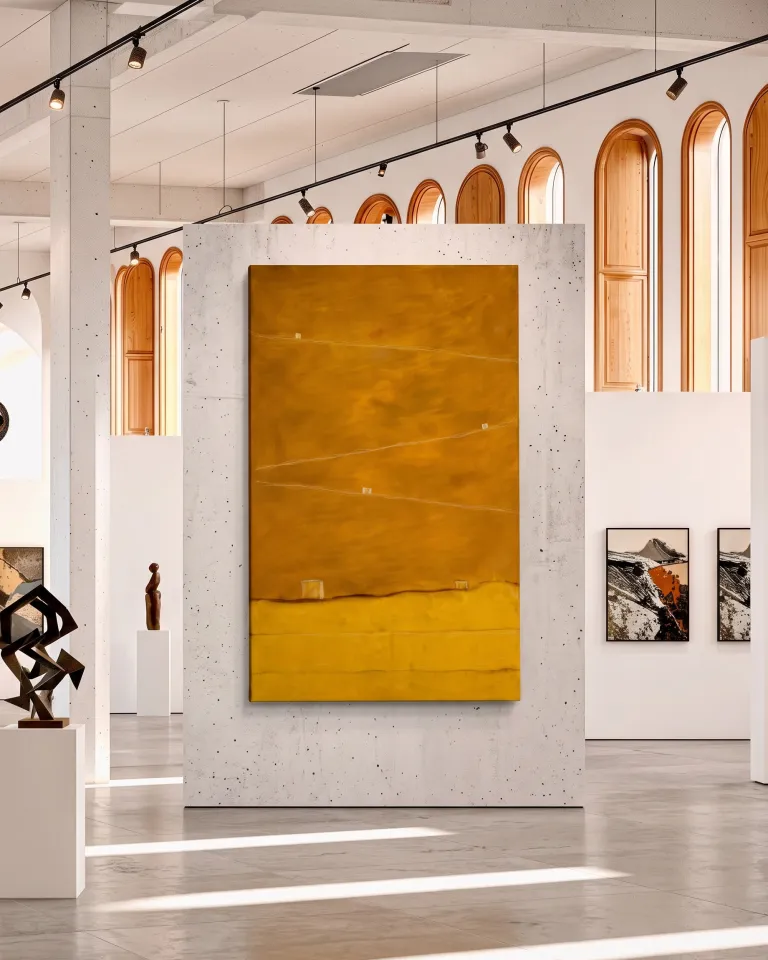
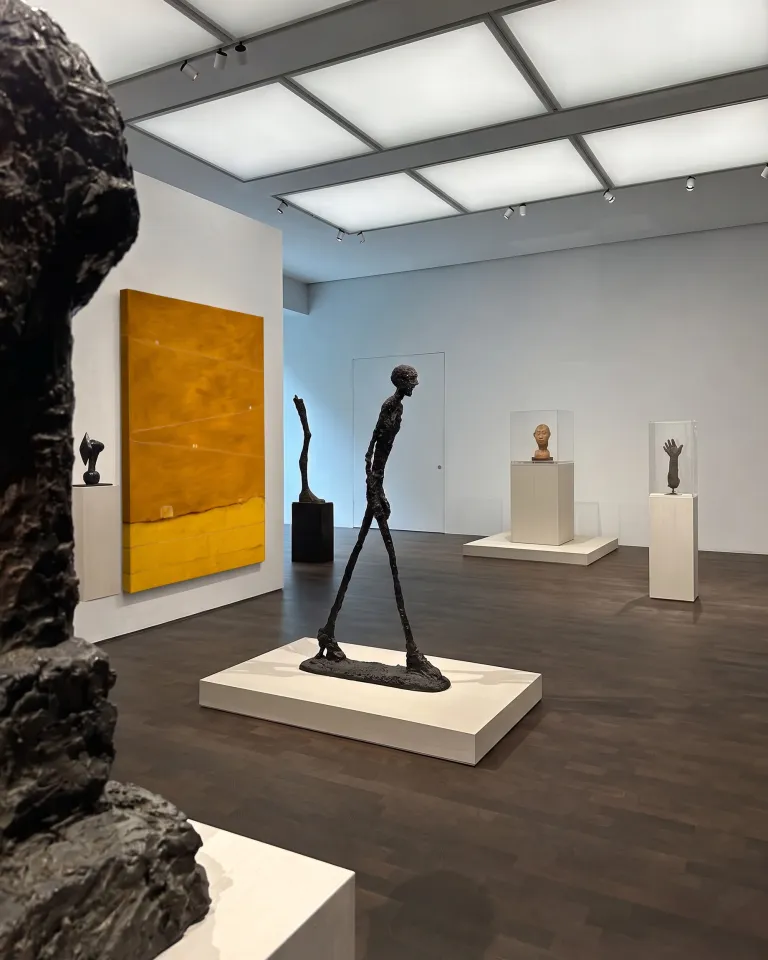
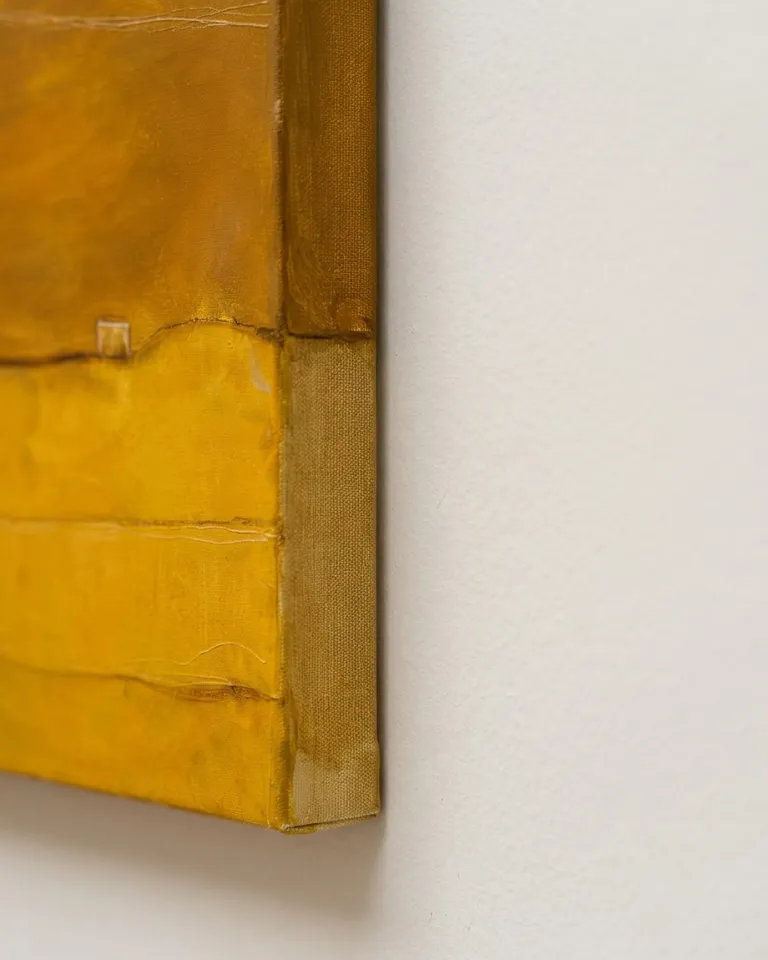
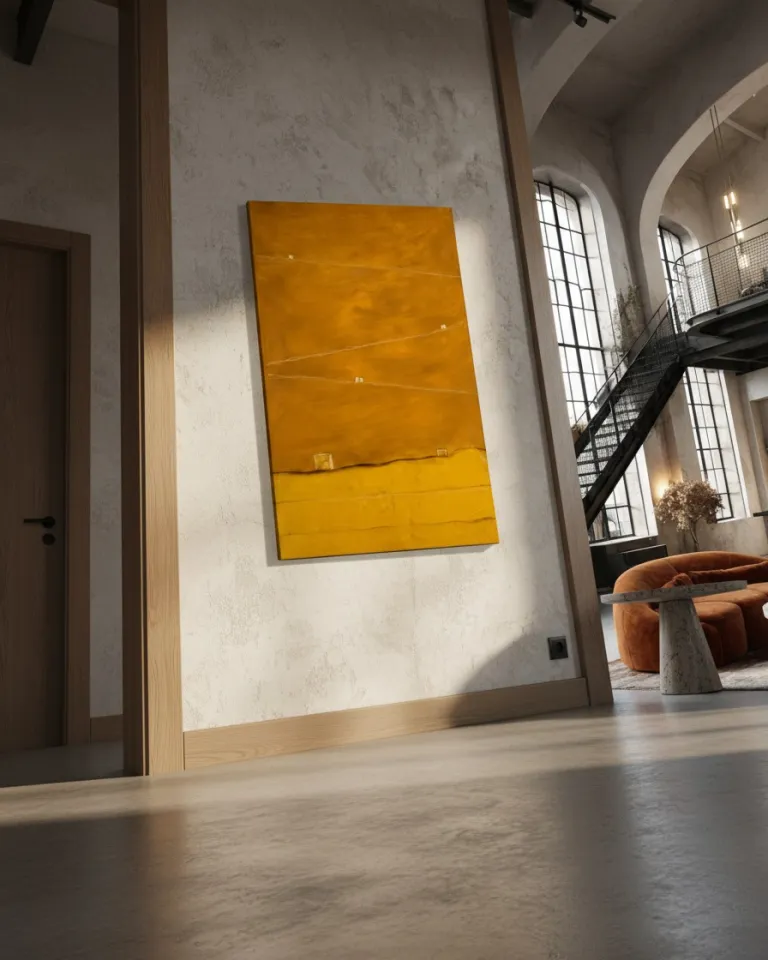
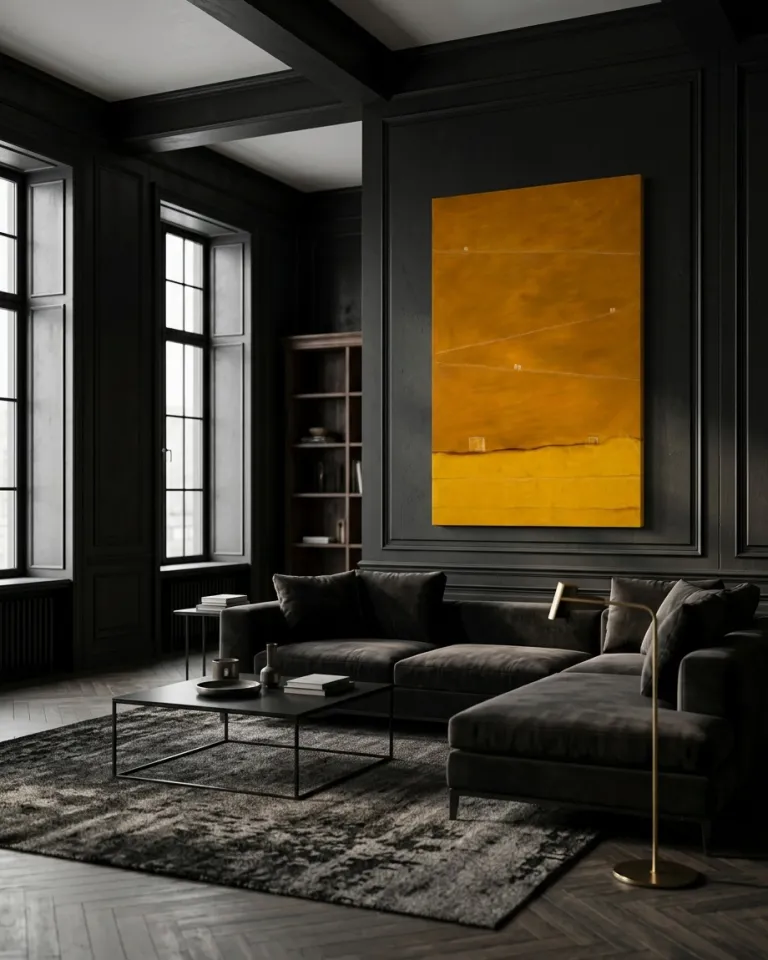
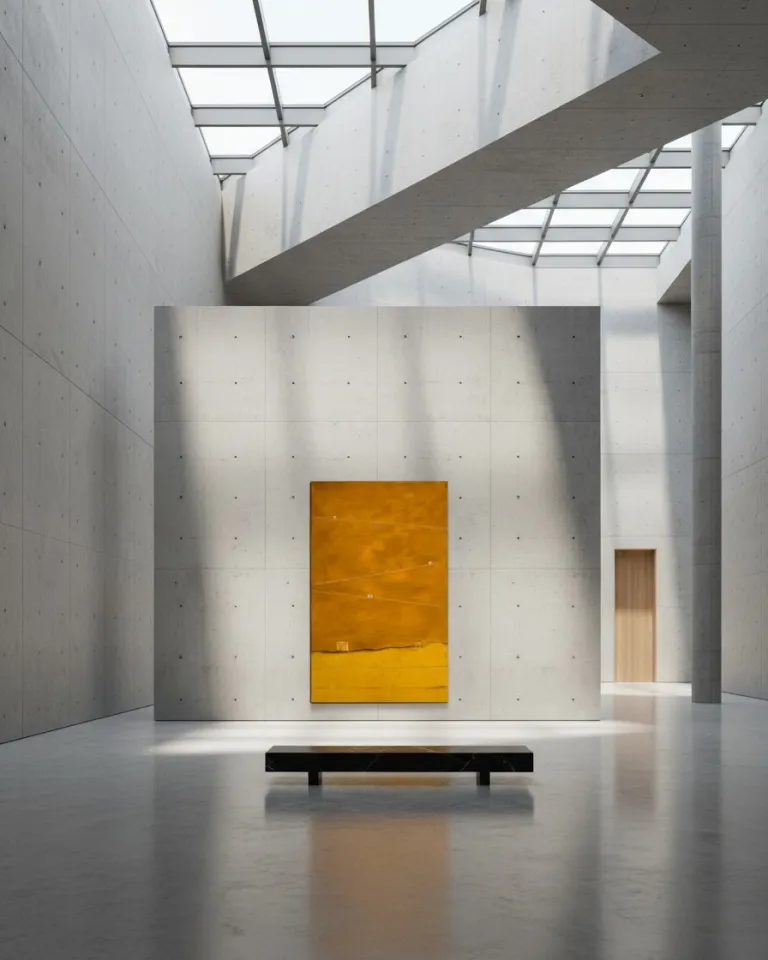
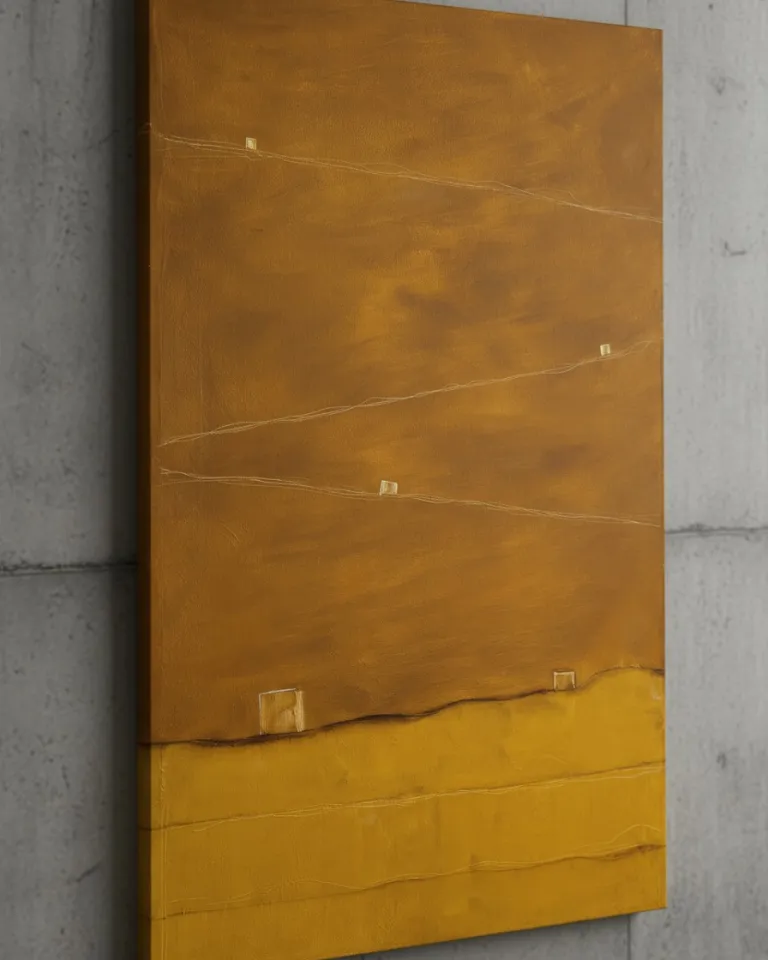
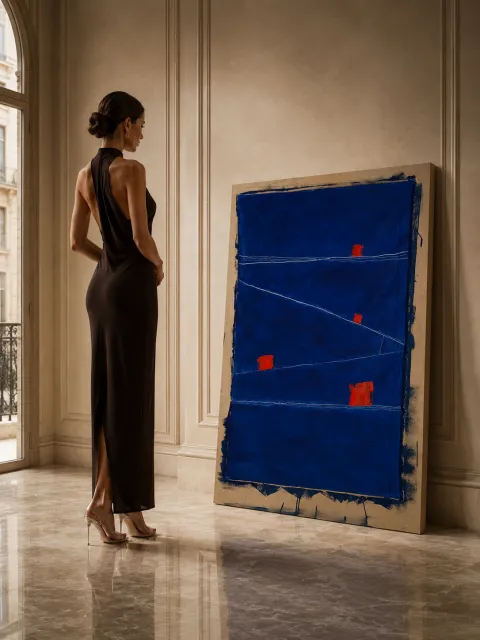
In "QUINQUE", the surface of the canvas becomes a geography of chromatic and tectonic tensions, split into two large regions of disparate warmth: a vast upper field of earthy, textured ochre that gravitates over a lower band of vibrant, luminous yellow. The irregular, dark scar acting as a horizon line is not a simple dividing seam, but a space of friction where the concepts of belonging and protection are physically embodied. On this unstable border, two highly raised material blocks sit like silent sentinels, claiming their place in the wound that separates the density of the ochre from the expansion of the yellow. These blocks do not merely guard the boundary; they act as spatial anchors, three-dimensional shelters for a material secret that resists being dissolved by the lower tide of light. Thus, belonging is defined within this strip not as a homogeneous assimilation into space, but as an active resistance, a mutual shelter where the boundary protects bodies from the visual exposure of the void.
By raising the matter on the canvas of "QUINQUE", I have always sought for paint to act as a second skin, an organic wall accumulating the weight of time and repeated gesture. When my hands shaped that rough boundary between ochre and yellow, I felt I was not simply drawing a line, but building a safety cordon, a layer of oil and acrylic capable of cushioning the wear and tear of reality. Placing those two lower blocks directly on the horizon was an act of intimate settling; I needed to give them a ground, a nest of dense matter in which to take shelter. For me, painting is an exercise in protection against the dispersion and instability of memory, a physical effort to retain what threatens to fade into oblivion, raising tactile ramparts that support the weight of our own fragility.
Moving the gaze toward the upper portion of the canvas, the terrestrial density of the horizon gives way to a suspended atmosphere, where three thin incised lines sinuously traverse the ochre void. Upon these subtle grooves rest three tiny, almost weightless blocks, introducing a visual paradox wherein lies the concept of trust. These elements do not rest on a protruding surface or a firm relief, but on a subtraction of matter, a precise scraping that exposes the vulnerability of the support. Here, trust reveals itself as a purely physical and intimate tension: the faith that a controlled tear, a subtractive mark on the pictorial plane, possesses the strength needed to sustain the presence of the object amidst the chromatic immensity, proving that the void is not always an abyss, but a furrow where lightness finds its own sustenance.
The number five, which gives this work its title, is not for me a mere figure of geometric organization, but a human scale linked to touch, to fingers scraping and measuring space. By wounding the chromatic surface with those three upper incisions, I exposed the canvas to a shared vulnerability; each groove is a channel of trust where I deposit these small blocks of light matter. Placing them there, I constantly wonder if these three suspended elements attempt to ascend toward a weightless plane or if, on the contrary, they have found a strange and poetic form of belonging in the very process of falling, disobeying the laws of physical gravity to surrender to the law of painting. There is no tragic fall here, but a suspended rest in which the cut becomes the only possible home for the body inhabiting the painting.
In its entirety, "QUINQUE" offers itself to the viewer not as an intellectual enigma to be deciphered, but as a "tactile shore" where the inside and outside of the pictorial space enter into an intimate, corporeal dialogue. The painting synthesizes belonging, protection, and trust into a single sensory experience, reminding us that inhabiting the world does not demand the rigidity of an immovable or monolithic structure. Ultimately, Maurizio Valch's work reveals that true belonging arises from the courage to sustain oneself on the subtlest boundaries, trusting fully in the capacity of the matter itself to remember, welcome, and protect its wounds, transforming each incision and each void into a space of resistance and sacred refuge.