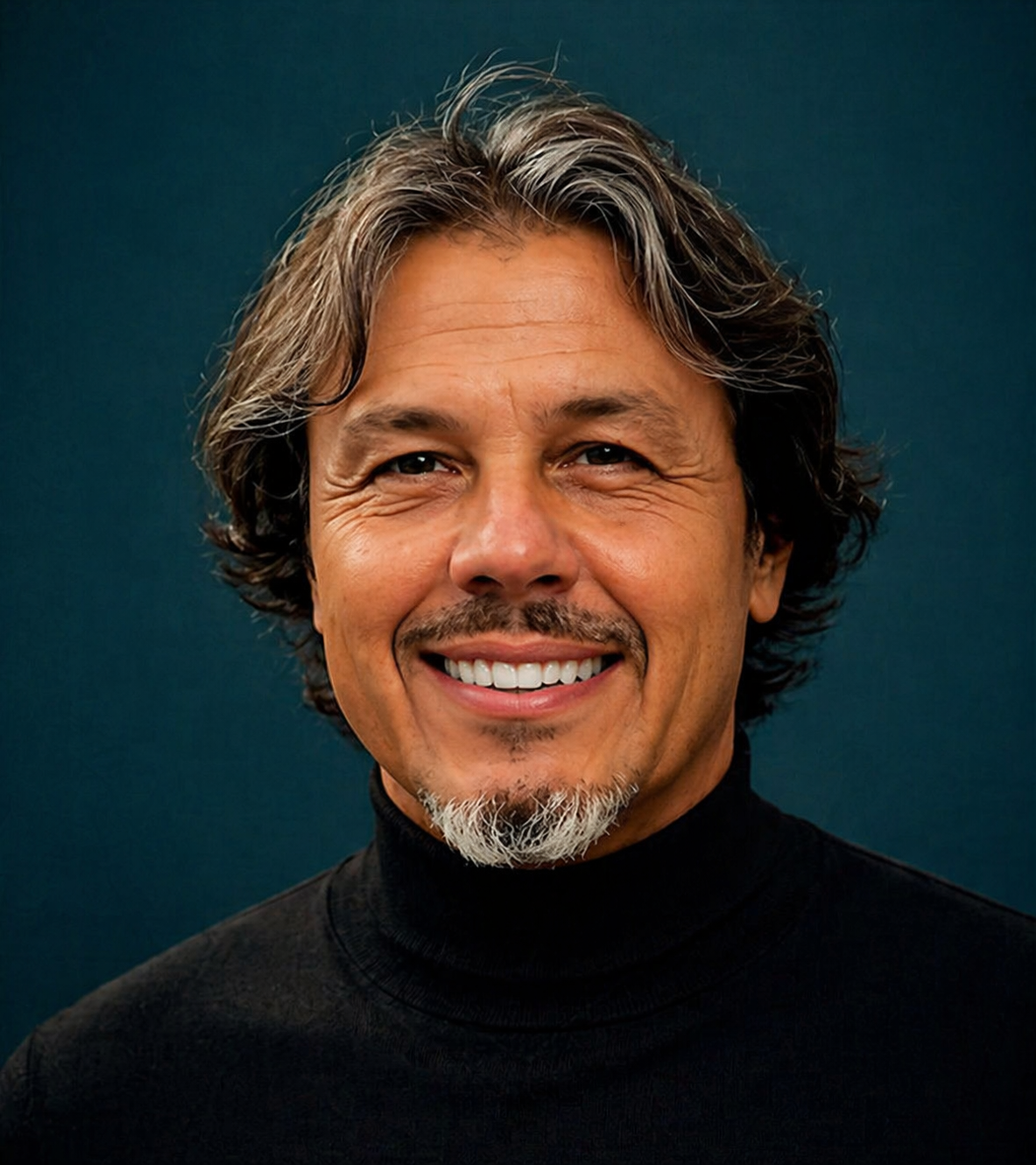
Maurizio Valch's symbolic and metaphysical universe
My pictorial language unfolds through different inquiries that share a metaphysical sensibility while retaining distinct visual identities. Geometry, materiality, space, depth and color relationships take on different forms of existence in each series. Recurring elements do not constitute a universal symbolic code: their nature and expressive possibilities change within each inquiry.
VORTEX — Movement, energy and transformation
Circular configurations, concentric structures, radial shifts and directional tensions form the essential vocabulary of VORTEX. Relationships between forms generate expansion, contraction and rotation, creating spaces in which stability seems constantly threatened by the forces acting upon it.
Geometry takes on a dynamic dimension. Centers can become points of convergence or dispersal, while lines and planes establish relationships of balance, opposition and displacement. Pictorial space ceases to appear as a static construction and becomes a reality traversed by simultaneous movements.
The inquiry approaches the continual transformation of existence metaphorically, without turning movement into a literal representation of energy or consciousness.
FACIES — Identity, multiplicity and recognition
FACIES investigates the possibilities of fragmented representation through geometric configurations, displaced planes, divisions and relationships between surfaces that may suggest the presence of a face without relying exclusively on figurative likeness.
Fragmentation is not intended to represent a destroyed identity, but to open different possibilities of recognition. Forms can relate to one another, contradict one another or coexist without necessarily achieving conventional visual unity. Perception moves between what seems familiar and a pictorial construction that retains its independence.
The face becomes more than a recognizable surface: it becomes a territory of spatial relationships, simultaneous presences and perspectives. This gives rise to a questioning of identity, its multiplicity, and the limits of what we believe we know when we recognize an appearance.
MARE SOMNIORUM — Imaginary territories and memory
Expansive horizons, architectural spaces, monoliths, ascending stairways, paths, thresholds, isolated blocks and geometric structures form a significant part of the world of MARE SOMNIORUM. These are settings in which the perception of territory gradually moves away from geographical references to acquire an imagined reality of its own.
These spatial constructions establish relationships between near and far, depth and surface, permanence and transformation. Horizons may suggest expanses that cannot be measured; paths and stairways introduce directions that do not necessarily lead to recognizable destinations. Architectural elements seem to belong to places whose history is unknown to us.
Memories of the Mediterranean, its landscapes and architecture, and the experience of places encountered inform this inquiry without turning it into a geographical reconstruction. Territory becomes more than a place: it becomes a possibility of pictorial existence.
PRIMORDIUM — Matter and primordial territory
Within the exploration of territory associated with MARE SOMNIORUM, PRIMORDIUM introduces a sensibility attuned to origins, the elemental presence of matter, and the construction of spaces preceding any precise geographical identification.
Color fields, expansive surfaces, horizons, monolithic structures and relationships between large geometric masses come to the fore. Forms may appear isolated, partially embedded in the territory, or suspended within a space whose scale remains indeterminate.
Reducing the number of recognizable elements intensifies the relationships between materiality, color and depth. The primordial does not necessarily represent a remote past: it proposes the possibility of contemplating a reality before our need to recognize it turns it into a familiar landscape.
PRIMORDIUM is presented here as an exploration associated with MARE SOMNIORUM, without automatically designating it as an independent series.
EMERSIO — Emergence, presence and spatial transformation
EMERSIO develops a language of geometric structures, architectural volumes, monoliths, overlapping planes and spatial divisions that explores the relationship between what remains part of a surface and what acquires autonomy from it.
Boundaries, interruptions, shifts in depth and relationships between masses of color create visual situations in which a form may seem to emerge, separate itself or acquire presence within pictorial space. The tension between surface and volume is particularly important.
Emergence need not be understood as birth or revelation. It may be a change in spatial relationships, a transformation of perception, or a new condition in which forms exist.
Presence need not represent anything recognizable: it can manifest itself through the very reality that painting creates.
STRATA — Sedimentation, materiality and time
STRATA investigates relationships between strata, color fields, fragmented surfaces, geometric blocks, horizons, territorial divisions and incisions made directly into the paint itself.
Layering and glazing build different levels of depth, while cuts and other material interventions interrupt the continuity of surfaces. A composition may suggest shifts, pressure, fractures or sedimented structures without necessarily becoming a geological representation.
Color has a spatial and material role. Contrasts can separate territories, bring surfaces closer together, or create tensions between apparently motionless volumes. Incisions introduce a physical dimension independent of symbolic interpretation: they are actual events on the surface of the painting.
Memory and time emerge as possible readings of these material relationships. STRATA does not necessarily depict traces of the past; it constructs a pictorial reality in which layering, permanence and transformation can coexist.
INCARNATE — The multiplicity of BEING and pictorial existence
INCARNATE allows me to recognize, in retrospect, an inquiry into the manifestation of BEING that was already present in my artistic practice. Its language develops through geometric structures, architectural relationships, planes, volumes, spatial divisions, color contrasts and constructions of depth.
A composition may establish complex relationships between unity and fragmentation, proximity and distance, balance and contradiction. Structures acquire an autonomous presence without needing to reproduce a human figure, an organism or a recognizable identity.
The inquiry approaches the multiplicity of existence: consciousness, memory, thought, desires, contradictions and dimensions that remain beyond our ability to define them. These dimensions, however, have no predetermined formal equivalents. No volume necessarily represents the ego, no incision a wound, and no spatial division a psychological conflict.
I do not seek to explain this multiplicity. I seek to give it pictorial existence.
Painting can conceive a presence without describing its appearance or revealing a supposed inner truth. Its reality does not depend on identifying what it represents, but on the relationships, intensities and possibilities of existence it acquires within pictorial space.
INCARNATA does not establish a new method of creation. It offers a perspective from which I can contemplate and investigate something my painting had been developing long before I found these words.
An overview — Maurizio Valch's pictorial universe
My pictorial universe unfolds through an abstract, geometric and architectural language in which materiality, space and color acquire a deeply metaphysical dimension. Each series constitutes a particular inquiry, while all participate in a broader questioning of existence, time, memory, transformation and the nature of BEING.
Monoliths, horizons, fragmented structures, color fields, strata, incisions, volumes, thresholds, stairways and spatial constructions belong to a vocabulary that changes throughout my practice. In some inquiries, movement and forces predominate; in others, identity and multiplicity, imaginary territories, the sedimentation of matter, or the manifestation of abstract presences.
Depth, three-dimensionality, layering and relationships between surfaces make it possible to construct realities that need not correspond to familiar physical spaces. Material itself plays an active part in that construction: it can accumulate, fragment, reveal earlier layers, or acquire new relationships through incisions and shifts.
My symbols do not constitute a system of established meanings. Their significance lies not only in what they evoke, but in the existence they acquire within each painting. A horizon can cease to be a landscape; a monolith can become a presence whose nature is unknown to us; a fragmented structure can retain a unity that does not depend on its appearance.
Looking back over my practice, I recognize an inquiry into the multiplicity of BEING that transcends the differences between my series. Painting can approach an existence without describing its attributes, representing its psychology or explaining its nature.
I do not seek to explain this multiplicity. I seek to give it pictorial existence.
This perspective is not a program that determines what I create, but a way of understanding what my painting has been exploring for some time. Each work retains its autonomy, its contradictions and its mystery.
We need not reduce the unknown to the known in order to paint it.
In this freedom, I find the possibility for painting to move beyond representation and become an experience of existence in its own right.