

Published work / STRATA
DECLIVIS
From the STRATA series
- Medium
- Acrílico y óleo
- Size
- 31.5 × 47.2 in / 80 × 120 cm
- Series
-
STRATA
 Painting series
STRATA
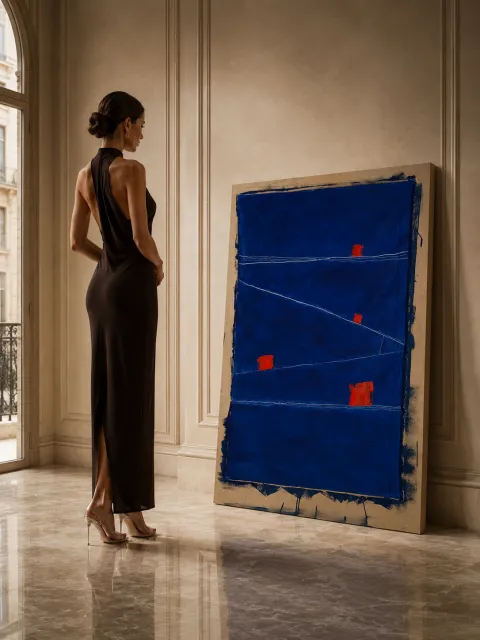
STRATA brings together abstract paintings in which the surface becomes a territory of pressure, cutting and duration. Amid dense chromatic fields, compact blocks and incisions, Maurizio Valch situates memory as a material trace rather than a decipherable narrative. View series
- Orientation
- Vertical
- Context studies
- 8
Conceptual Note
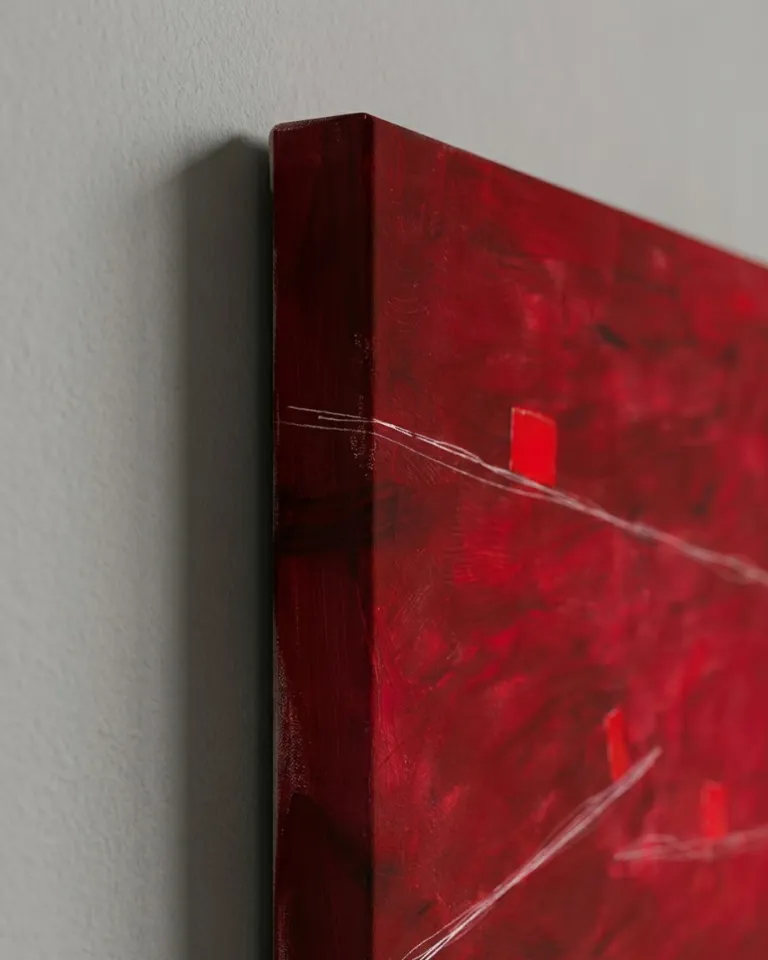
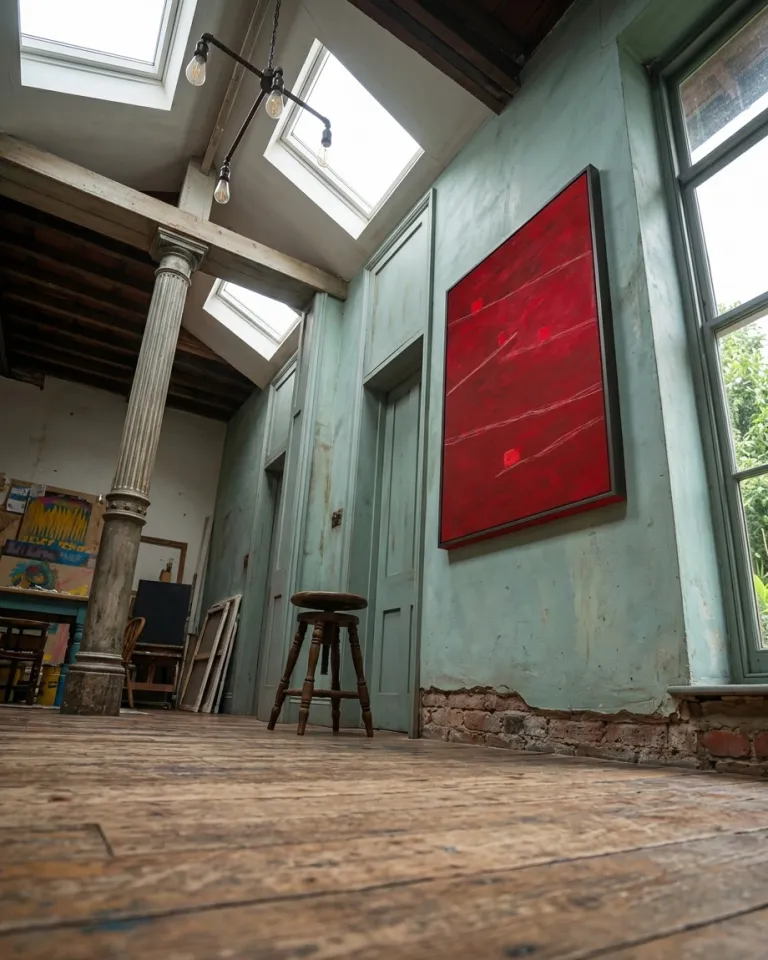
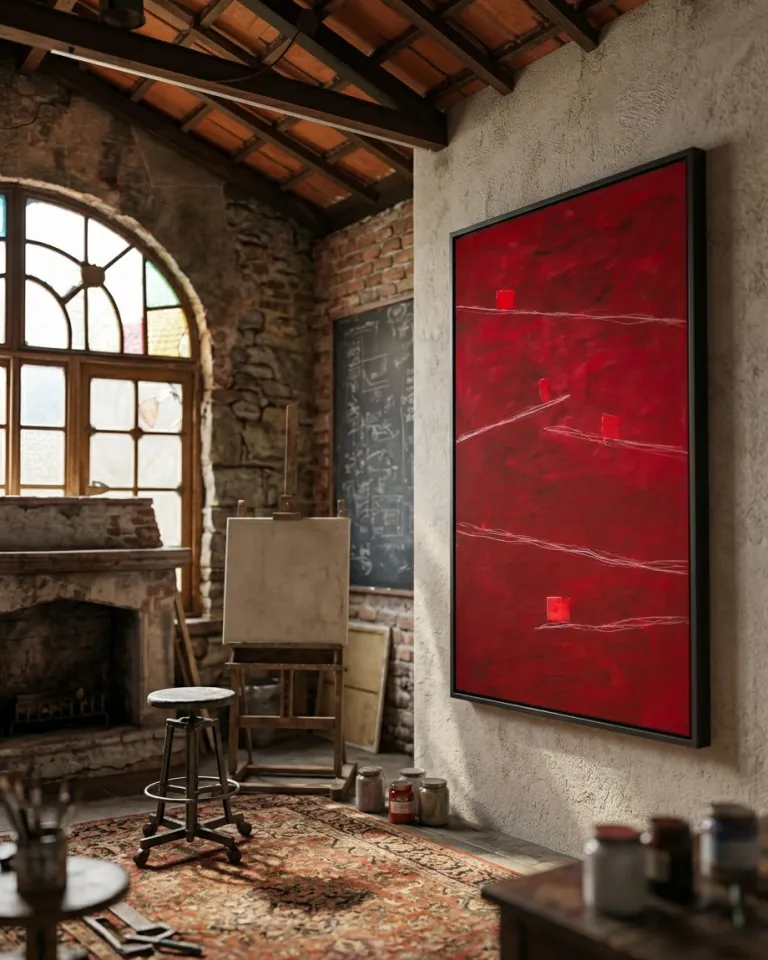
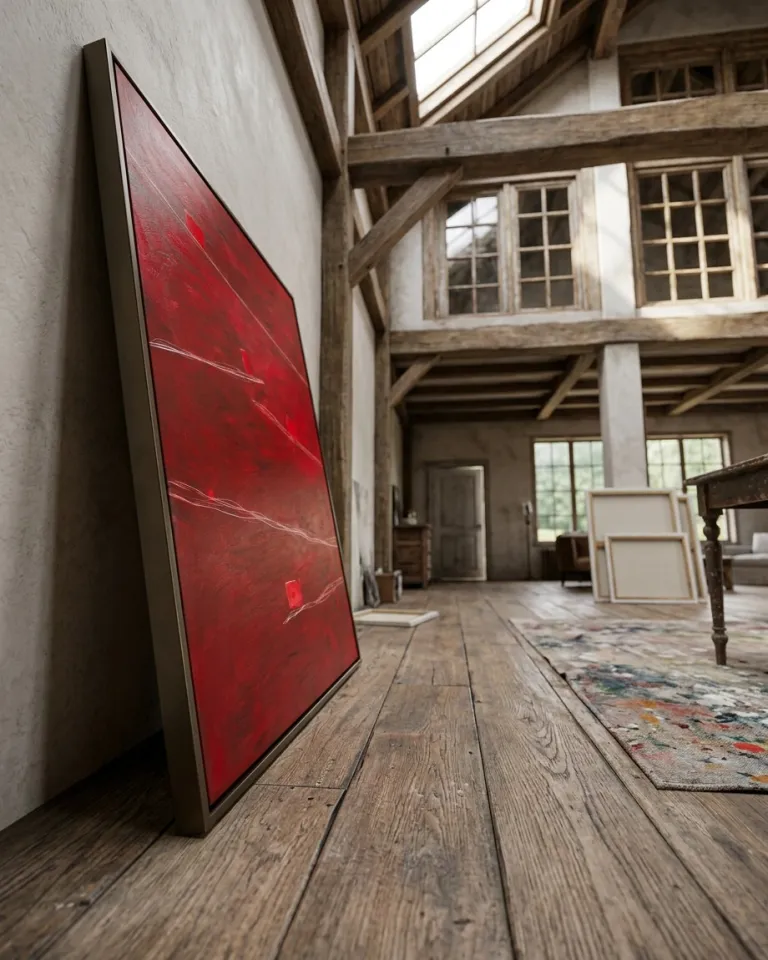
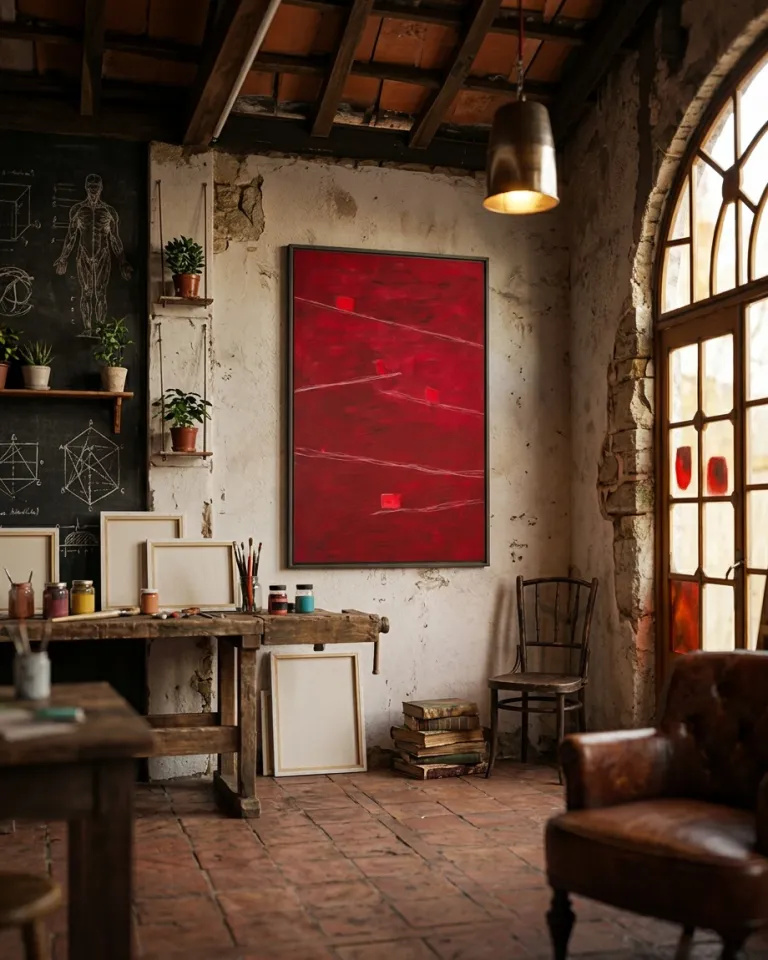
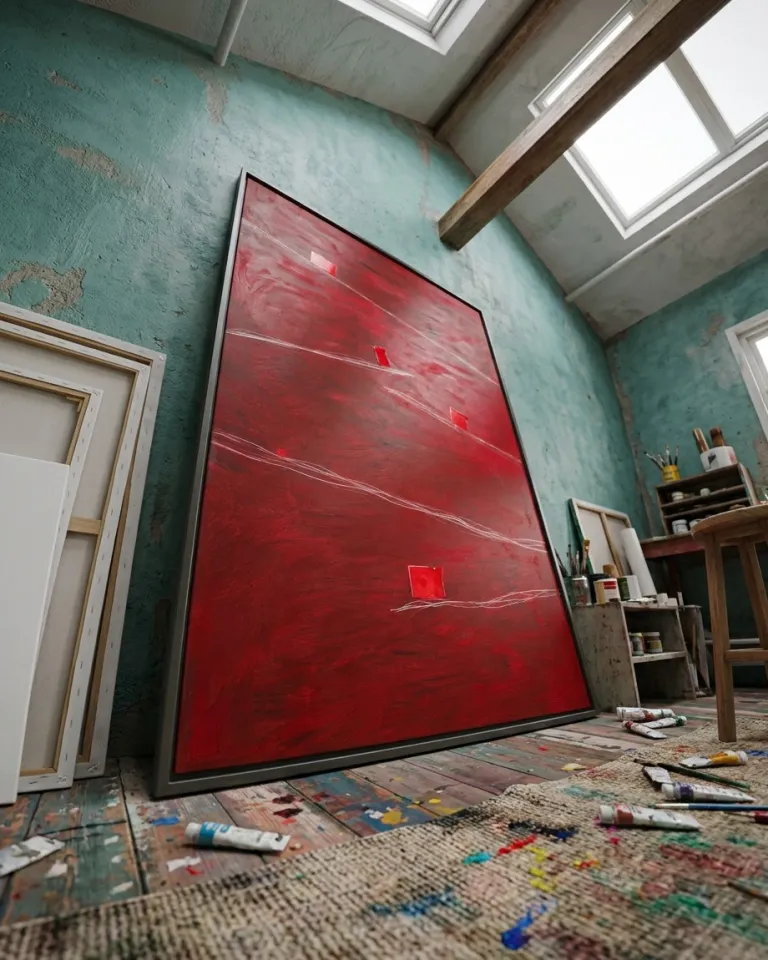
The surface of DECLIVIS presents itself to the eye as a dense and vibrant crimson chromatic field, furrowed by fine white incised lines that trace diagonal trajectories in a continuous descent. In this composition, the traditional notion of protection is suspended and reformulated from its physical roots. Usually, the act of protecting is associated with rigidity, the construction of orthogonal walls, and the search for an unshakeable stability that isolates the body from external forces. However, in this painting, the small red blocks seem to slide helplessly down unstable slopes, held up only by the delicate tension of the incised lines. The work thus suggests that true safety is not found in tenacious resistance against decline or in erecting insurmountable barriers, but in the conscious acceptance of the fall and of gravity as fundamental dynamics of vital movement.
When confronting the stretcher covered by the dense layer of crimson oil, my pictorial practice does not seek to build through decorative accumulation, but to unearth through subtraction. With the palette knife, I scrape the wet matter and open channels that reveal the underlying white light of the gesso, a physical gesture that demands absolute trust in the behavior of the pigment and the firmness of my own pulse. This incised line, by deliberately renouncing perfect horizontality and predictable geometric order, embodies the concept of the clinamen, that creative swerve that introduces contingency into the void. For me, trusting on the canvas means surrendering to the weight of the oil and the traction of gravity, allowing the forms to slide and find their own dynamic balance without the rigid imposition of a plumb line or a level that artificially orders the space.
Scattered along these luminous crevices, the small quadrangular blocks of color are suspended in the pictorial space, raising a question about the nature of belonging. What does a body adhere to when the ground on which it rests lacks a static plain? Contrary to the common conception that belonging implies taking deep roots in an immobile territory, DECLIVIS proposes a strictly dynamic and relational belonging. The blocks are not fixed; they belong to the inclined line that displaces them, to the vibrant void of the red background that envelops them, and to the shared speed of the journey. The painting refutes fixity as a condition of identity and demonstrates that the sense of belonging can be an active complicity with transit, an inhabiting of movement itself along with other elements that share the same vector of descent.
When I extend the crimson oil beyond the front plane of the canvas and allow the incised marks to wrap around the edges of the three-centimeter-deep stretcher, I seek to nullify the traditional border that isolates painting from the real world. By dispensing with a containing frame, I dismantle the trench that historically functioned as a protection for the creator's ego, a boundary that sought to preserve the work on a purely autonomous plane. Now, the painting becomes an exposed body that tactilely inhabits the gallery's architecture, transforming my own sense of belonging toward the workspace; I am no longer the author dominating a fictional window, but a worker inserting a physical object into the spectator's daily experience, where the raw edges of the canvas become membranes of direct contact with external reality.
In the final contemplation of DECLIVIS, the concepts of belonging, protection, and trust merge into a single spatial and material experience that invites us to inhabit the present without the promise of definitive rest. The subtle syncopation of the oblique lines and the contained tension of the red blocks do not push the eye toward an external goal or the crowning of a summit, but sustain attention on the decline itself. Through its structural rigor and chromatic vibration, the work demonstrates that serenity is not conquered at the end of a heroic ascent, but in the honesty of accepting our common fall. On this plane, the swerve of the line is not a calculation error, but our true home, and the decline reveals itself as the only ground where it is possible to essay a shared existence in constant transformation.