Series · 2026–Present
STRATA
Matter as a record of what remains

About this series
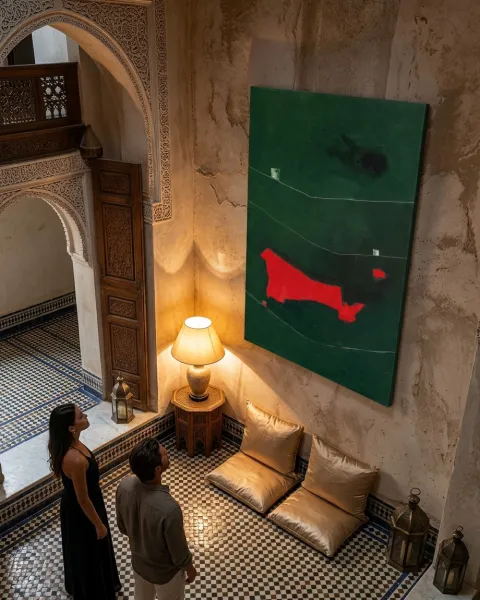
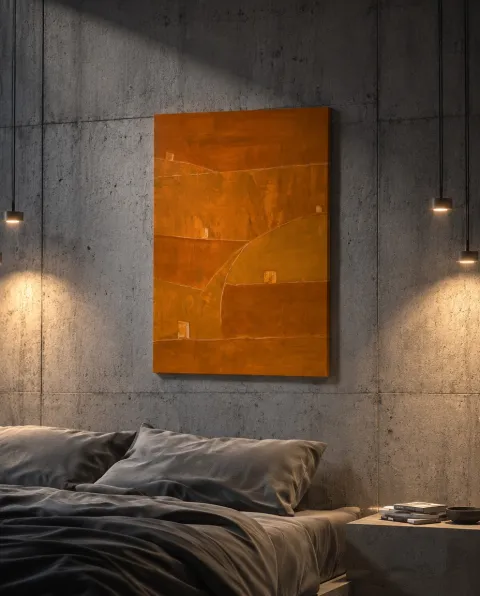
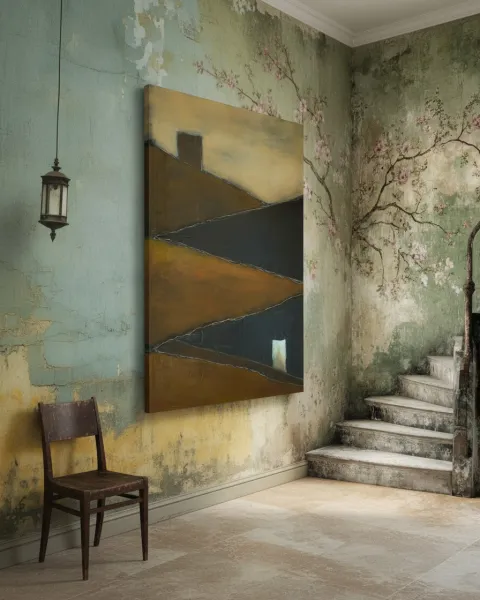
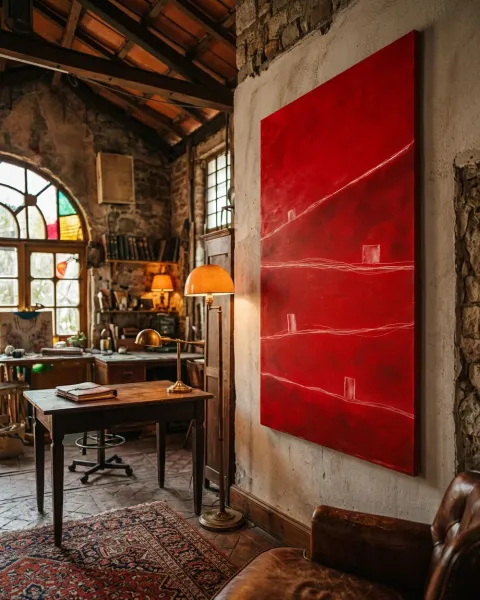
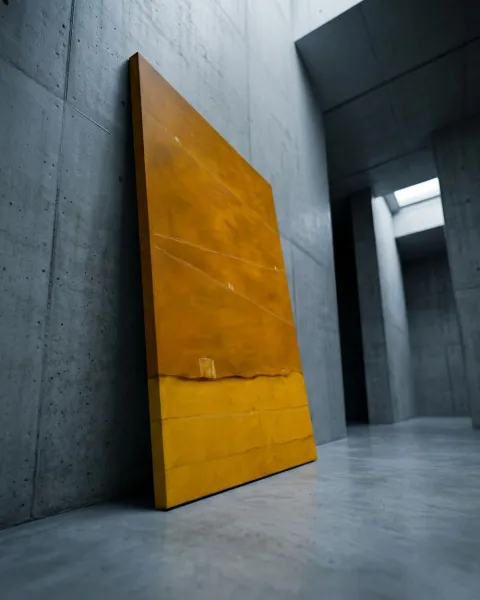
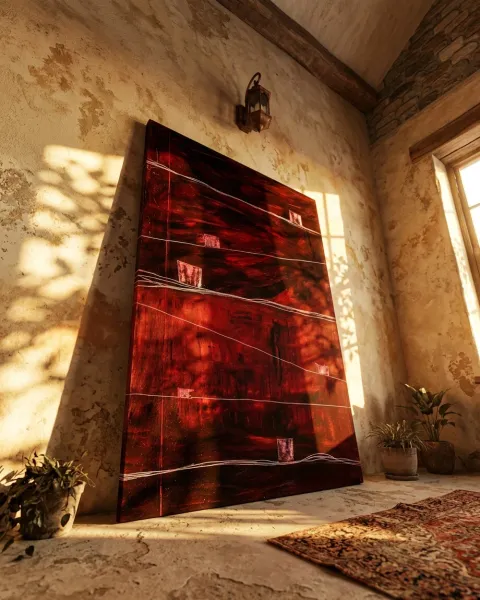
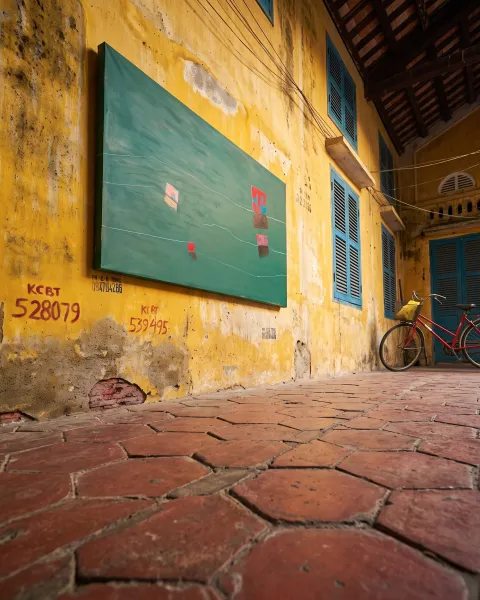
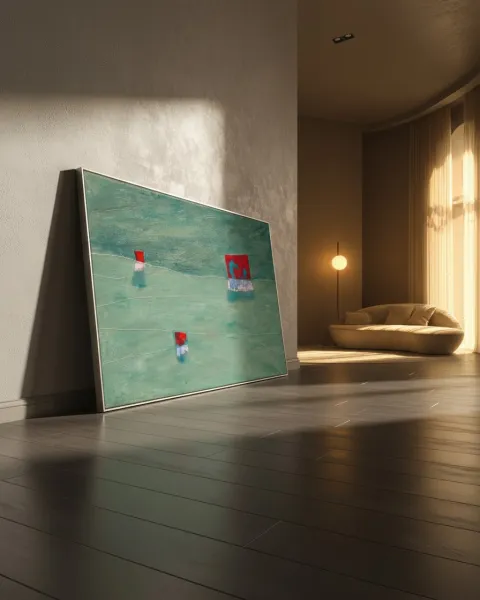
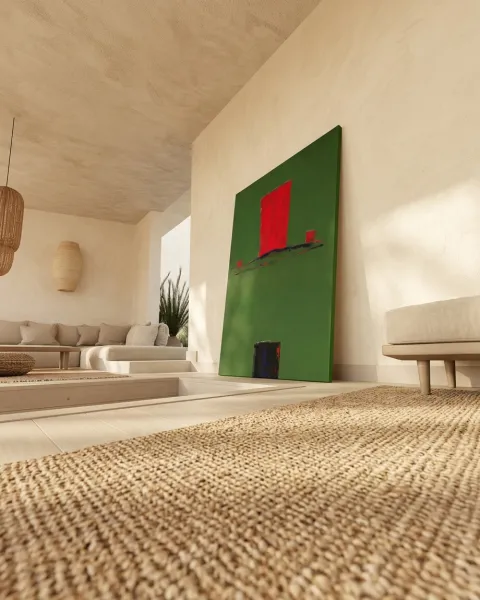
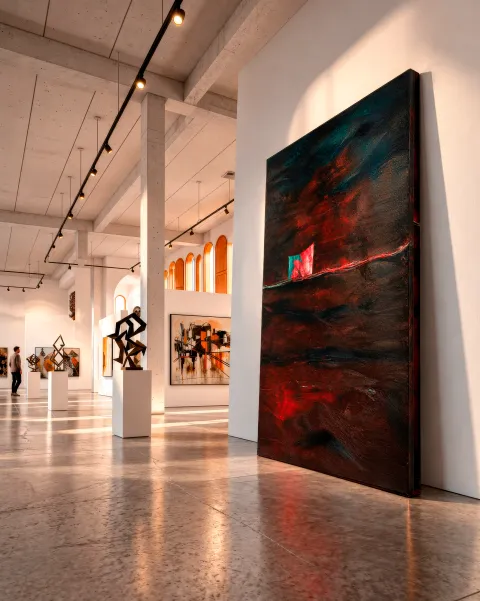
STRATA brings together abstract paintings in which the surface becomes a territory of pressure, cutting and duration. Amid dense chromatic fields, compact blocks and incisions, Maurizio Valch situates memory as a material trace rather than a decipherable narrative.
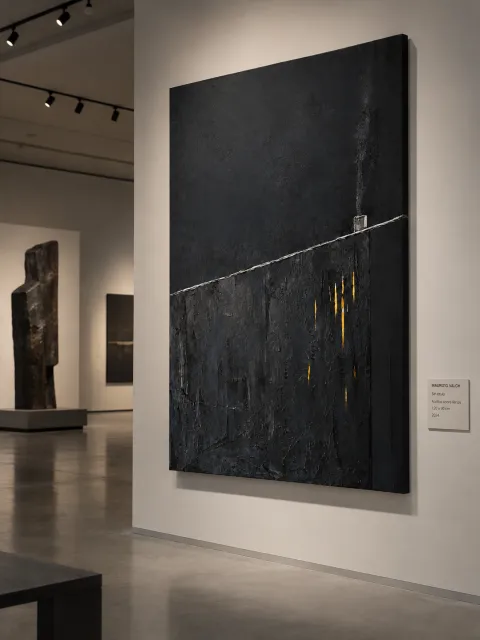
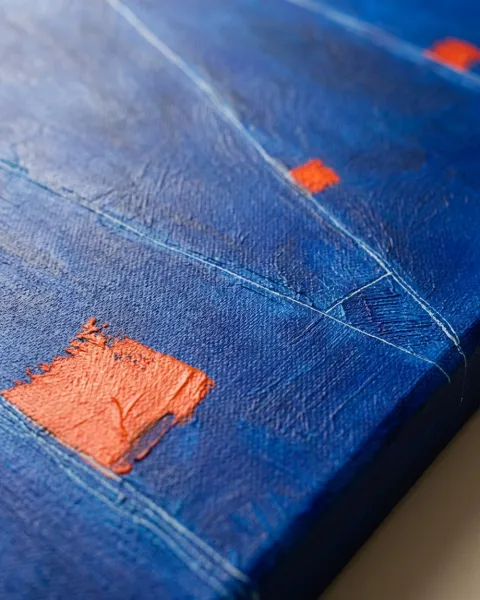
In STRATA, territory no longer appears as a distance to be contemplated. It comes closer until it acquires thickness, resistance and marks. Maurizio Valch works with painting as a surface subjected to accumulations, reductions, scraping and cuts; a field in which colour does not simply cover the canvas, but retains the physical history of its transformation. Acrylic and oil are arranged in layers, glazes and areas of concentrated matter that make duration perceptible without needing to narrate it.
Incisions occupy a decisive place in this inquiry. They are not lines added to delimit forms: they pass through the pictorial strata and leave an actual alteration in the surface. They may suggest paths, divisions or incomplete cartographies, yet resist becoming a legible map. This reserve is essential to Valch’s practice, for whom an image should not be reduced to a fixed equivalence. The mark records that something has occurred, even if it does not disclose the cause or destination of that passage.
Compact blocks and horizontal divisions introduce another kind of presence. They weigh upon the chromatic field, interrupt its continuity and establish zones of containment. They may evoke an elemental architecture or a form hardened by time. Without imposing a closed psychological reading, the series allows one to consider what becomes fixed within a life: habits of perception, memories, beliefs or structures that protect and, at the same time, constrain. Matter retains a decisive autonomy here; before signifying anything, the block is volume, density and spatial relation.
This attention to the surface brings STRATA close to concerns found in Antoni Tàpies and Alberto Burri: painting understood as a wall, skin or body exposed to pressure, erosion and rupture. Valch, however, maintains a more restrained territorial organisation. His chromatic fields, horizons and monolithic forms do not entirely relinquish the memory of landscape, even though that landscape can no longer be identified with an external geography. Territory appears as ground, archive and shared boundary.
The series extends an inquiry that has run through the artist’s trajectory, from spaces closer to dream and horizon towards increasingly concentrated matter. In STRATA there is no promise of transcendence, nor a route set out in advance. There are surfaces that resist, cuts that open a discontinuity, and compositions in which stillness never amounts to immobility. Before them, the viewer may sense that what remains inscribed is not necessarily closed off: a mark can also be the point from which a form begins to reorganise itself.
Tags
contemporary abstract painting; territorial abstraction; material-based painting; minimalist abstract art; brutalist painting; acrylic and oil; canvas; stratified surfaces; chromatic fields; incisions; incised lines; monolithic blocks; horizontal divisions; abstract landscapes
Series works
Works in this series