
Published work / STRATA
SUBMERSA
From the STRATA series
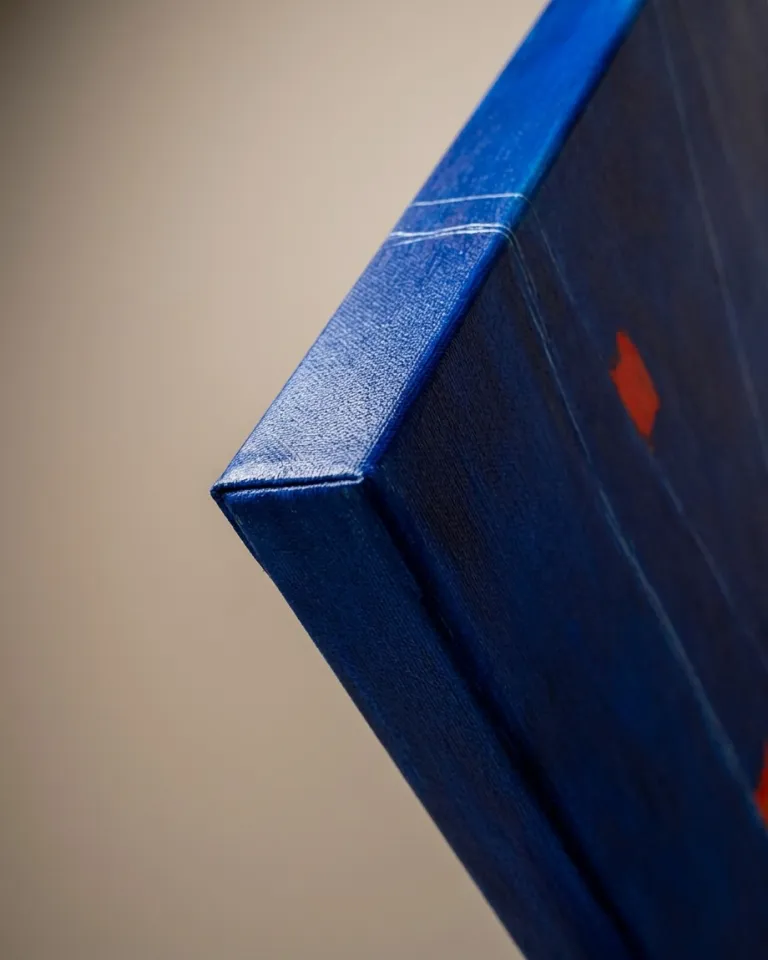
- Medium
- Pintura
- Size
- 31.5 × 47.2 in / 80 × 120 cm
- Series
-
STRATA
 Painting series
STRATA
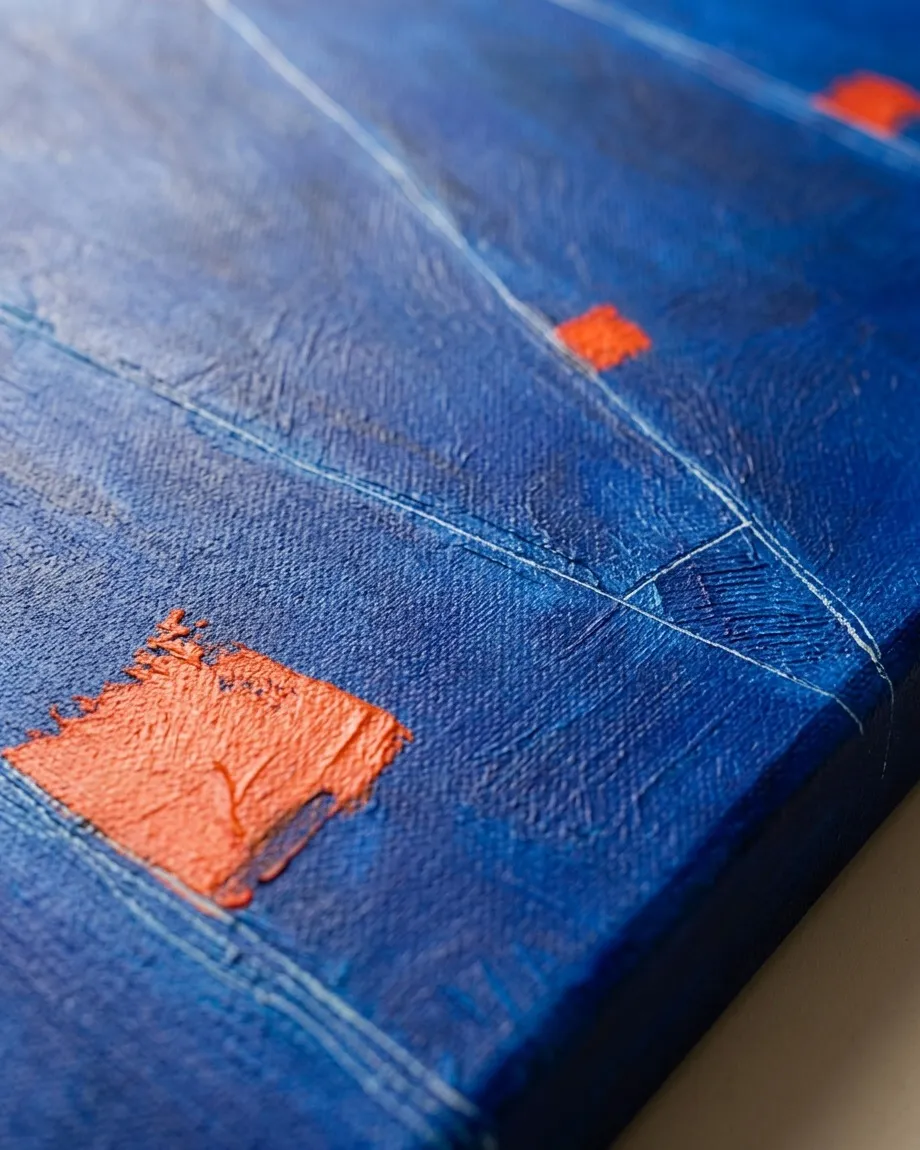
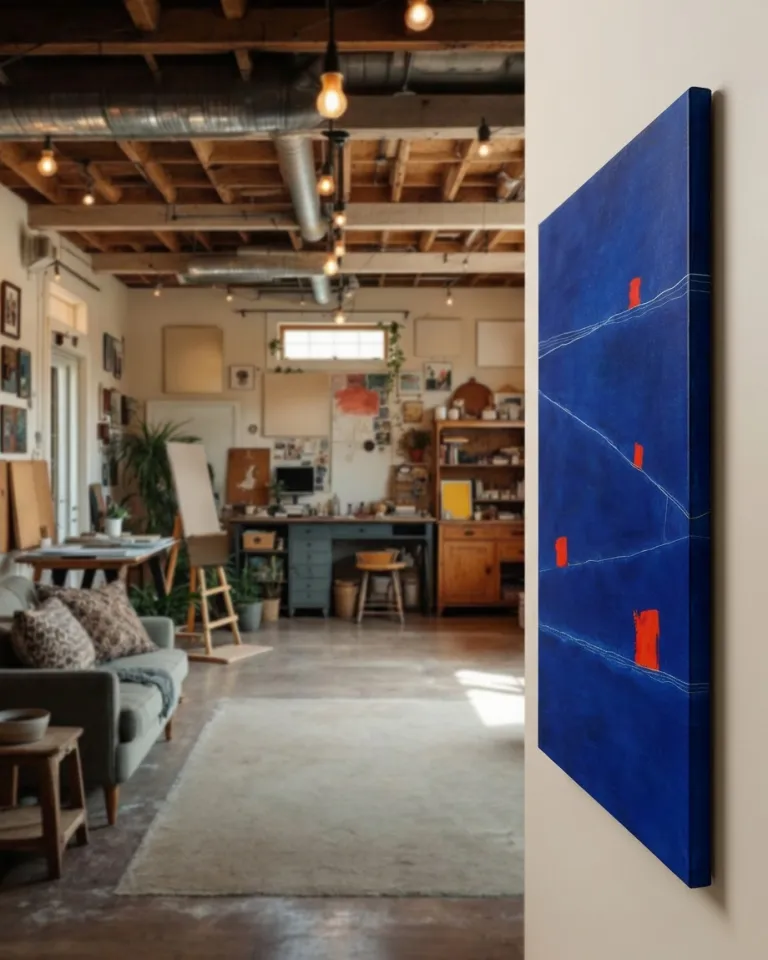
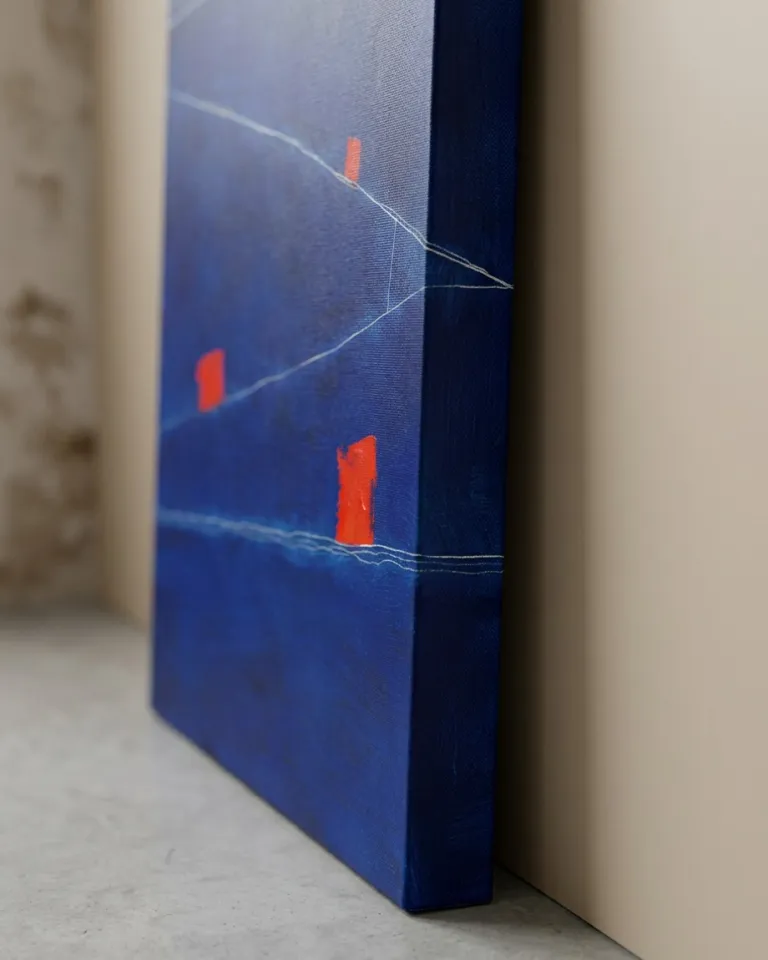
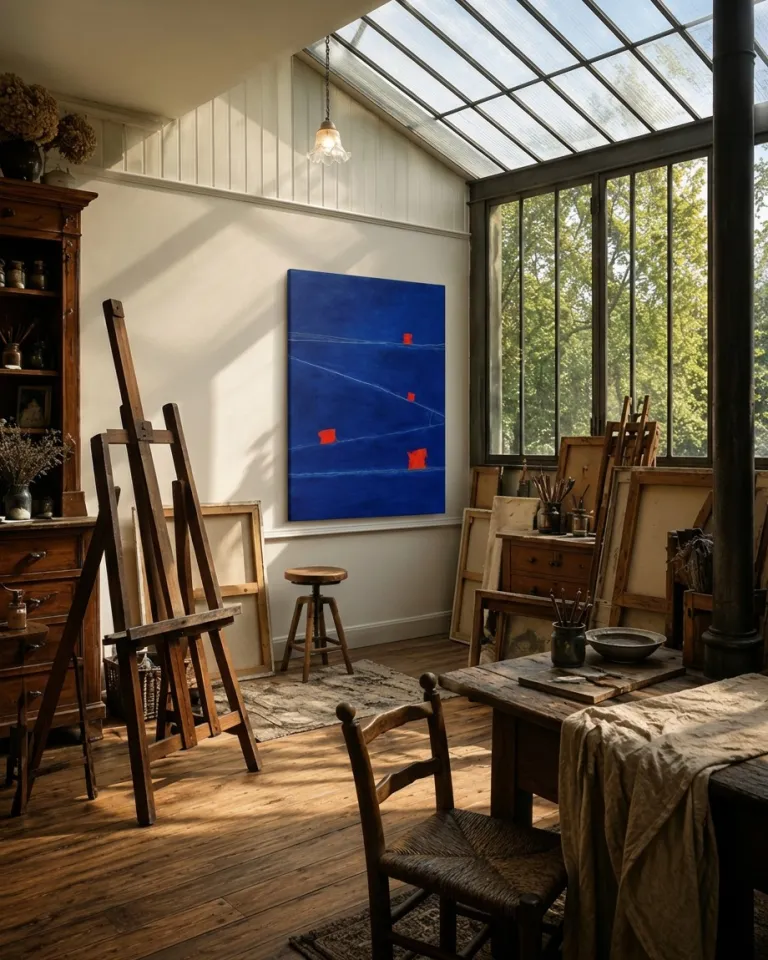
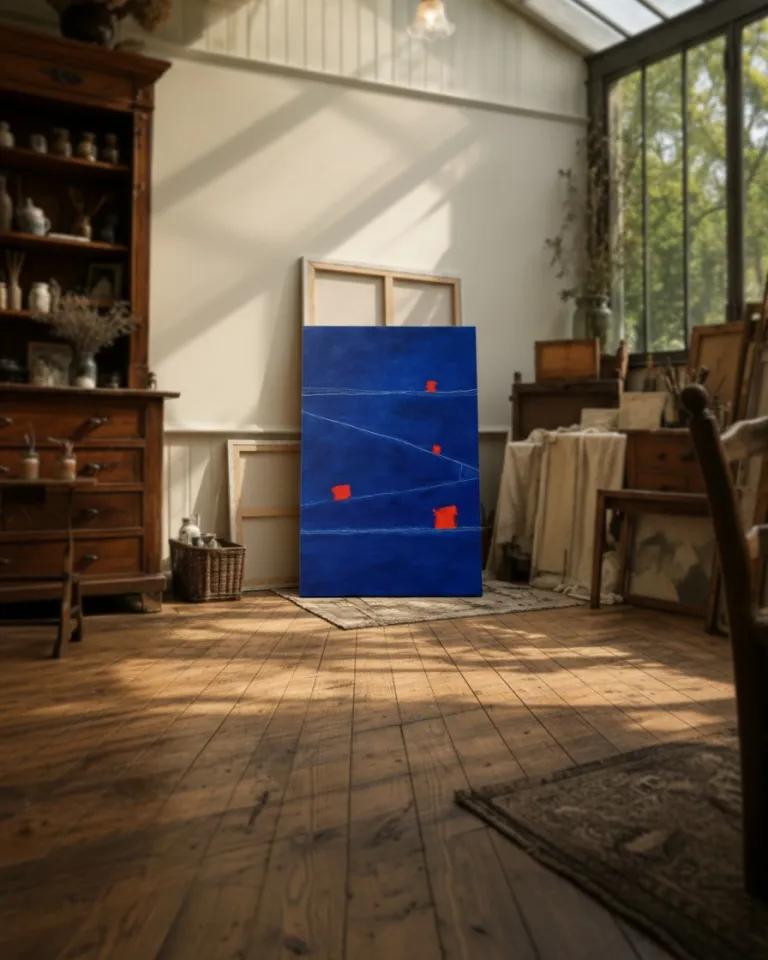
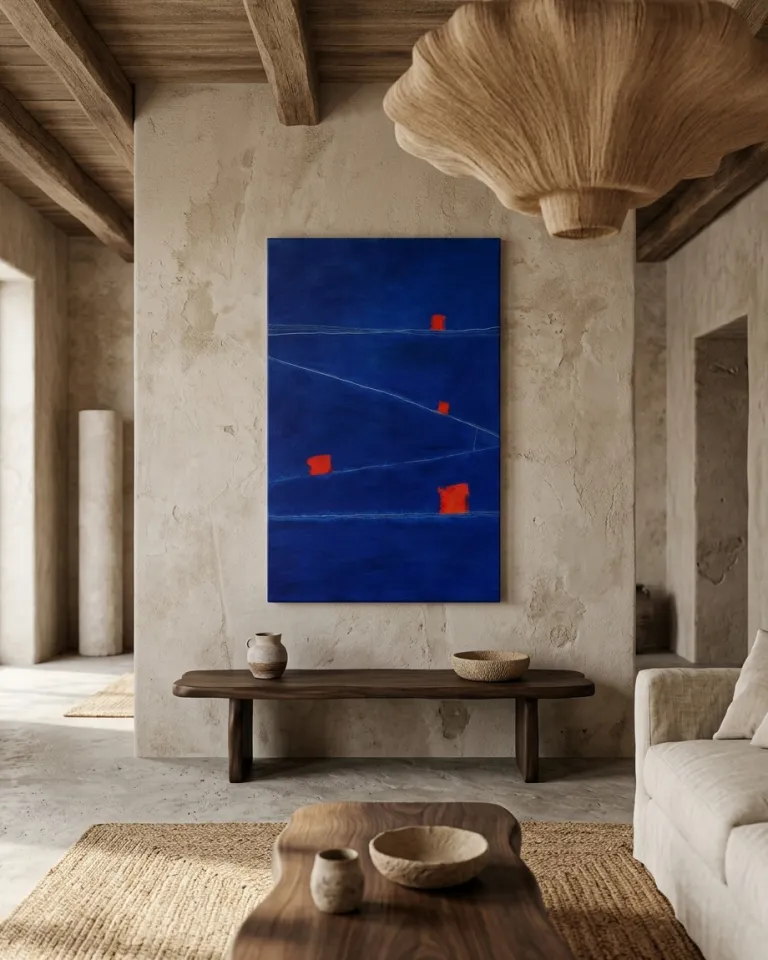
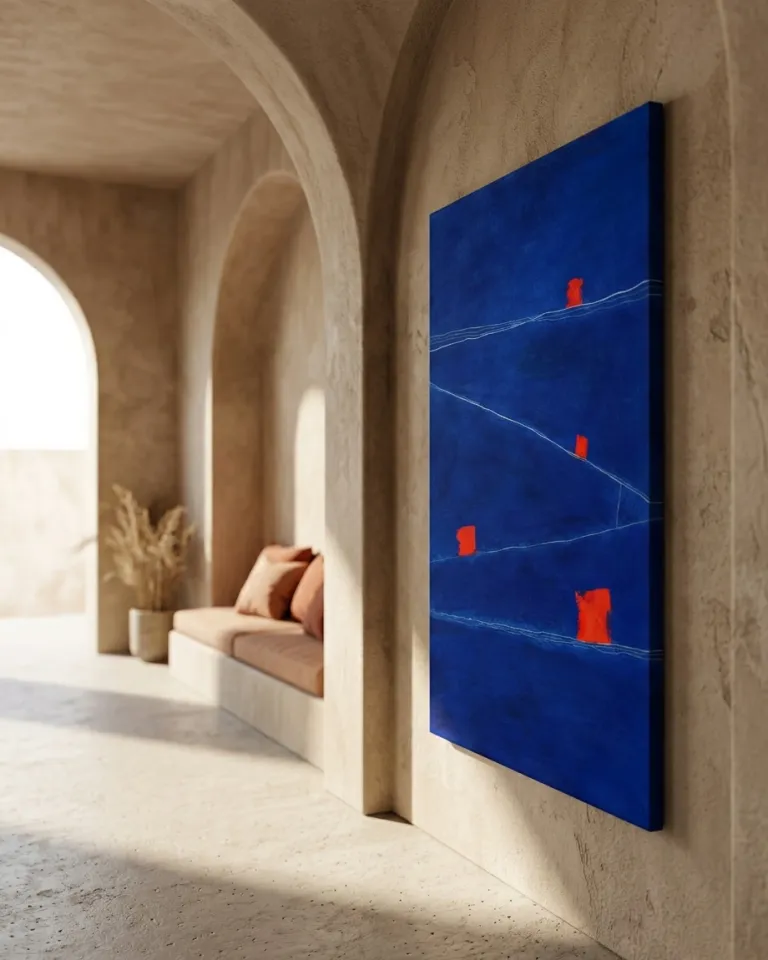
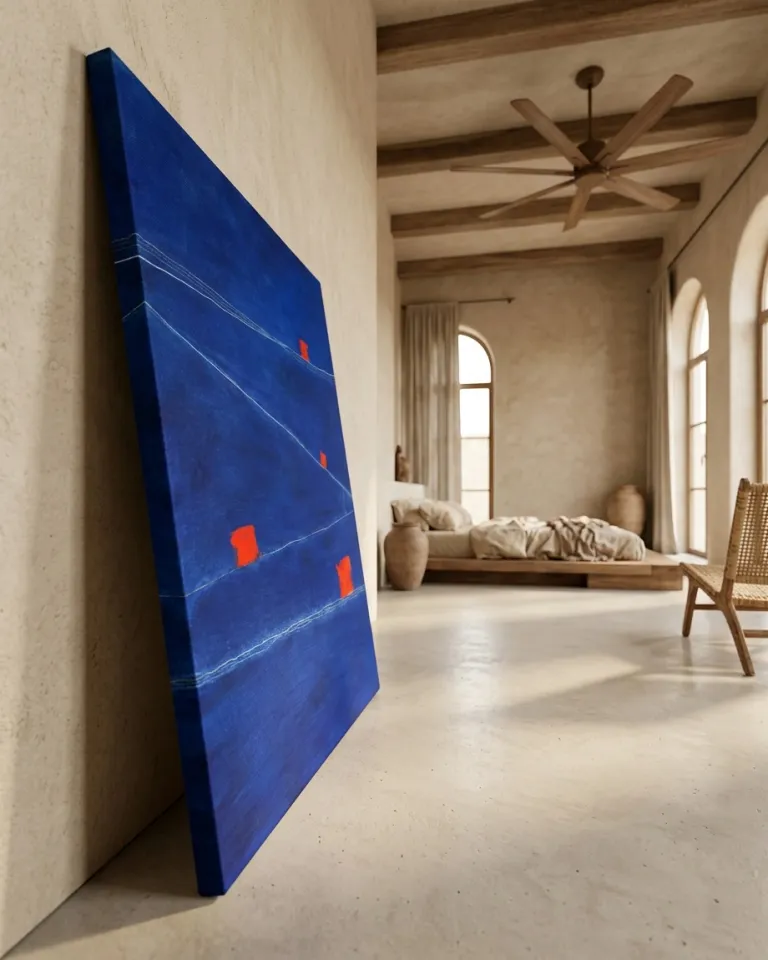
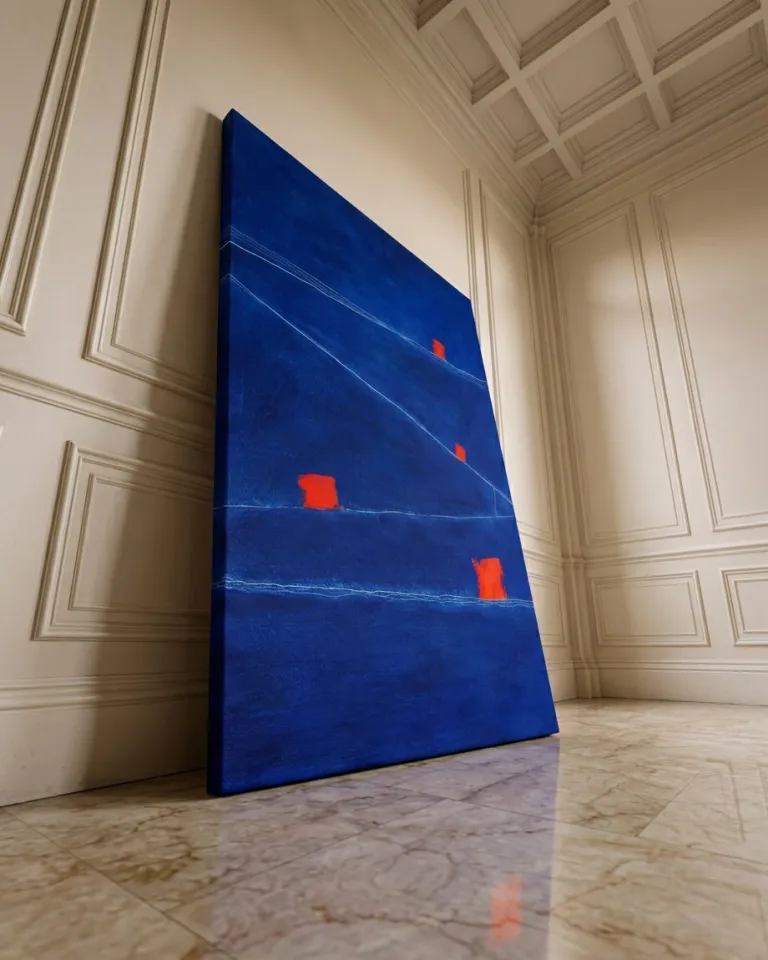
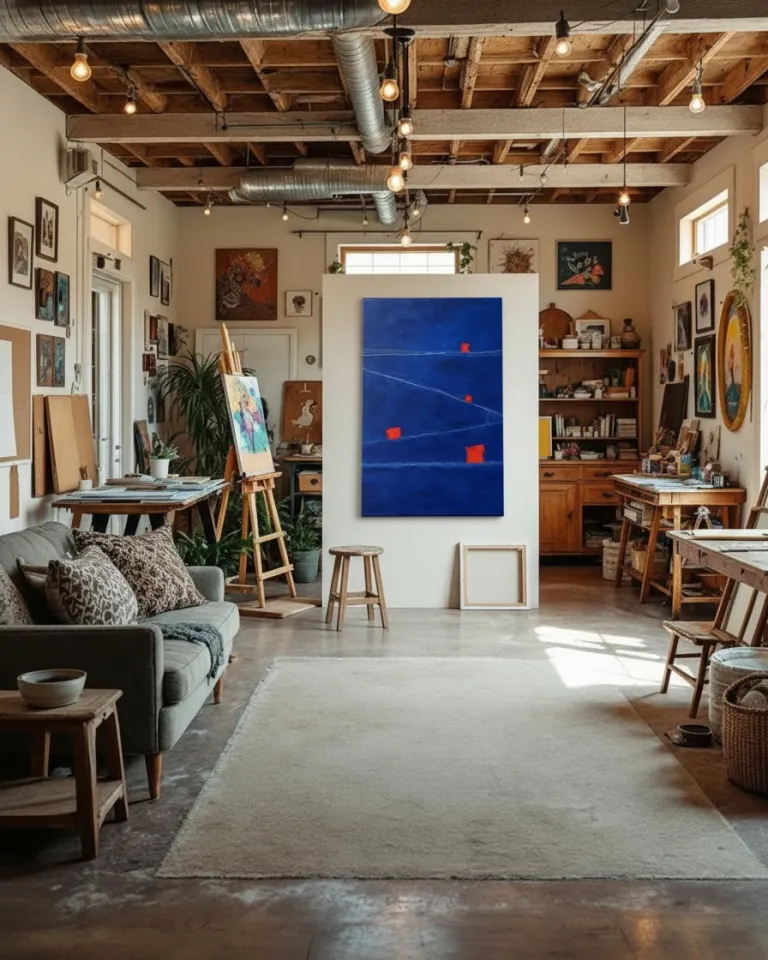
STRATA brings together abstract paintings in which the surface becomes a territory of pressure, cutting and duration. Amid dense chromatic fields, compact blocks and incisions, Maurizio Valch situates memory as a material trace rather than a decipherable narrative. View series
- Orientation
- Vertical
- Context studies
- 13
Conceptual Note
high watermark / first buoy
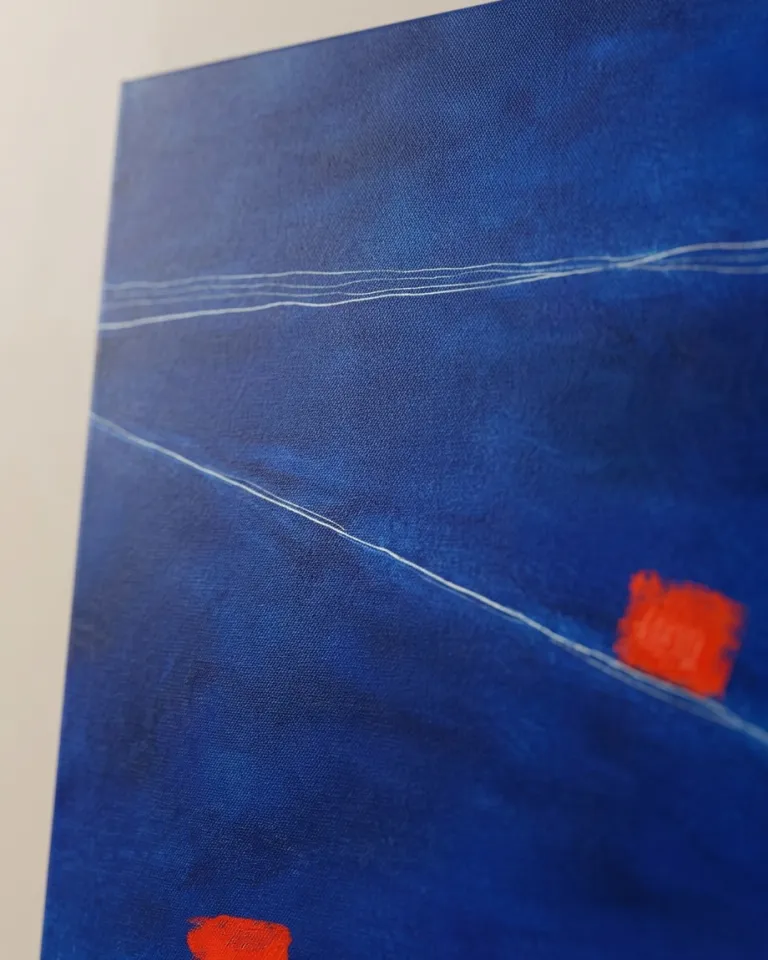
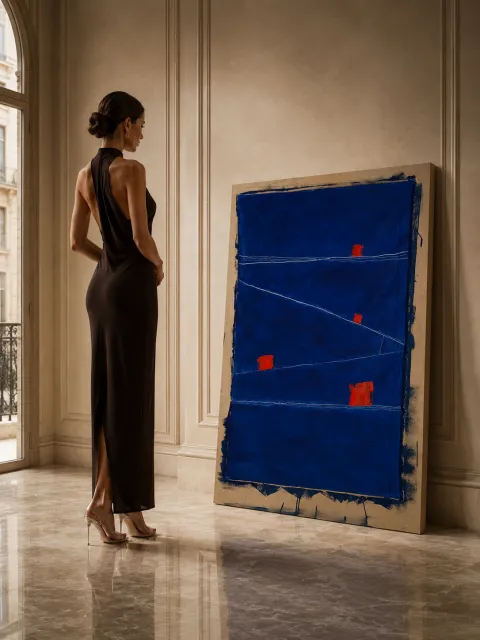
Above, the blue still seems to be a surface that permits orientation. Two light, almost horizontal lines hold themselves a short distance apart; they are not quite levels, nor edges, nor a script that someone has left suspended. The eye follows them with the provisional confidence with which one looks at a coastline from afar: a slight variation is enough to believe that a measure exists there.
The first red intrusion, towards the right, does not confirm that measure. It is too compact to be merely a signal and too small to ensure scale. It could be a buoy, but also something that has emerged without asking permission. Ailton Krenak is an Indigenous Brazilian thinker and activist whose imagination challenges the separation between humanity, territory, and more-than-human life. With him, the blue stops behaving as a background: perhaps it looks at the red, perhaps it keeps it afloat, perhaps it preserves a memory that does not need these lines to exist. The question shifts. It is not so much what this mark represents, but what right the gaze has to call empty that which it does not understand.
I look at the upper strip and realise that my intention fails to fix it. I wanted to recognise a distance between the lines, but the blue makes that distance unstable and causes the first red form to seem to approach or recede without moving. The painting resists my need to decide: the more I observe it as a surface, the more I perceive that something within it is already occurring without me.
at medium pressure
The second red patch appears lower down, near the slanted line. Here, the journey changes breath. The diagonal enters from the left as a faint tension and advances towards the right without the serenity of a horizon. It seems to go down, though there is no certainty that it does; it seems to open a plane, though it could also be closing it. The eye has to tilt along with it. Up to this point, it was possible to imagine a cartography: contour lines, calm waters, territories reduced to a legible extension. The diagonal interrupts that comfort.
Hassan Fathy was an Egyptian architect who approached housing from the perspective of climate, local materials, and the dignity of those who inhabit it. The lines could be, for him, thresholds without walls: boundaries of use, tensions between shelter and exposure, a construction that has not yet decided whether it will receive or expel whoever enters. The second red mark would demand a measure. How high is it? How far is it from the line? Could it serve for a body to recognise where to rest its weight?
Krenak resists this operation. That red form would have no reason to accept the role of reference; perhaps it is a presence that does not fit into the human need to calculate. Fathy, however, needs at least to test its scale, because without a relationship between body and space, no habitation is possible. Neither manages to impose himself. The mark shrinks when looked at as an object and expands when treated as a refuge. It remains suspended between a signal that guides and something that must not be used.
Then the diagonal reaches its tensest zone and makes both fail. There is no landscape: no edge allows one to say where water or land ends. Nor is there a plane: there is no firm ground, no body appears to guarantee a measure, no line retains its function long enough. The diagonal does not lead; it diverts. After crossing it, the blue no longer seems a surface observed from the outside, but an shoreless flood, an architecture without a base, a thought that loses the obligation to remain stable.
A child might ask: if the blue is holding up the reds, why don't we see it tremble? The question forces one to abandon the safe distance. One is no longer looking from an imaginary shore. One must approach the almost invisible lines, follow their slight vibration, step back for the blue to regain weight, and admit that up and down have ceased to be reliable instructions.
I look at the diagonal after having let it cross me and understand that I cannot ask the painting to return me to a stable position. The red form near it remains unknown, but I no longer experience it as a lack to be corrected. Something of my gaze has remained within that extension: not to dominate it nor to inhabit it, but to accept that it can also be held up by that which it fails to name.
low watermark / third buoy
The third red intrusion, towards the left, alters the previous two. It seems closer, almost within reach of a hand, but that proximity could be a trap. It is installed on a line that is now perceived less as a support than as a fluctuation: a thread that tightens as it dries, barely visible, and whose tension is only noticed when it threatens to give way. The first buoy, above, ceases to be a distant point; it may have been falling slowly. The second ceases to be a scale; perhaps it was already floating within a greater pressure.
The child's question returns transformed. The blue does not need to tremble in a recognisable way to support something. Perhaps the trembling is the displacement of the viewer: the instant when the eye believes it has found a level and discovers that this level was a momentary seam between two uncertainties. The third red form does not answer. It does not sink, but neither does it float in the way a known thing floats. It forces us to think that to hold up does not always mean to contain.
unmeasured depths / fourth buoy
The last red patch, lower down and to the right, is the hardest to pin down. It seems large because it is close; it seems small because the blue exceeds it. Its edges do not manage to stabilise a name. In front of it, the other three are no longer four points distributed in a composition: they form a series of interruptions that change each time a new one appears. The first could have been a presence. The second, a demand for measurement. The third, a false closeness. This last one does not gather the previous ones nor explain them: it disorganises them.
Below, a light, almost horizontal line crosses the blue strip without quite securing anything. Between that line and the lower edge remains a distance that seems empty only when looked at quickly. Upon lingering, the strip gains density; not as a depth inviting one to enter, but as a place that refuses to be crossed. There, between the final red and the low line, remains an unconquered zone. Perhaps the lines are not crossing the blue: perhaps it is the blue that is letting them through.