
Published work / STRATA
DISPERSA
Matter and memory in tension on the canvas
- Medium
- Pintura
- Size
- 31.5 × 47.2 in / 80 × 120 cm
- Series
-
STRATA
 Painting series
STRATA
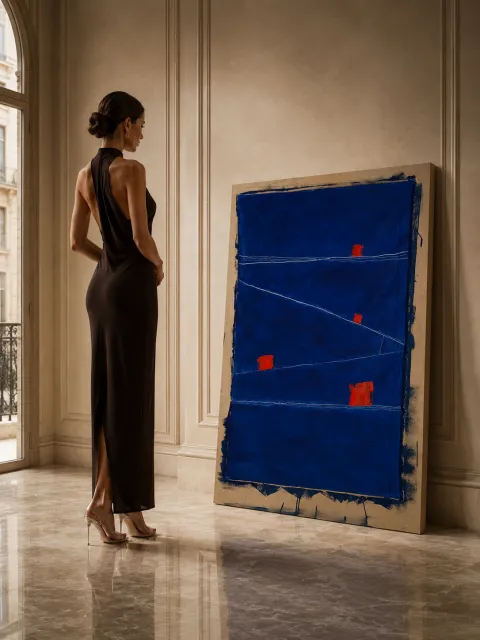
STRATA brings together abstract paintings in which the surface becomes a territory of pressure, cutting and duration. Amid dense chromatic fields, compact blocks and incisions, Maurizio Valch situates memory as a material trace rather than a decipherable narrative. View series
- Orientation
- Vertical
- Context studies
- 12
Conceptual Note
DISPERSA condenses one of the most persistent inquiries in Maurizio Valch's career: the transformation of the canvas into a living territory that records the passage of time and physical action. Integrated into his exploration of matter and memory, this work confronts the viewer with a surface that ceases to be a passive support to become a skin subjected to tensions. By dispersing minimal elements over a dense chromatic field, Valch proposes a dialogue where the individual and the collective, permanence and transit, are physically inscribed in the painting, showing that every consolidated territory always harbors the possibility of its own fracture.
The work raises a fundamental question about how we inhabit and order space in the face of the inevitable dispersion of experience. Through the tension between the incised lines that furrow the canvas and the small suspended blocks, it suggests the existence of an unfinished cartography, a navigational map that does not seek to guide towards a safe destination, but rather to register accidents, pauses, and detours. This layout questions the rigidity of inherited structures—whether conceptual, social, or personal—and proposes that true awareness does not arise from absolute stability, but from accepting the fragility of occupying a provisional place exposed to the forces of the environment.
In this piece, Valch’s critical affinity with Antoni Tàpies is evident in the treatment of the surface as a wall or skin that accumulates scrapes and incisions, moving away from purely flat painting. However, unlike the informalist roughness of Tàpies, Valch introduces a geometric restraint and a linear tension that dialogues with the organized fields of Barnett Newman. While Newman uses his lines to divide absolute fields, Valch's incisions operate subtractively, excavating into the dense matter to reveal the support and sustain small structures that oscillate between architectural block and graphic sign.
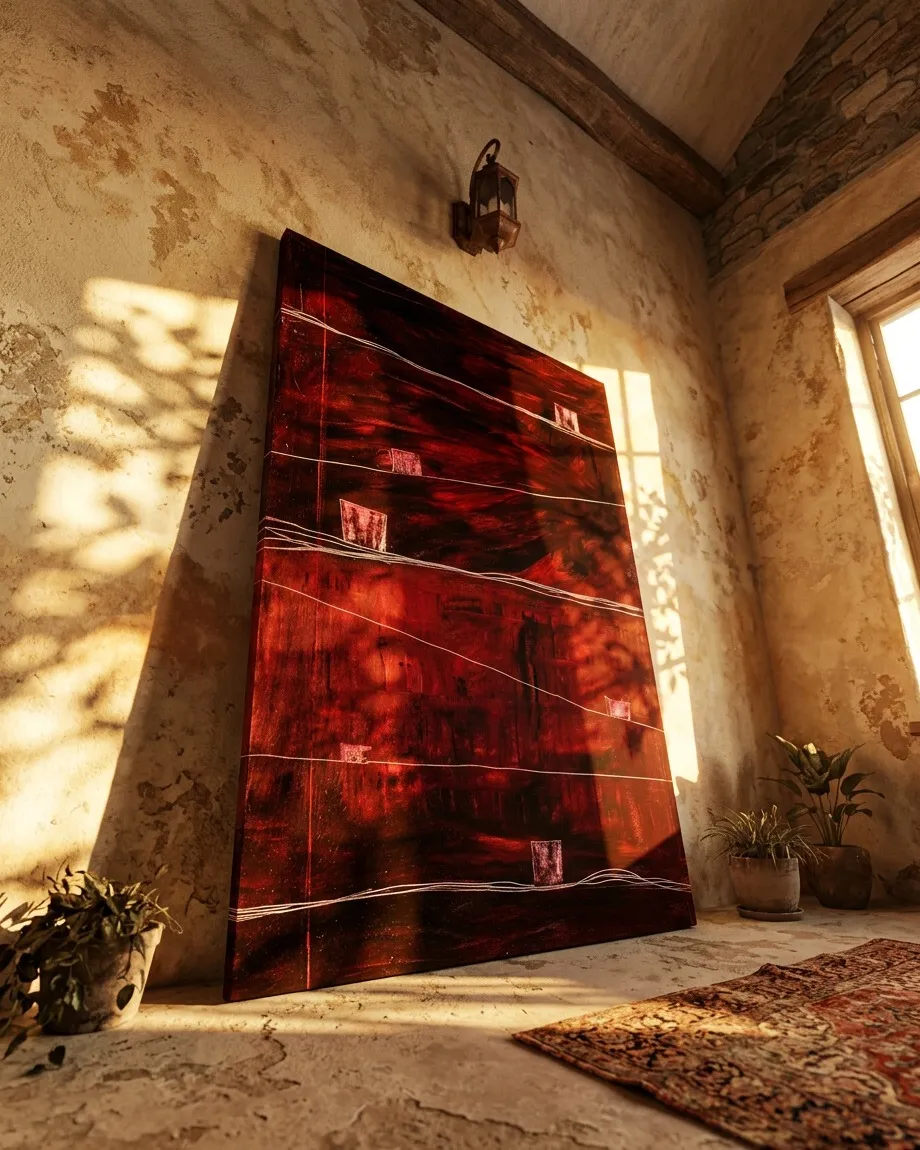
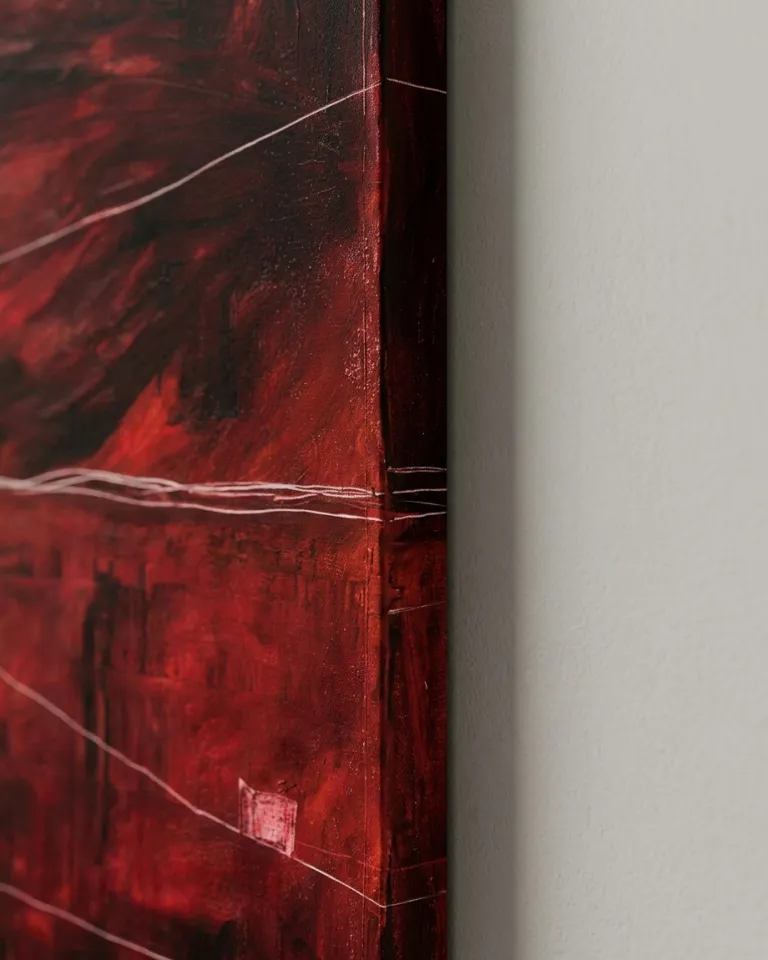
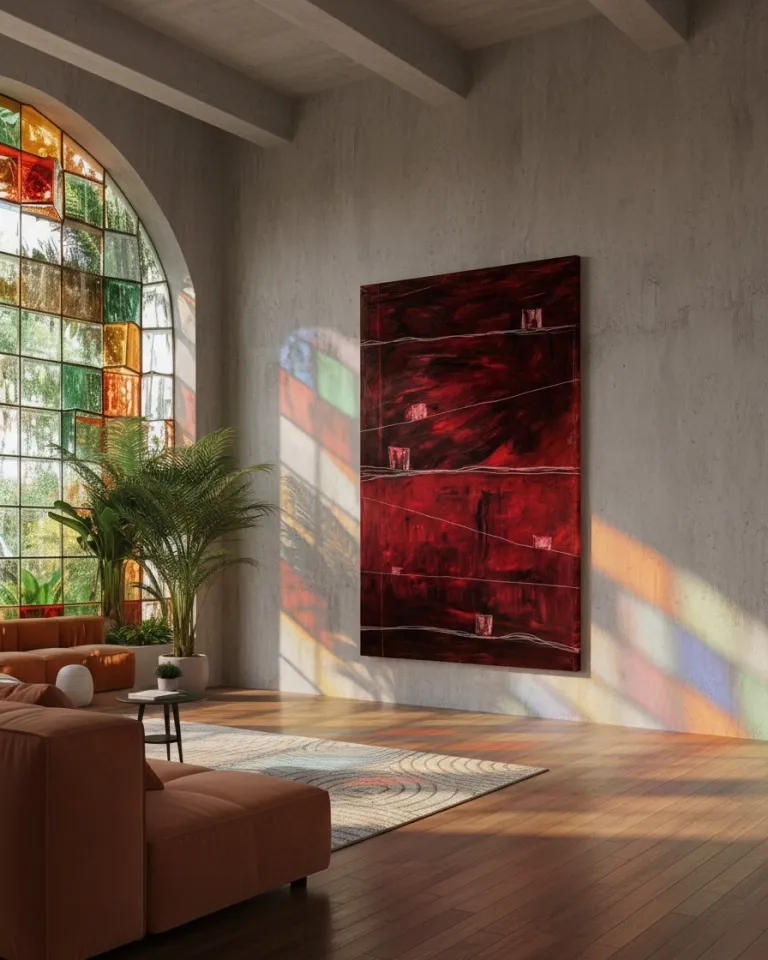
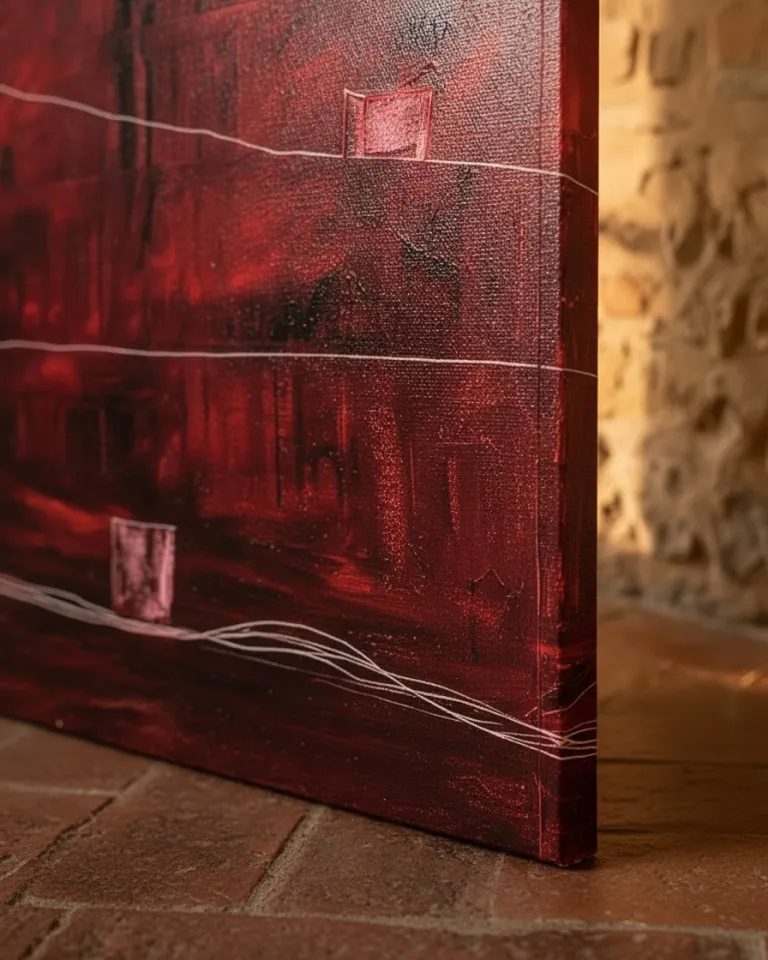
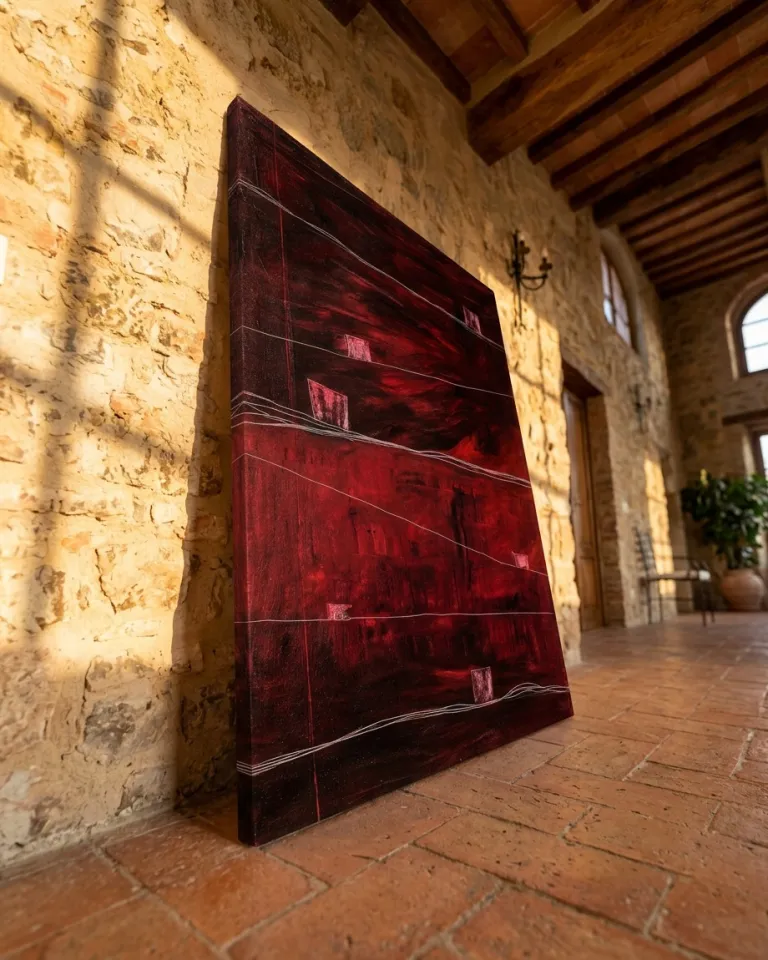
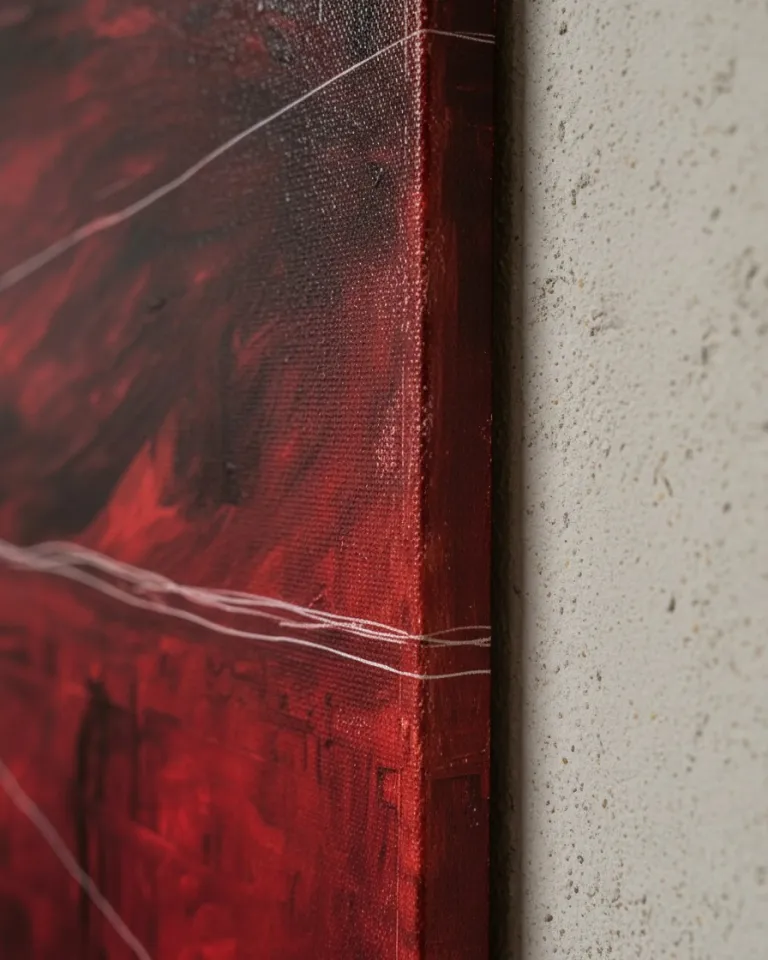
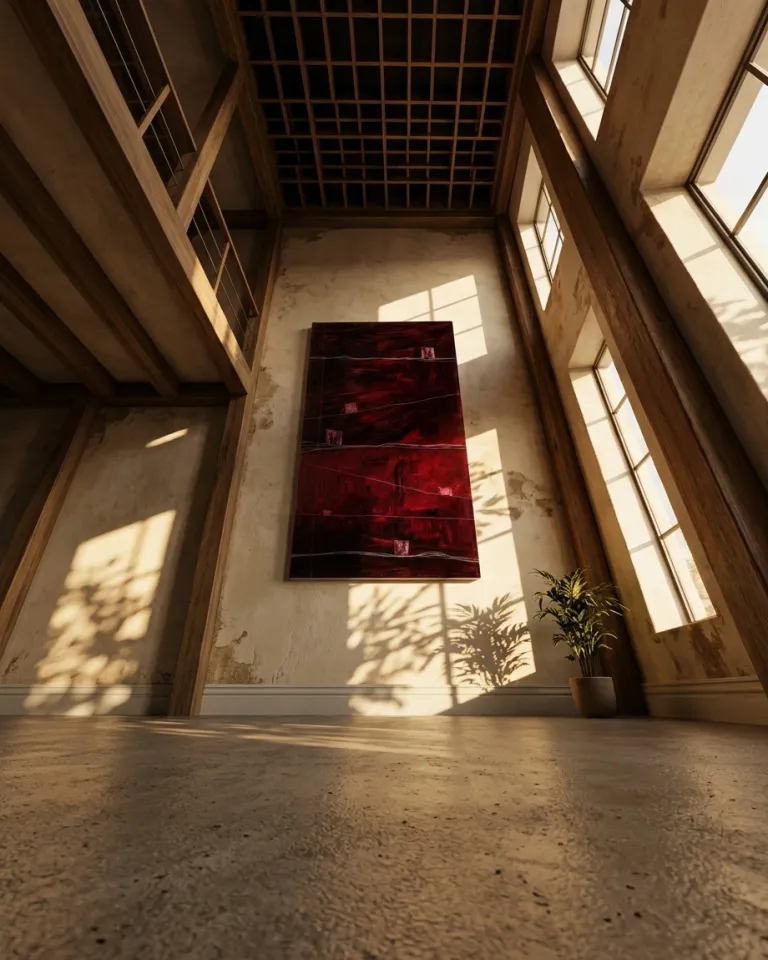
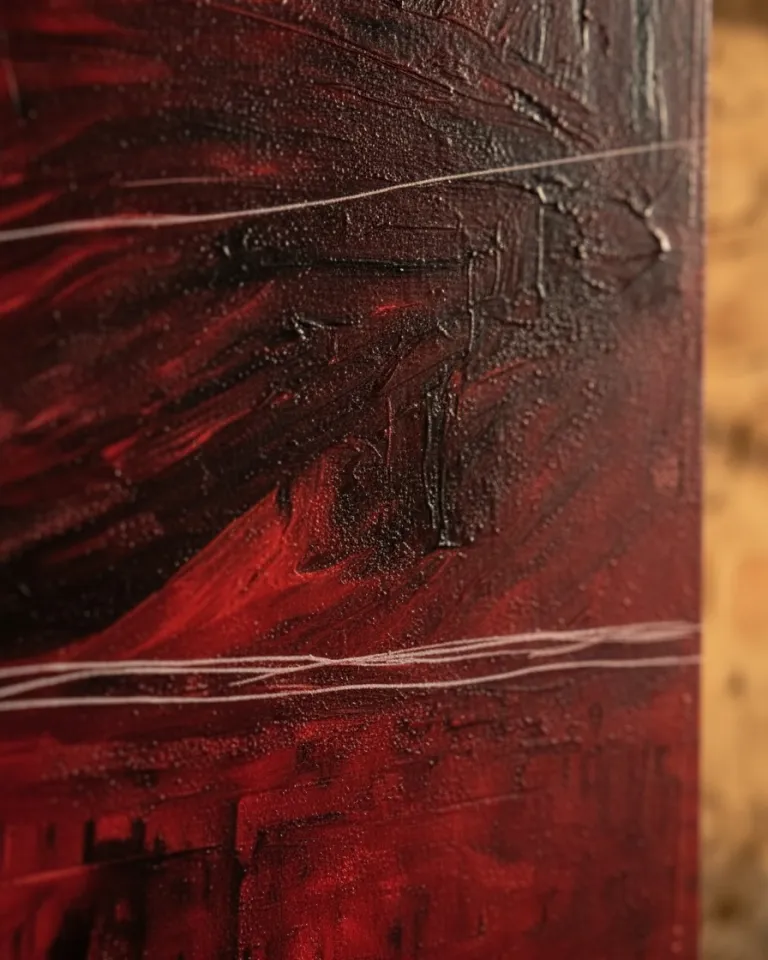
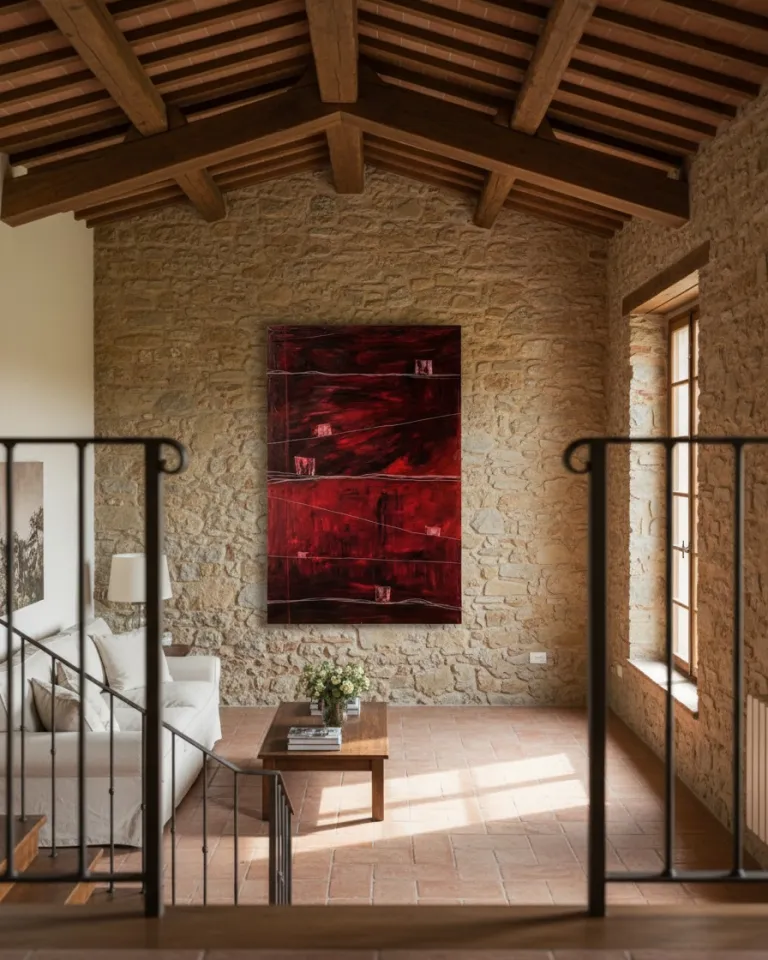
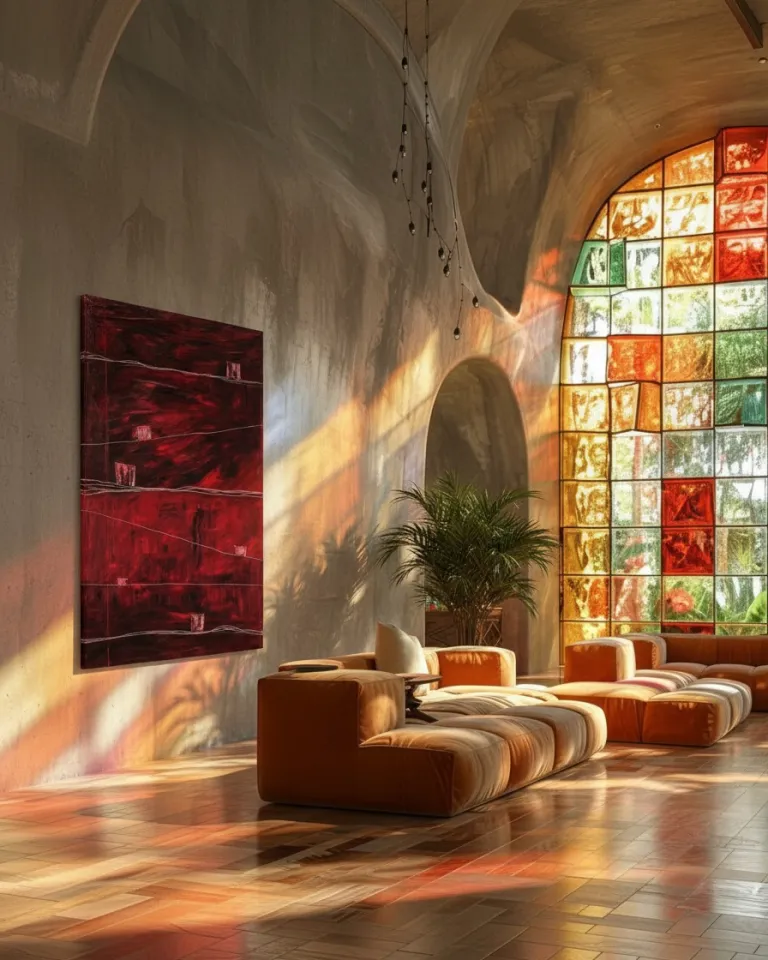
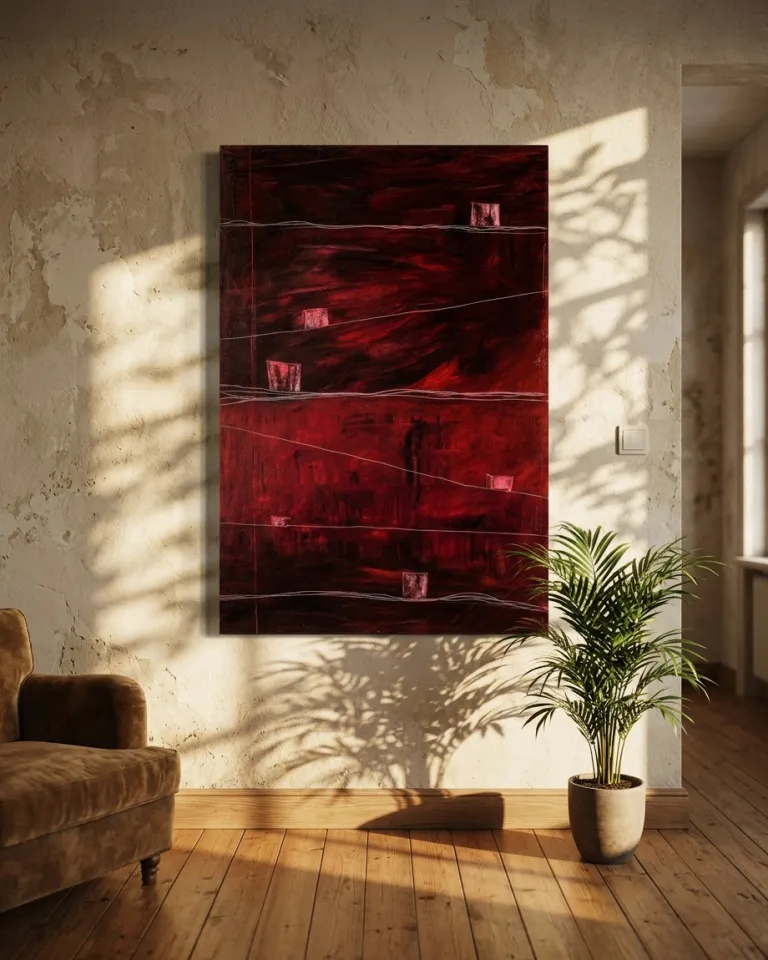
Visually, DISPERSA is organized on a dense and textured crimson field, worked through layers of acrylic and oil that reveal dark areas of accumulation and sedimentation. Several horizontal and slightly diagonal incisions cross the surface; these white lines are not added on top of the paint, but result from a physical scraping that penetrates the strata of pigment. Hanging from these incised marks are small quadrangular blocks with relief texture, distributed irregularly across the plane. This asymmetrical composition deliberately avoids a symmetrical order, generating a rhythm where the voids and distances between forms acquire the same material weight as the visible presences.
By scraping the density of this crimson, I do not seek to add a drawing on top of the canvas, but to remove matter so that light interacts with the relief of the surface. When I place the canvas leaning directly against the floor or the bricks, outside the controlled order of the easel, I assume that the work must defend itself and accept the accidents of its own weight. Each suspended block and each incision represents for me an attempt to understand the resistance of what we inherit and the need to open cracks in that solidity. In the end, returning to the empty studio does not leave me with a sense of loss, but with a cleared space where I can formulate the next question.