



Published work / STRATA
FISSURA
From the STRATA series
- Size
- 47.2 × 31.5 in / 120 × 80 cm
- Series
-
STRATA
 Painting series
STRATA
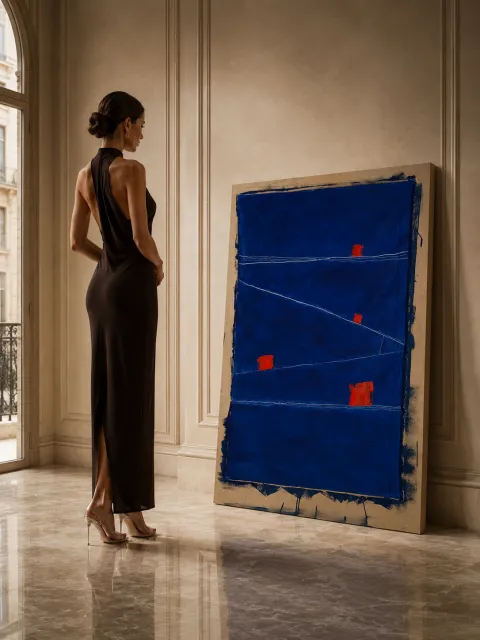
STRATA brings together abstract paintings in which the surface becomes a territory of pressure, cutting and duration. Amid dense chromatic fields, compact blocks and incisions, Maurizio Valch situates memory as a material trace rather than a decipherable narrative. View series
- Context studies
- 14
Conceptual Note
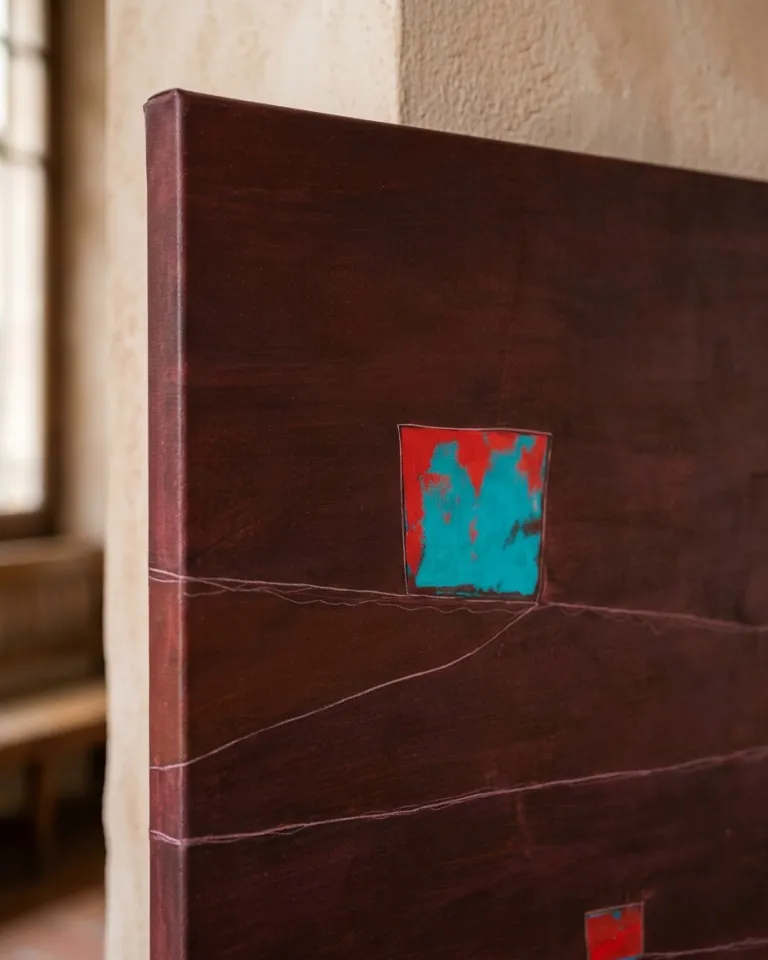
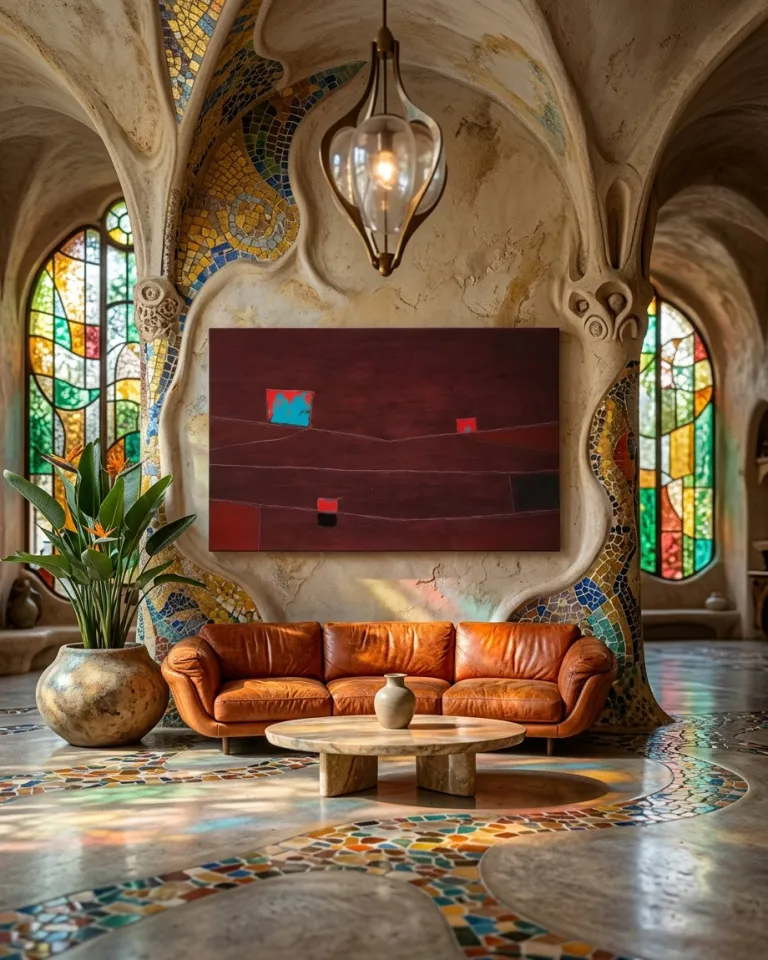
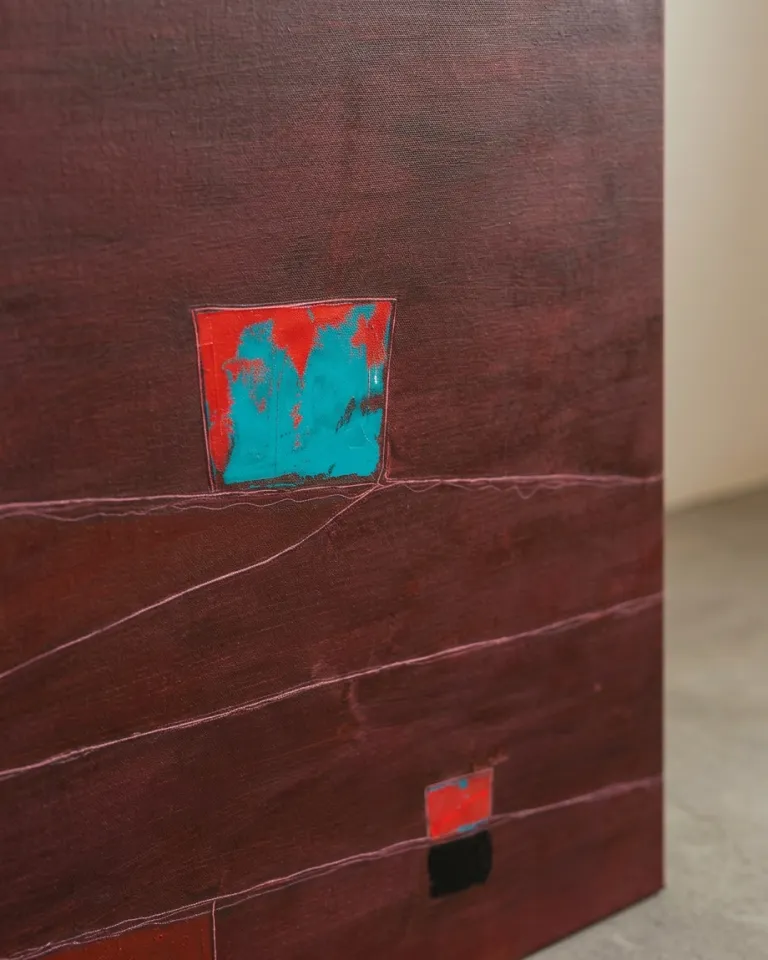
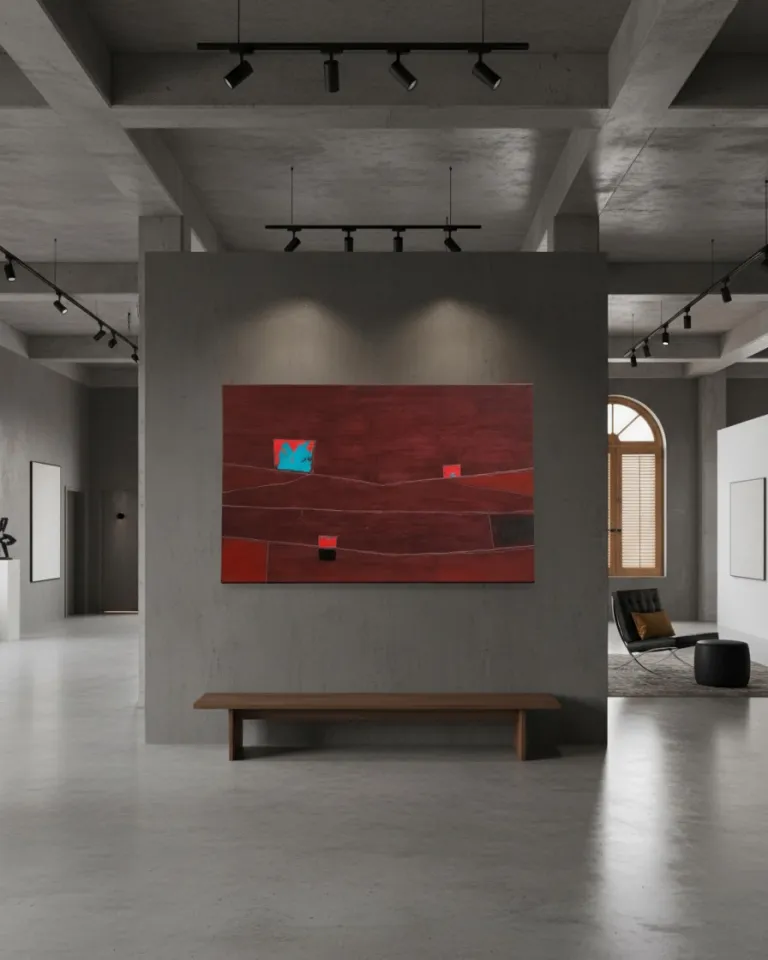
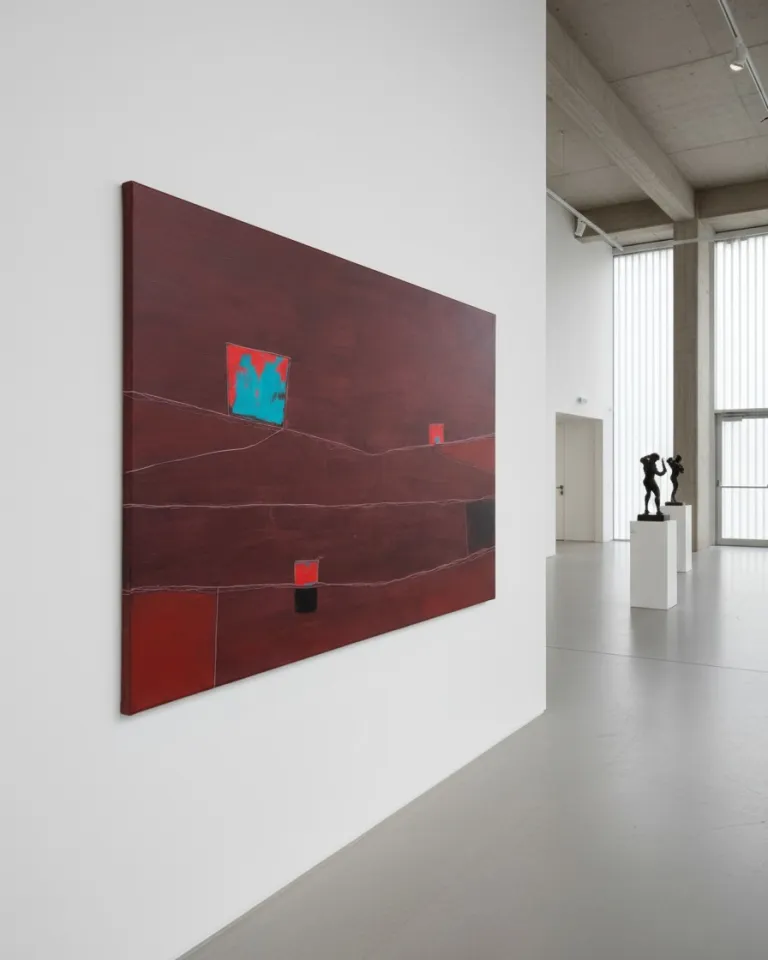
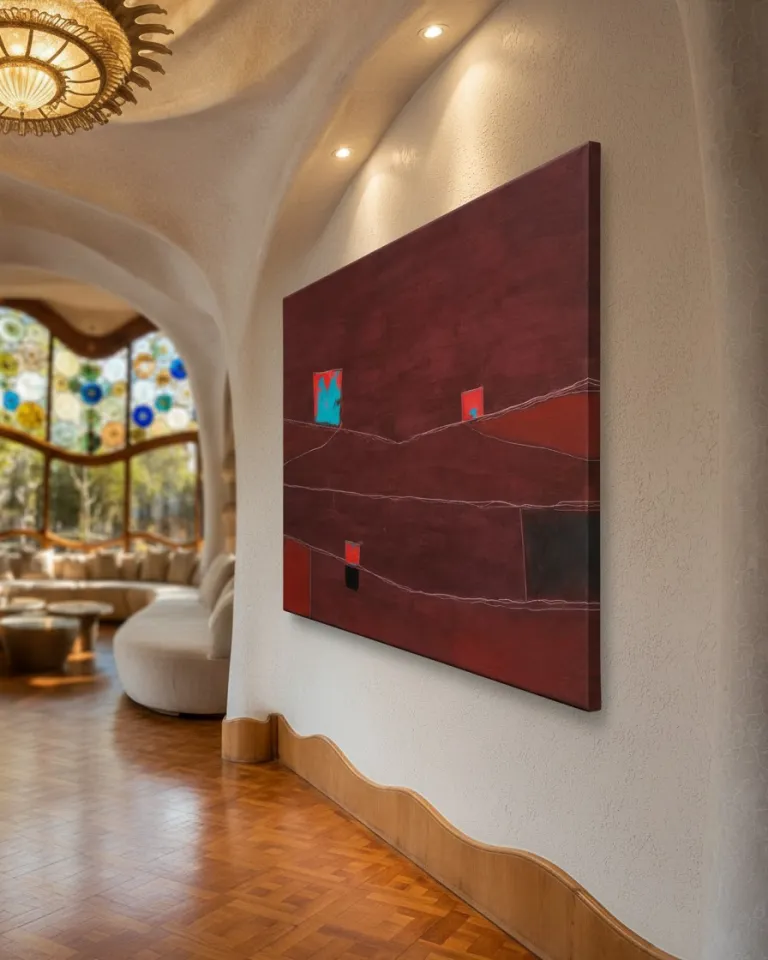
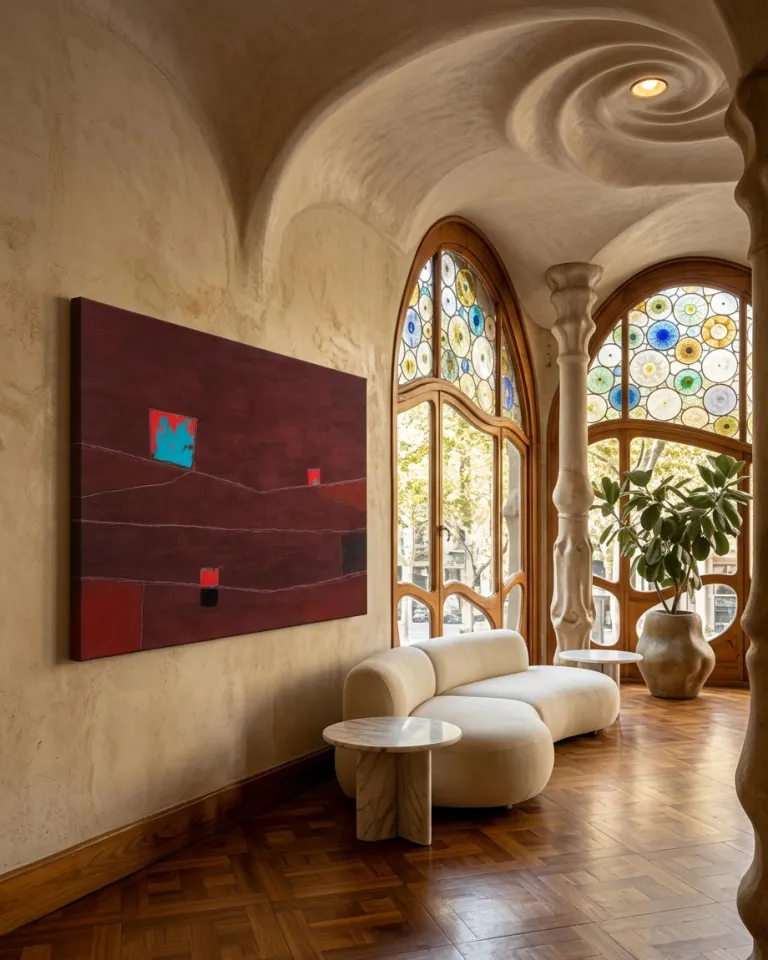
A vast crimson territory, dense and purplish, stretches before the gaze like geological skin or stagnant night over an ancient plain. On this surface of heavy, opaque oil paint, fine incised lines cross the canvas from edge to edge, tracing precarious paths that interrupt the chromatic monotony. They are not mere decorative divisions; they are sutures and scars that tension the plane. In this scenario, belonging is not experienced as secure grounding or pleasant rest, but as a difficult and constant negotiation. The small blocks of saturated color that dot the composition seem to cling urgently to these dividing lines, seeking a foothold on a ground that threatens to fracture. Belonging here is the act of resisting on the edge, an unstable equilibrium where identity is defined by proximity to the limit.
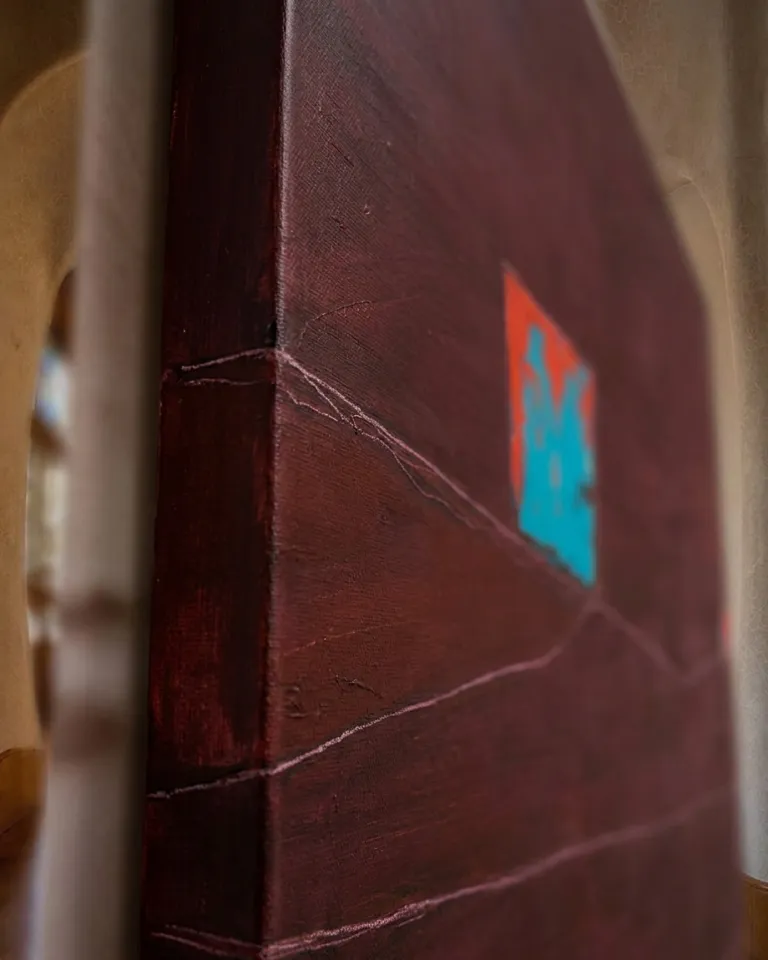
When I sink the palette knife and the stylus into the wet layers of oil, I feel the material resistance of the paint opposing the metal. I do not seek a fluid stroke, but a controlled wound: scraping, cutting, unearthing the sediments that lie hidden beneath the primary crimson surface. This gesture, at once destructive and reconstructive, demands absolute physical trust, devoid of prior certainties. I must trust that the resulting line, though appearing as fragile as a thread, will be strong enough to sustain the visual weight of the plane and open a passable path; a necessary support where pure pigments can settle without dissolving into the void of the dark mass pressing against them.
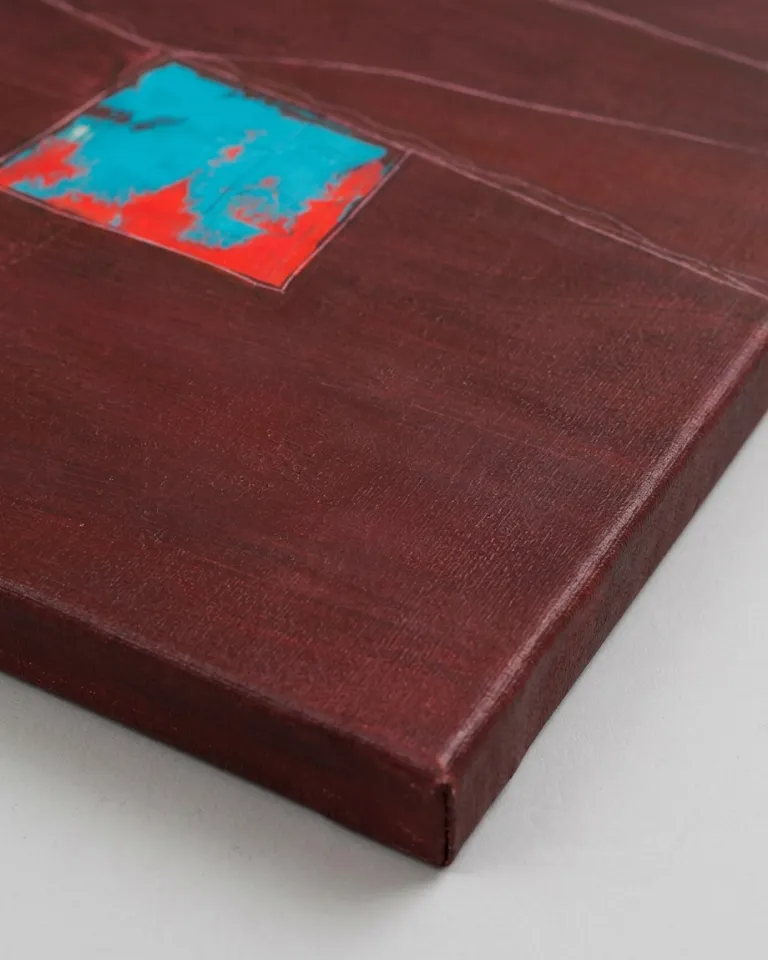
When pausing on the details, the gaze is drawn by the magnetism of the turquoise-blue block bordered with an incandescent red, suspended over the upper incision. These chromatic quadrants act as tiny architectures of protection, though they lack the robustness of traditional fortresses. They are minimal shelters, fragile and exposed to the open weather of the dense background surrounding them. The sharp contrast of the turquoise and the vibration of the burning outline function as a defensive shield; they do not isolate the color from its surroundings, but preserve its internal luminosity against the dark and absorbing tide of the crimson. The painting thus demonstrates that protecting oneself does not imply hiding, but delimiting a space of one's own where the light can resist its own wear.
I conceive my works from the STRATA series as records of a tectonic memory, a passage where the primordial ground emerges, transforming into skin. In structuring FISSURA, my intention was never to offer a landscape of passive contemplation or an idyllic refuge of unbreakable order. For me, belonging is an active experience of the rift. I want these surfaces to reveal that inhabiting a place means accepting its constitutional flaw; understanding that our own history is composed of superimposed layers, exposed scars, and subterranean tensions pushing from the depths to make themselves visible on the surface.
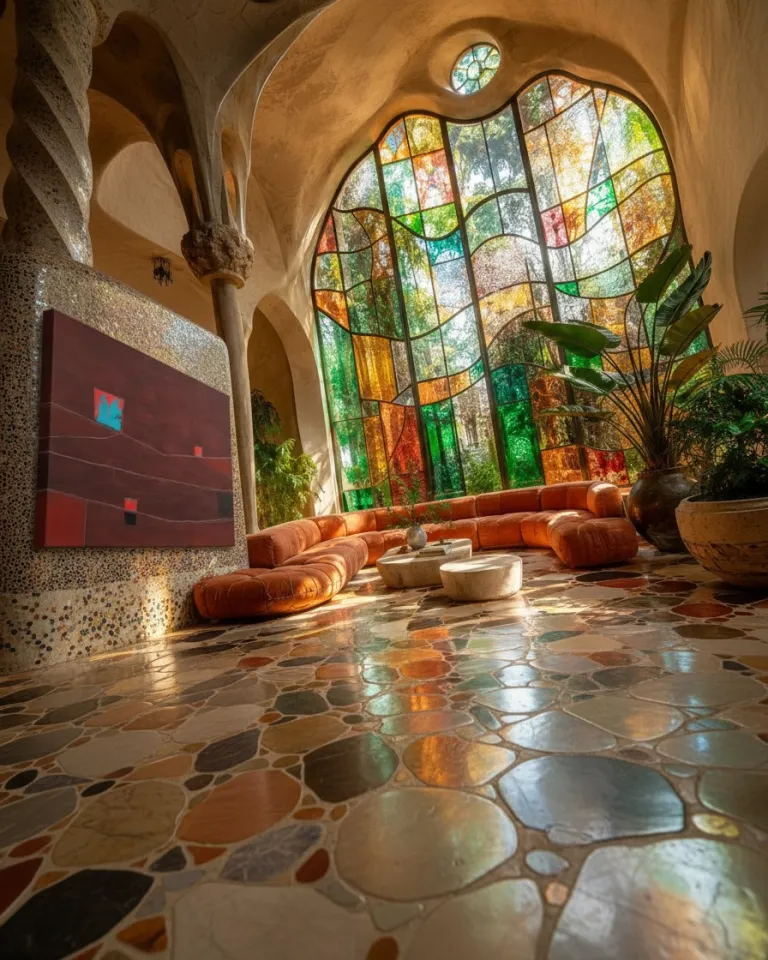
Beyond the two-dimensionality of the plane, the 120-centimeter canvas reveals its physical volume and interacts directly with the light bathing its textured relief. In this spatial dimension, FISSURA articulates its ultimate lesson: true protection does not consist in dodging the fracture or feigning a non-existent solidity, but in having enough trust to settle directly upon the cleft, transforming it into a place of belonging. In the end, the strength of this surface lies in its renunciation of the perfect suture, reminding us that the most persistent beauty is that which dares to show its cuts.