Published work / INCARNATE
A THEORY OF LIGHT AND SHADOWS
From the INCARNATE series
- Size
- 31.5 × 47.2 in / 80 × 120 cm
- Series
-
INCARNATE
 Painting series
INCARNATE
In INCARNATE, Maurizio Valch rethinks the boundaries of representation through layered surfaces, blocks of color, and physical incisions that reject biographical illustration to embody the multiplicity of existence. View series
- Context studies
- 6
Conceptual Note
Fragment I: The Descent of the Absolute
In the silence of the room, two very different gazes linger before the density of the canvas. Novalis was a poet and philosopher who saw in the night the true awakening of the soul, defending that the journey inward is the only way to touch the infinite. Beside him, Baizhang Huaihai was a Zen master who revolutionized monastic life by teaching that enlightenment hides in everyday labor and in the silence of a mind stripped of concepts.
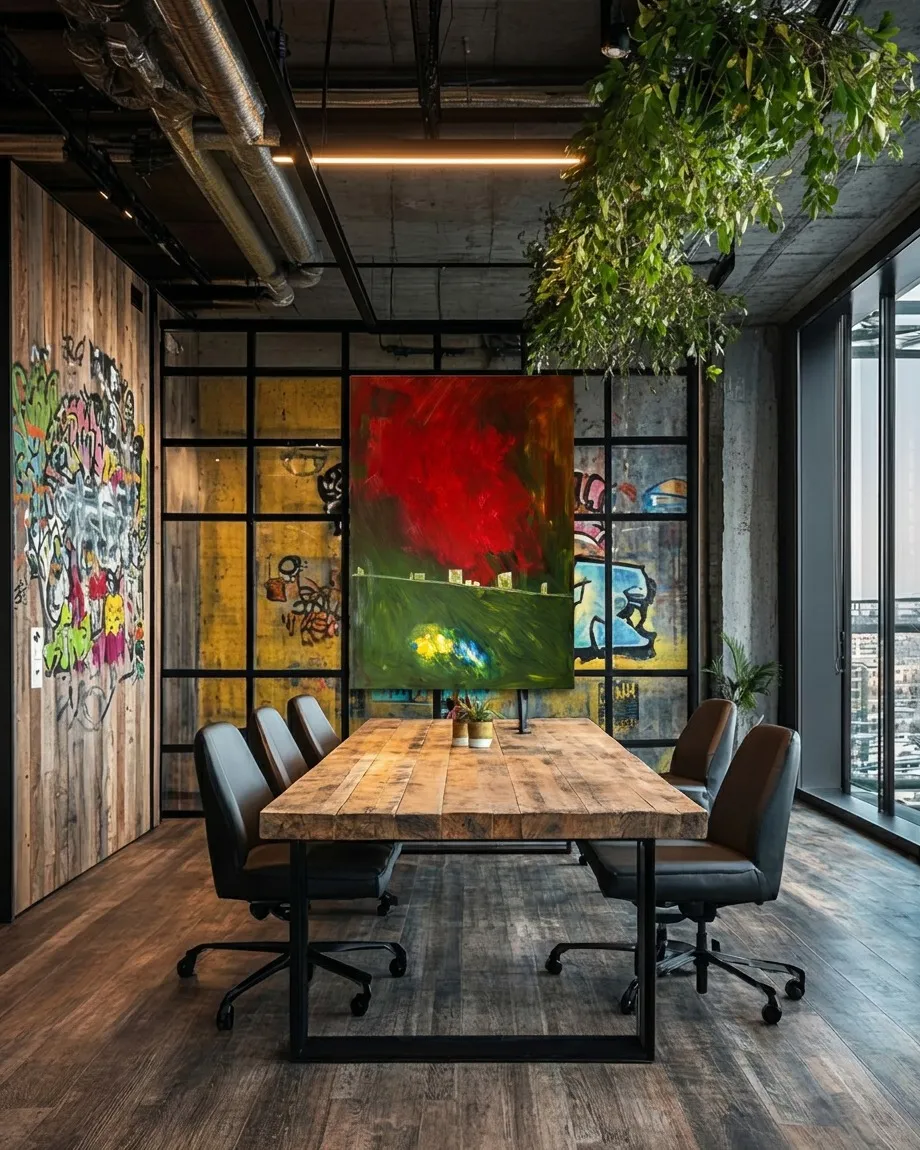
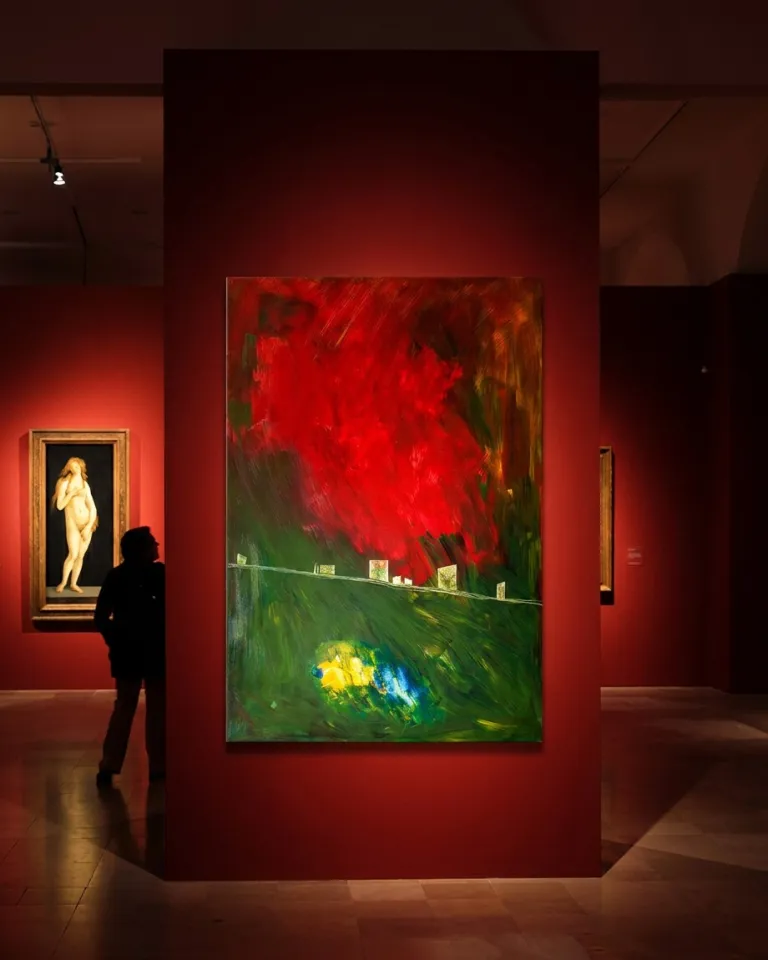
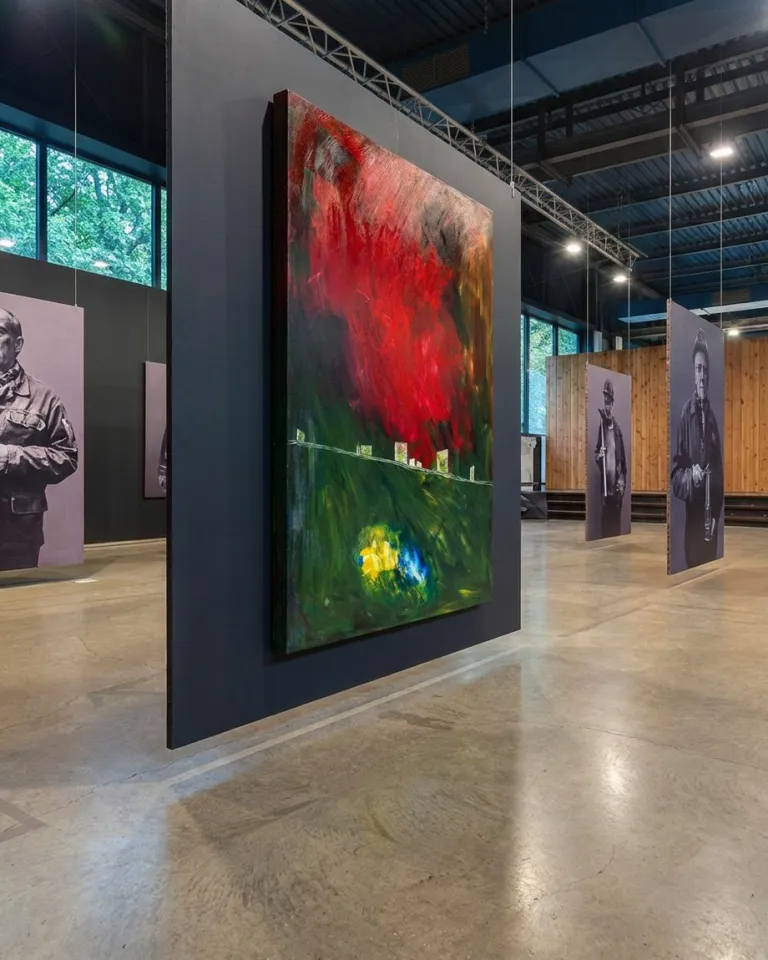
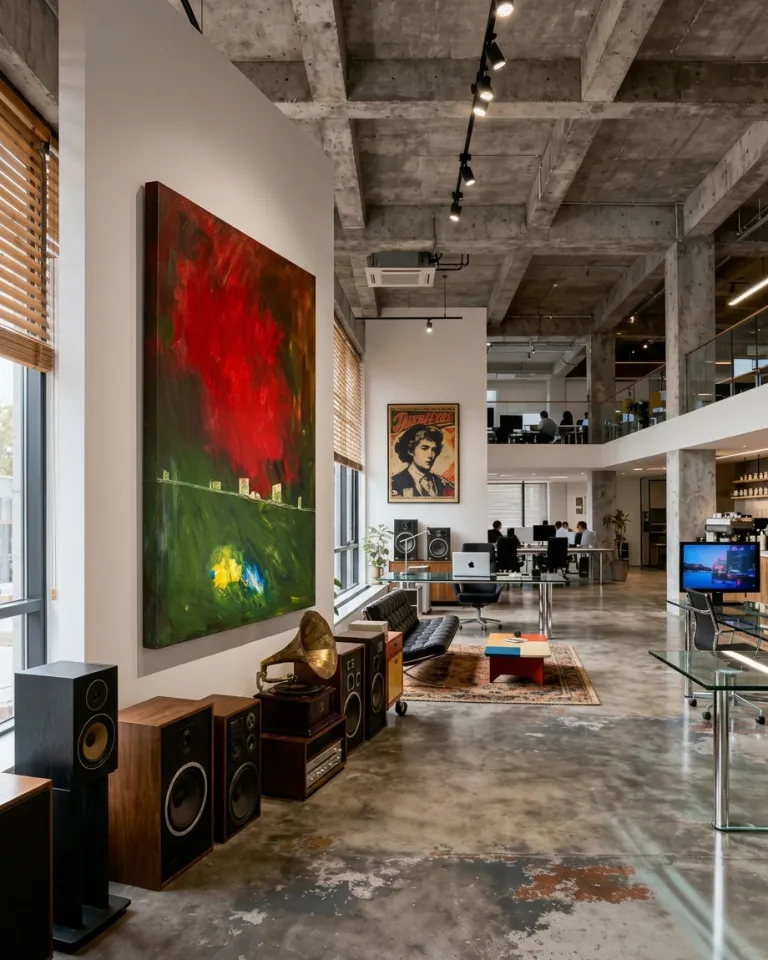
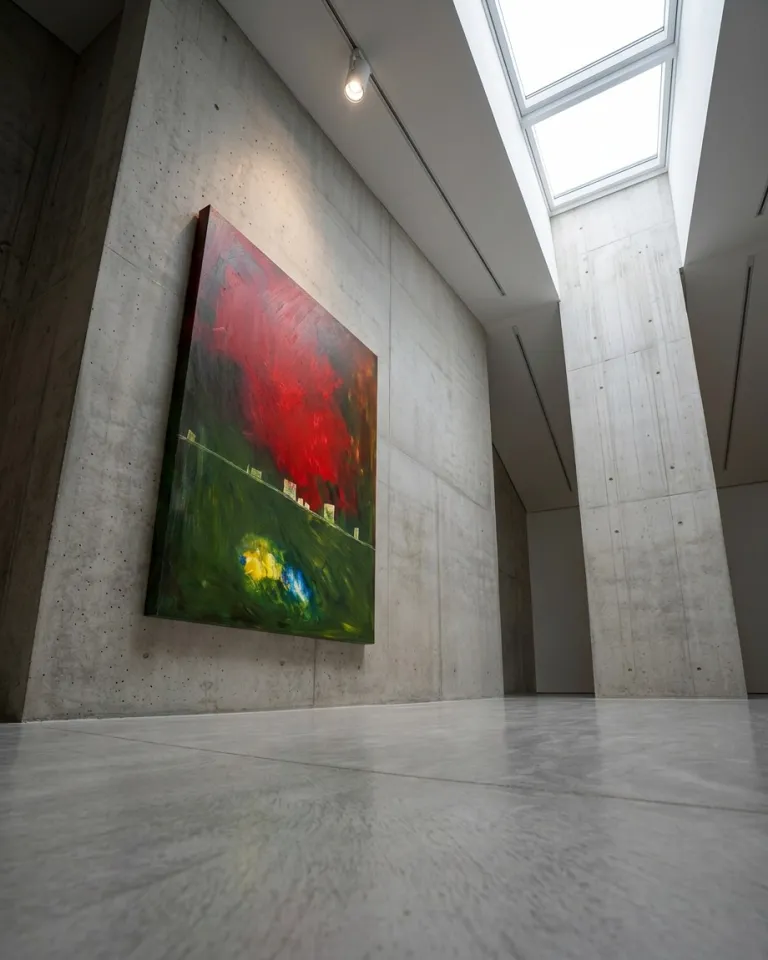
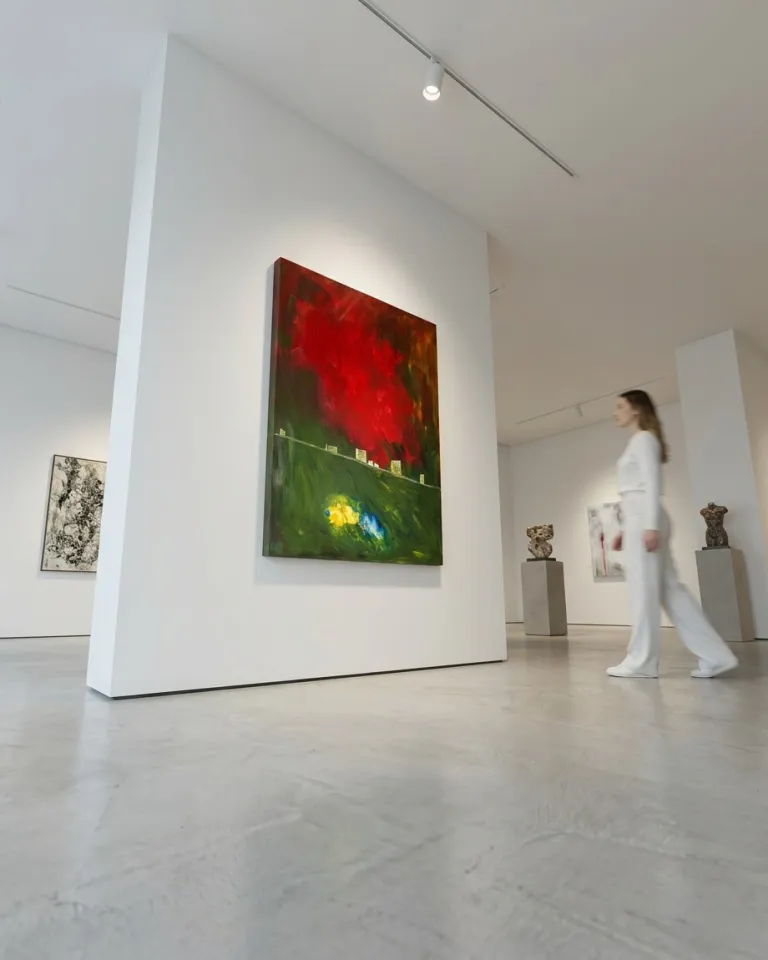
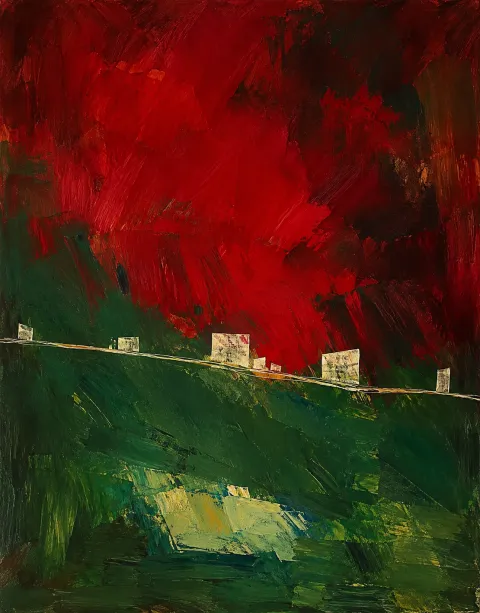
For the young Romantic, the immense red mass gravitating in the upper section is a sacred wound: the burning yearning of the spirit seeking incarnation in matter, a celestial fire pressing against the air with the urgency of that which must exist. The Zen master, on the other hand, does not even look up. He stands with his hands folded beneath his sleeves, breathing in the weight of the somber green. For Baizhang, the true miracle of the work does not lie in the drama of its color, but in the silent fact that the canvas sustains its own presence without demanding anything, existing in a stillness that requires no explanations to balance the universe.
Fragment II: Doubt in the Palette Knife
I can still feel in my wrist the resistance of the green acrylic as I dragged it with the palette knife, carving furrows into the canvas like someone plowing a field in the middle of the night. But then the red oil paint burst into the upper half. It was an intolerable invasion, a dense, oily weight that threatened to devour the structure I was seeking to build. While painting, I was struck by a suspicion that completely disassembled the conceptual framework of my INCARNATA series: am I the one deciding the physiognomy of this being upon the canvas, or is the paint itself dictating which parts of my own intimacy must remain buried under successive glazes? Every scratch in the green was an attempt to bring something to light; every layer of red, a capitulation to that which insists on remaining hidden.
Fragment III: The Boundary of Silent Witnesses
Between the red storm and the green gloom stretches a very fine line, a tense wire from which hang small, pale squares that seem to float in the void. Novalis leans toward them, fascinated by their fragility: in those small shapes, he sees the remnants of our fragmented identities, small sanctuaries of memory that human beings hastily build to shield ourselves from the immensity of the cosmos. For him, they are proof that the soul always seeks a limit to cling to.
Baizhang, however, observes the same line with unshakeable calm. Gently, he disarms the poet's anguish with a clean question: "What happens to your own pain when you stop calling those small blocks of light 'masks' or 'houses'? If you do not give them a name, are they still separate from the rest of space?"
Fragment IV: The Bioluminescent Nest
That patch of yellow and electric blue pulsing below, in the deepest part of the green, was never in my plans. It was not the result of an intellectual decision, but an accident of the palette knife: a residue of paint that resisted being covered, an imperfection that refused to disappear beneath the shadow. Seeing it there, so unprotected and yet so alive, I thought of the simplicity of my days in the studio, of the quiet walking of my dogs through the workshop, and of my deep distrust toward the constant chatter of the mind. That light does not want to prove anything; it is neither the fire of heaven nor the boundary of thought. It is, simply, the rest of the being before we begin to interpret it. A corner where matter rests from itself.
Fragment V: The Unfinished Theorem
Before the canvas, the mystic of everyday action and the seeker of the nightly mystery end up meeting in a territory where words are no longer needed. There is no easy reconciliation between the upper fire and the calm of the lower abyss; both understand that the painting does not offer an answer, but a suspended tension held in the air of the room. As they contemplate the work, one final, childlike doubt remains floating in space: why does that small yellow light at the bottom, so pure and concentrated, not rise to extinguish the fire above once and for all? It is in this unbridgeable distance that the secret law of matter operates: that all search for clarity is nothing more than a subtle attempt to give meaning to that which we decide to keep in the dark.