


Published work / LIMINA
ADITUS
A territory of levels, signals, and uncertain access.
- Medium
- Pintura
- Size
- 31.5 × 47.2 in / 80 × 120 cm
- Series
-
LIMINA
 Painting series
LIMINA
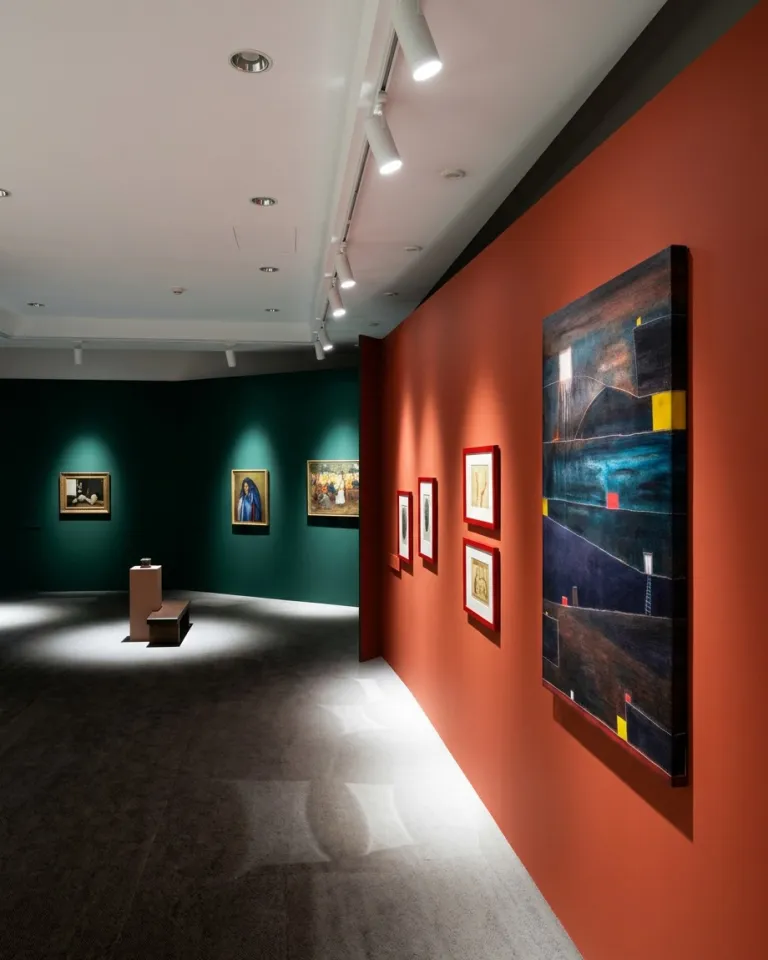
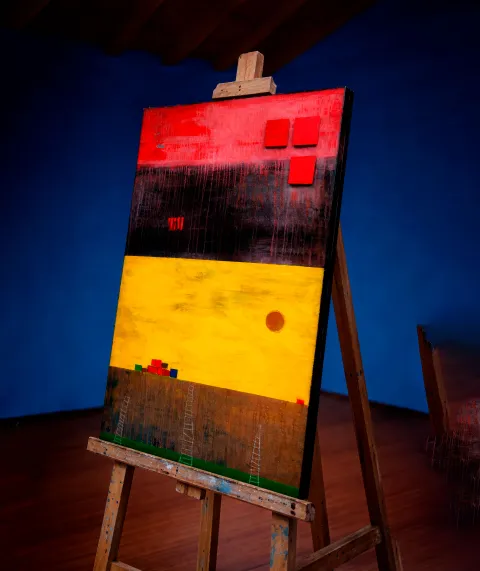
In LIMINA, Maurizio Valch constructs territories of transit through superimposed planes, contained horizons, unstable enclosures, and suspended forms. The painting sustains an elemental architecture while seepage, drips, and incisions introduce a mobility that prevents any definitive orientation. View series
- Orientation
- Vertical
- Context studies
- 13
Conceptual Note
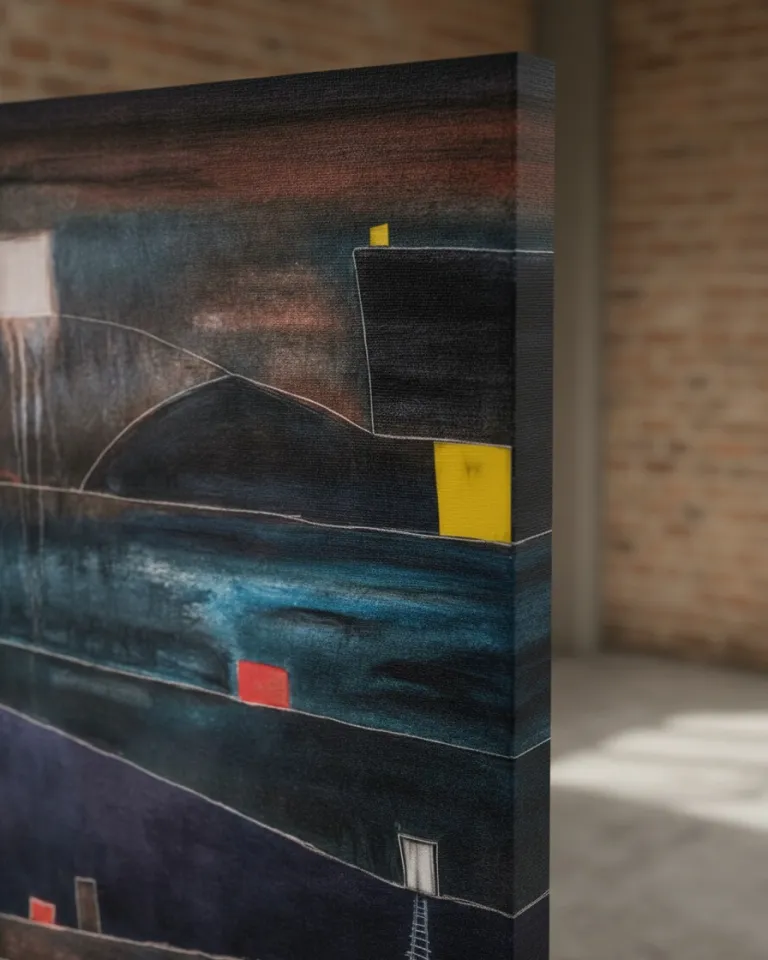
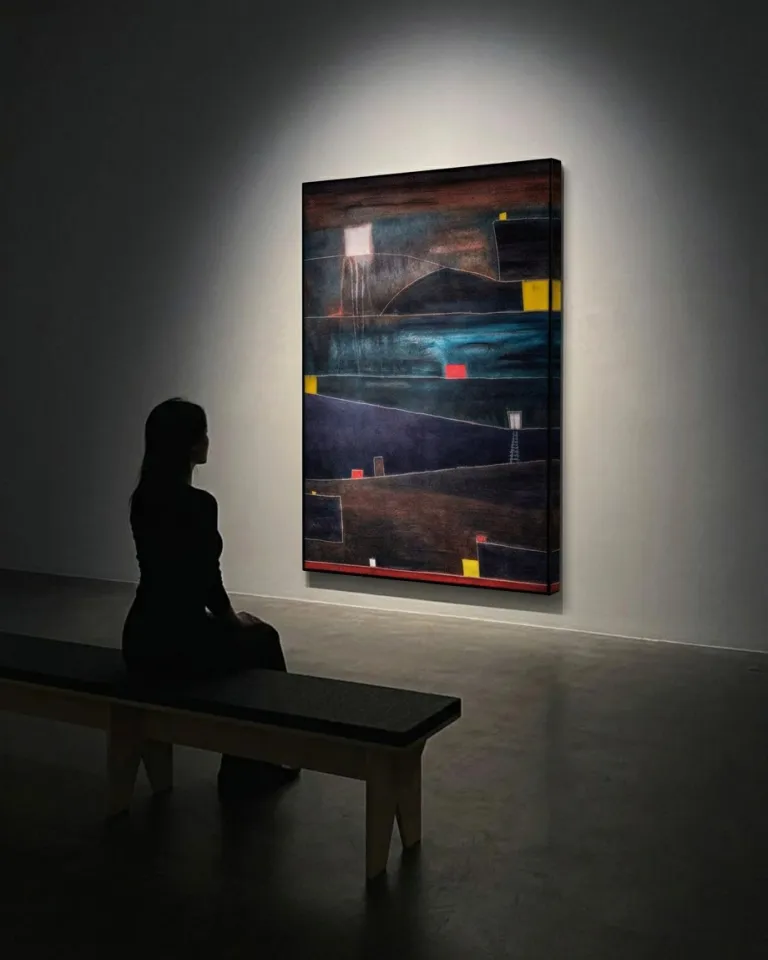
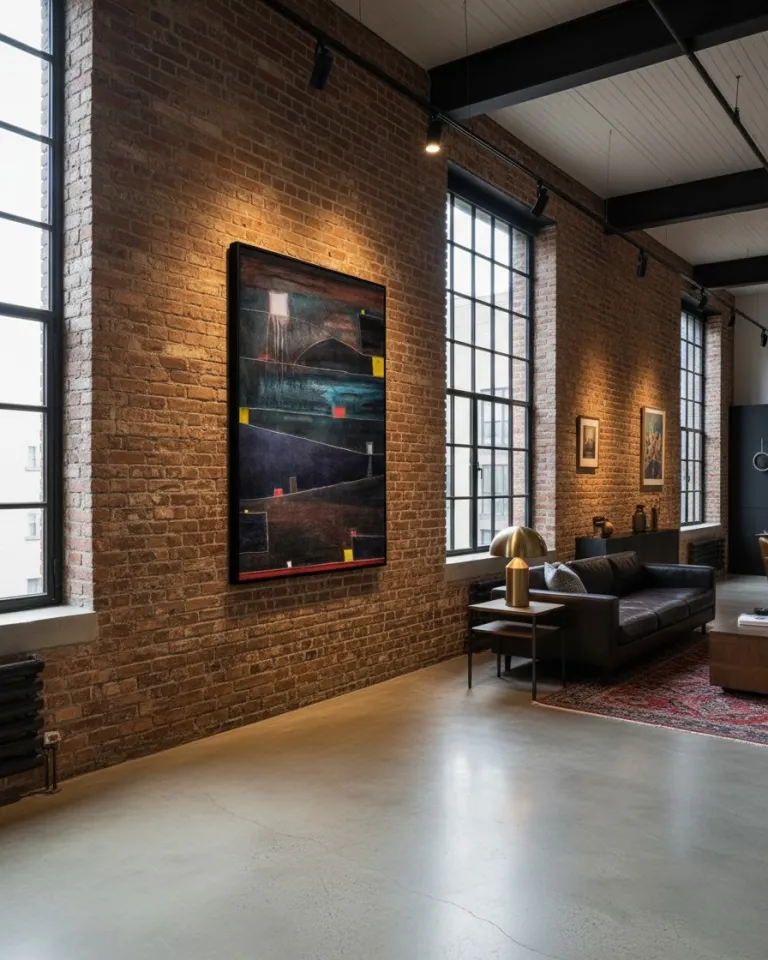
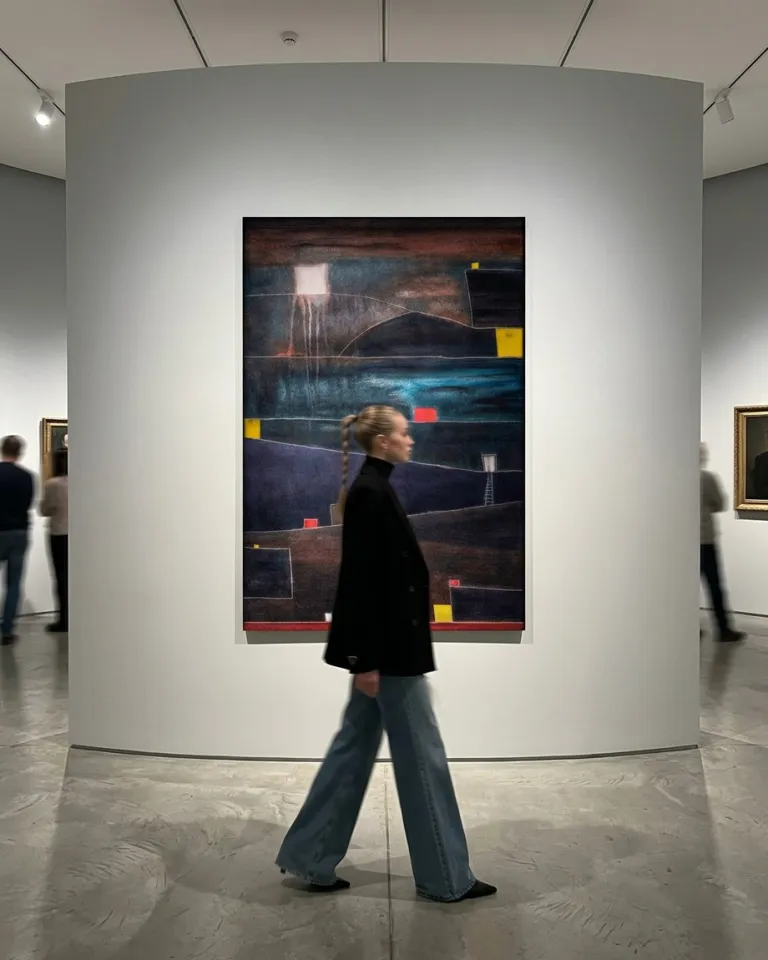
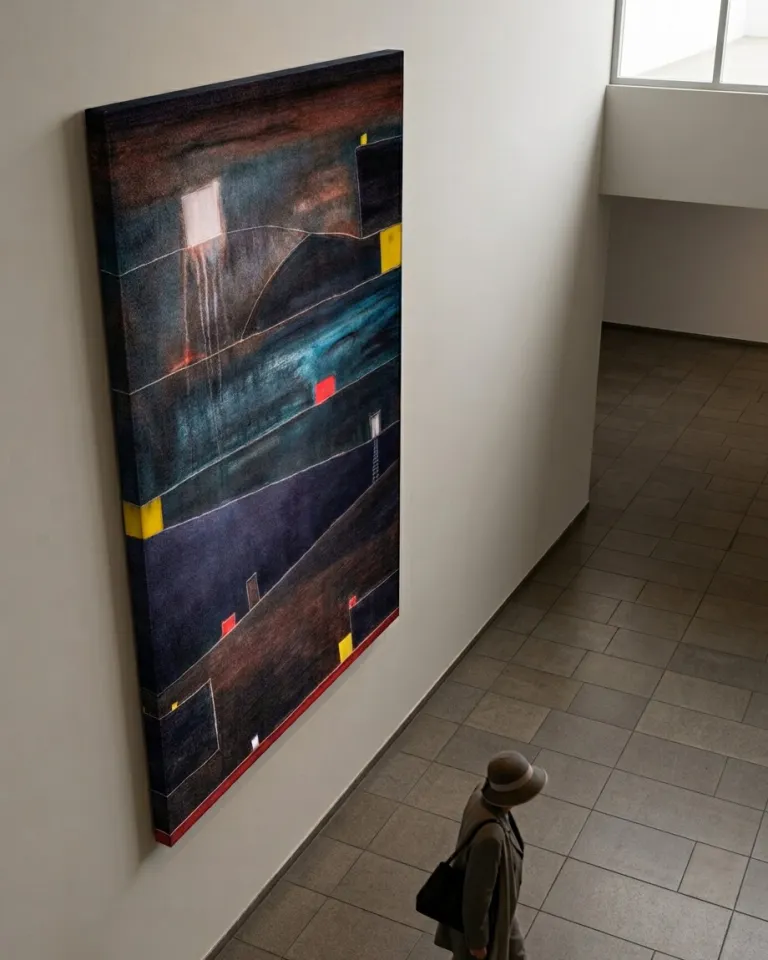
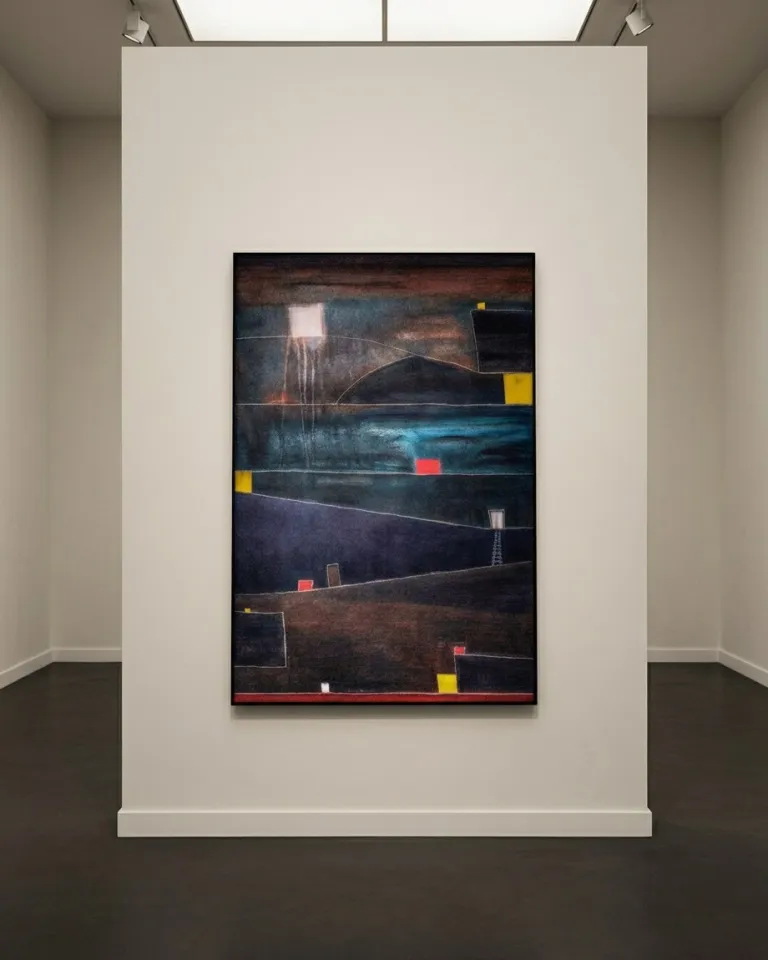
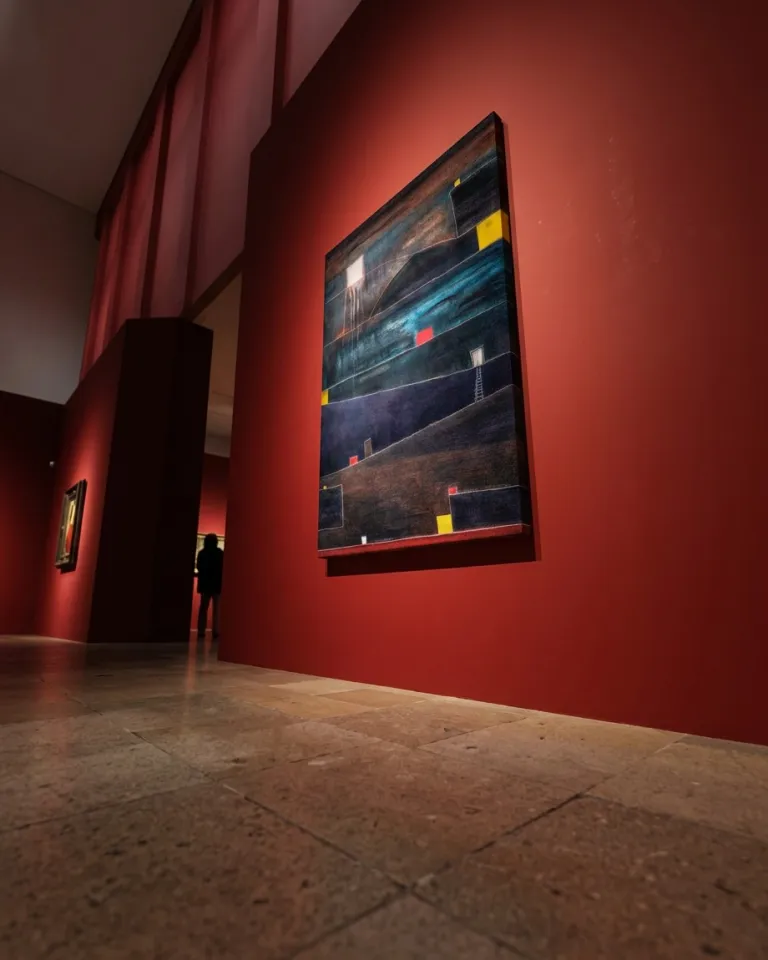
ADITUS, a Latin title referring to entry or access, places LIMINA’s question in a particularly precise position: not before a destination, but before the uncertain conditions of reaching it. Maurizio Valch organizes the canvas as a territory distributed across bands and levels that retain a constructive logic without becoming recognizable architecture. Small luminous rectangles, an empty frame, and a barely delineated staircase interrupt the dark expanse; they suggest possible passages, but none is assured.
The work sustains a paradox: there are divisions, edges, and signs enough to find one’s bearings, yet each seems to displace orientation elsewhere. The staircase rises to a tiny, isolated threshold; the red, yellow, and white forms take on the intensity of signals within a vast field, but offer no instruction. Here, access may mean approaching, pausing, or discovering that every entrance also entails separation. In this way, the outer territory begins to touch an inner experience of distance and searching, without being reduced to it.
A specific affinity with Paul Klee may be perceived in the function of these small forms as signs and measures of scale within a broad space. In Valch, however, they do not produce a light architecture or a playful system: they remain subject to a denser, eroded, nocturnal atmosphere. The surface, worked through layers, seepage, and incised lines, also brings his work critically close to Antoni Tàpies’s idea of wall or skin, although here this materiality remains contained within a territorial structure of unstable horizons.
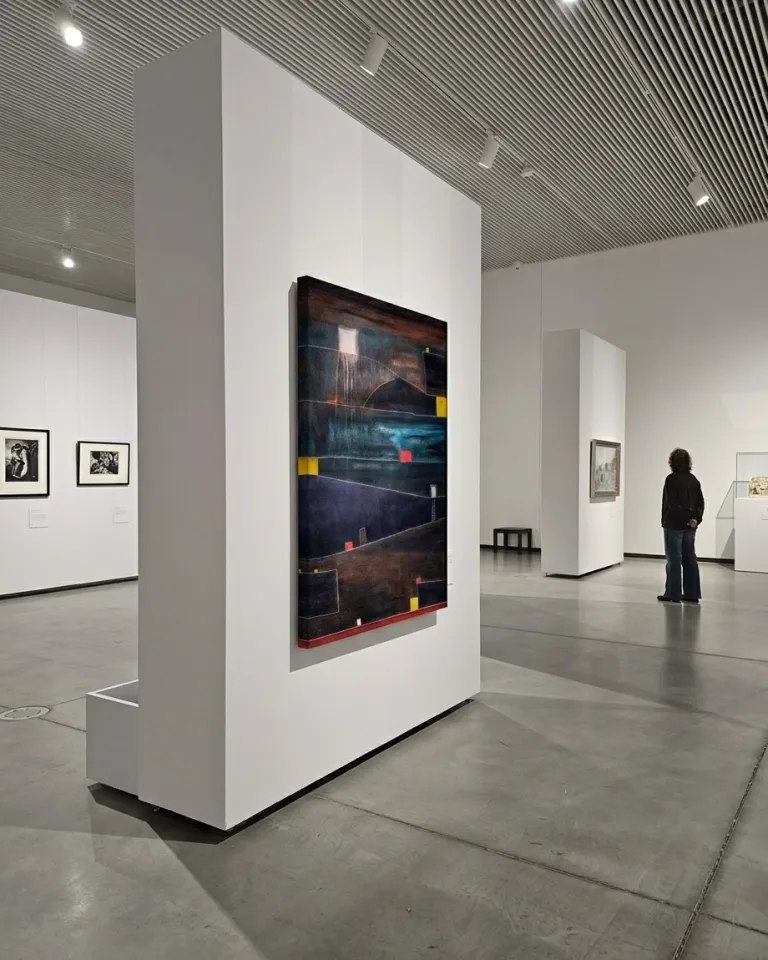
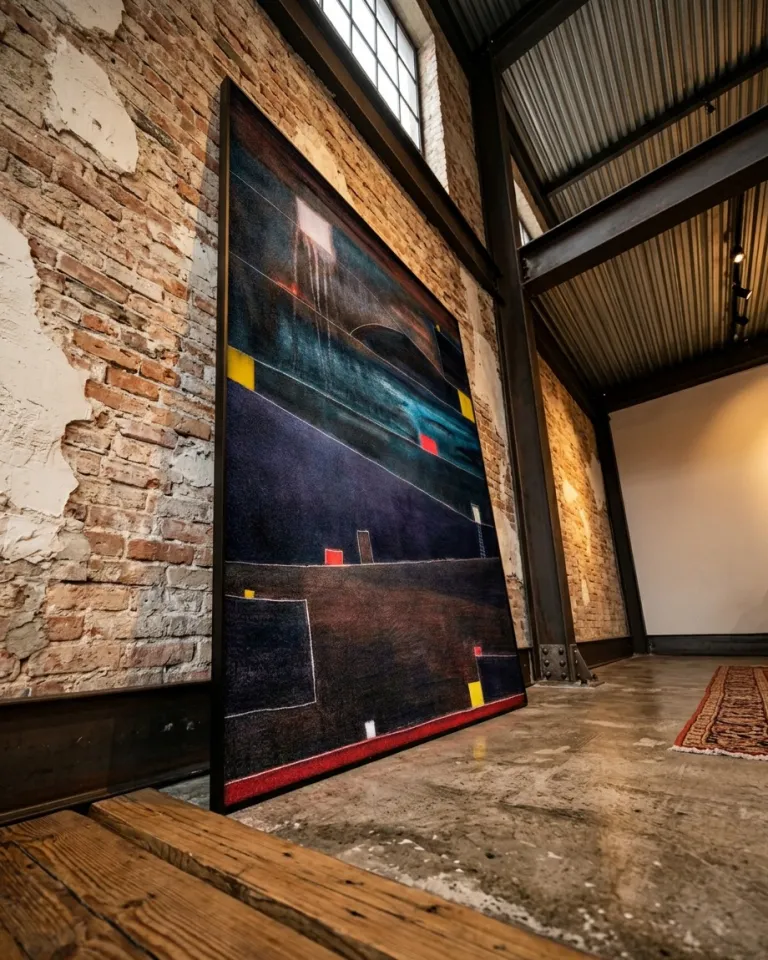
A turquoise band crosses the centre with a compressed, watery luminosity, set between fields of near-black violet, rust, and dark earth. Above it, a fine arch traces a curve that never closes off an enclosure. In the upper section, a pale form releases vertical glazes; below, light lines separate slanting strata and lead the eye towards the small staircase. The incised contours and drips do not decorate the order: they make it vulnerable, as though the pigment were slowly altering the boundaries that contain it.
I am not interested in a staircase guaranteeing ascent, nor in a rectangle becoming definitively a door. I need these forms to remain at the edge of their meaning, as presences that propose a direction without mastering it. I paint territories where something appears capable of being crossed, even though we do not yet know what permits passage or what lies on the other side. Perhaps painting consists in remaining a little longer before that uncertainty, without rushing to turn it into an explanation.