

Published work / MARE SOMNIORUM
VIA SOLIS
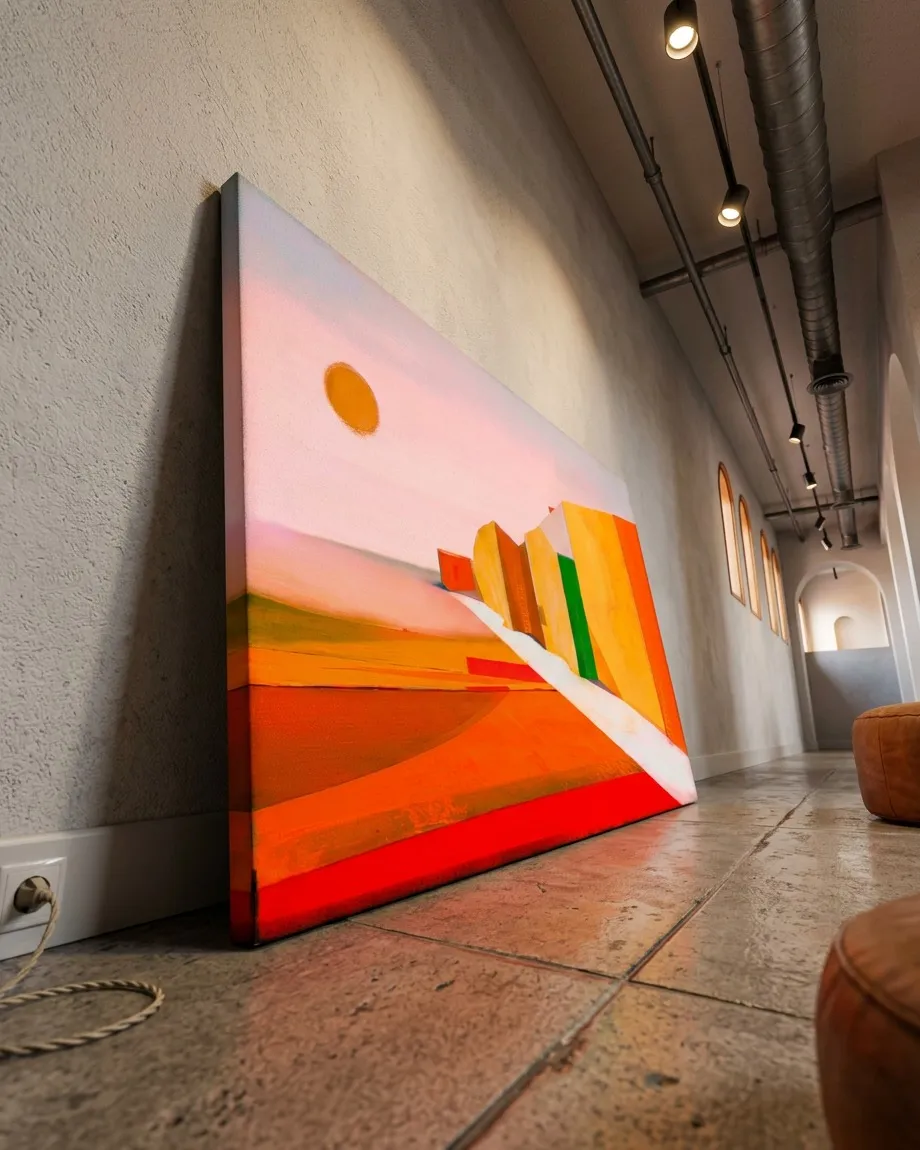
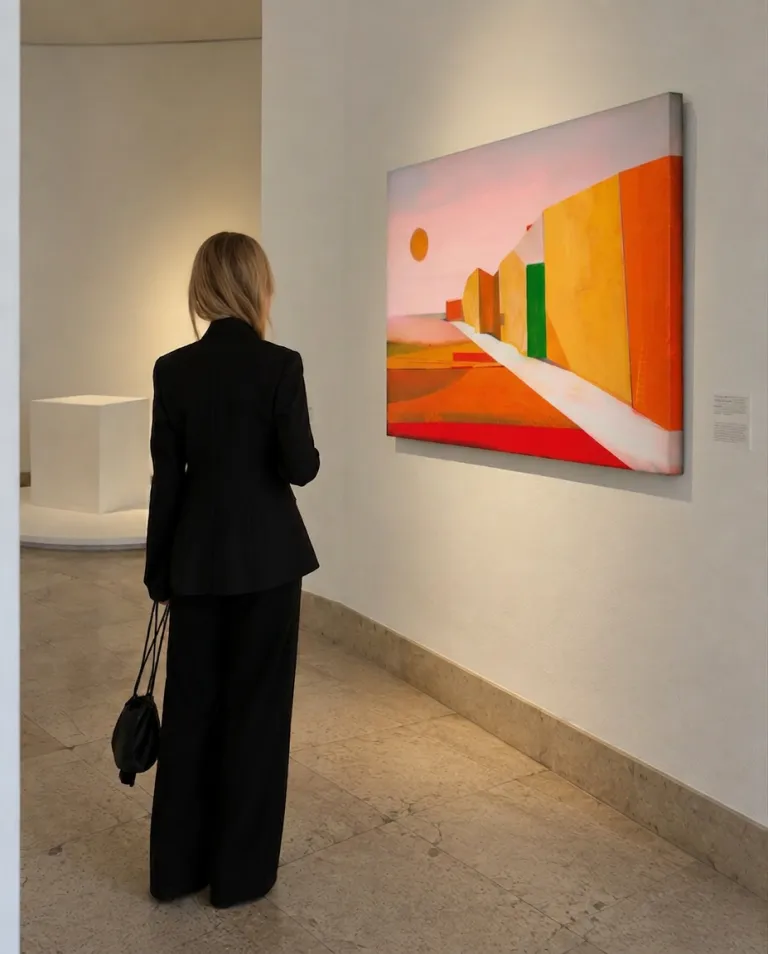
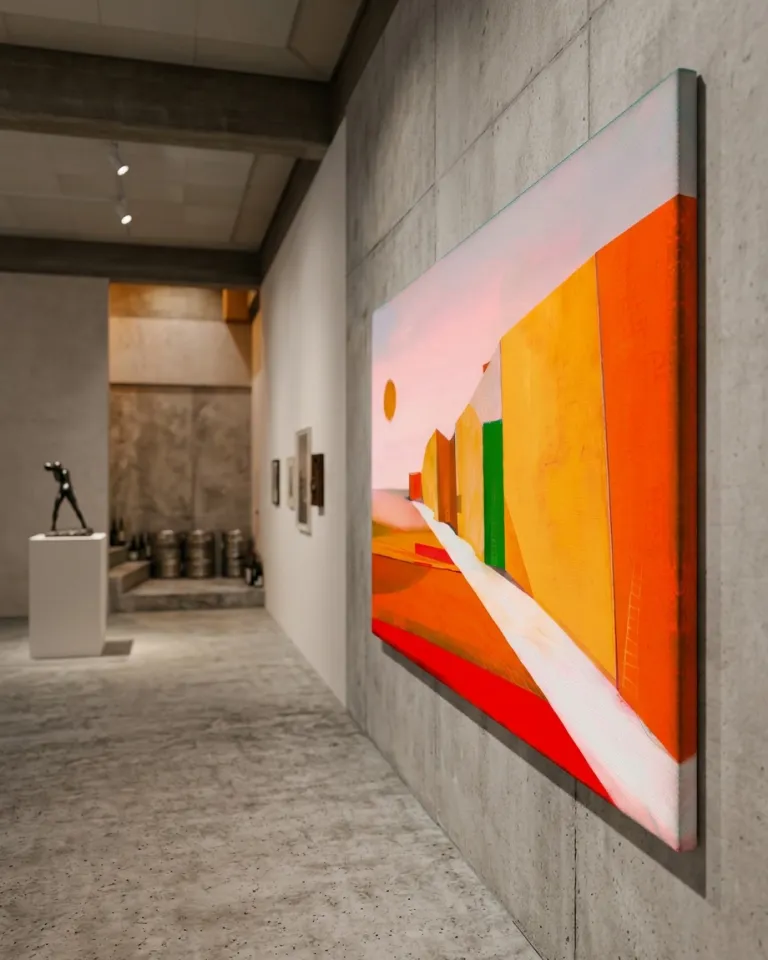
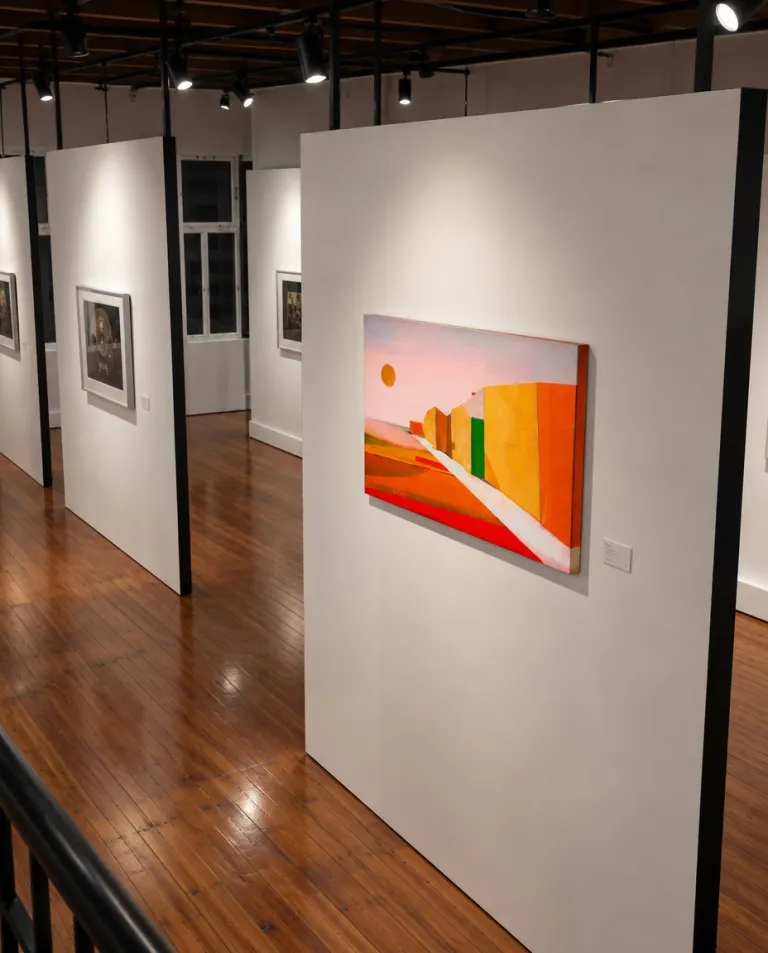
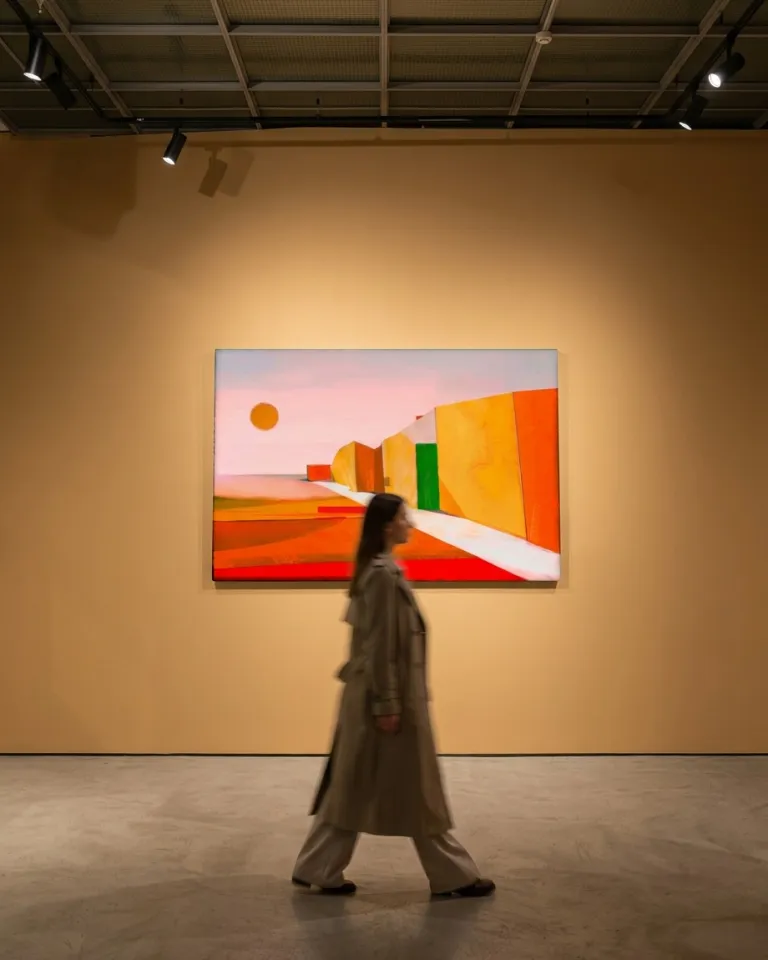
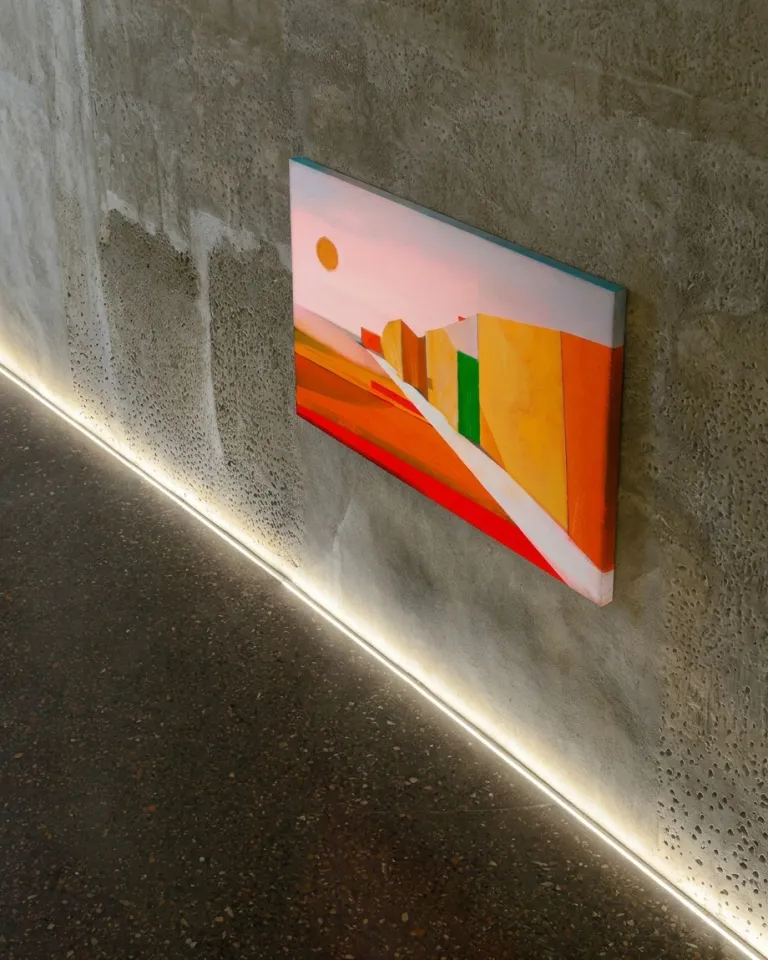
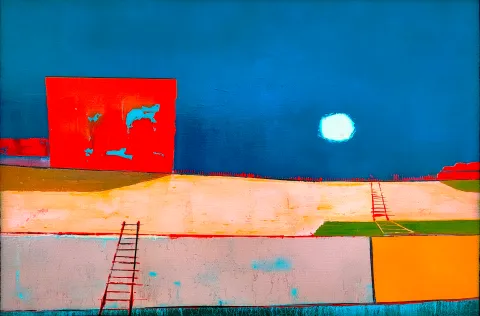
A white path between luminous blocks and a distance with no confirmed destination.
- Size
- 47.2 × 31.5 in / 120 × 80 cm
- Series
-
MARE SOMNIORUM
 Painting series
MARE SOMNIORUM
MARE SOMNIORUM transforms Maurizio Valch’s Mediterranean experience into an open pictorial territory, where horizon, silence, and isolated structures retain the intensity of a place without describing it literally. His paintings sustain a distance between what has been lived and what has been imagined, between movement and stillness. View series
- Orientation
- Horizontal
- Context studies
- 22
Conceptual Note
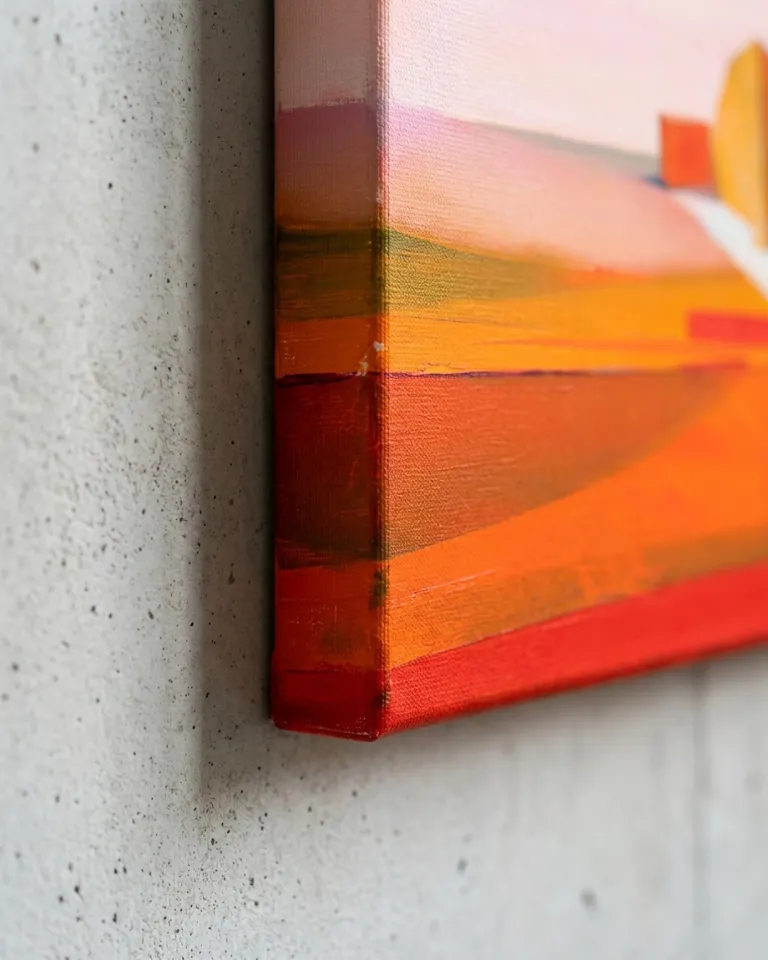
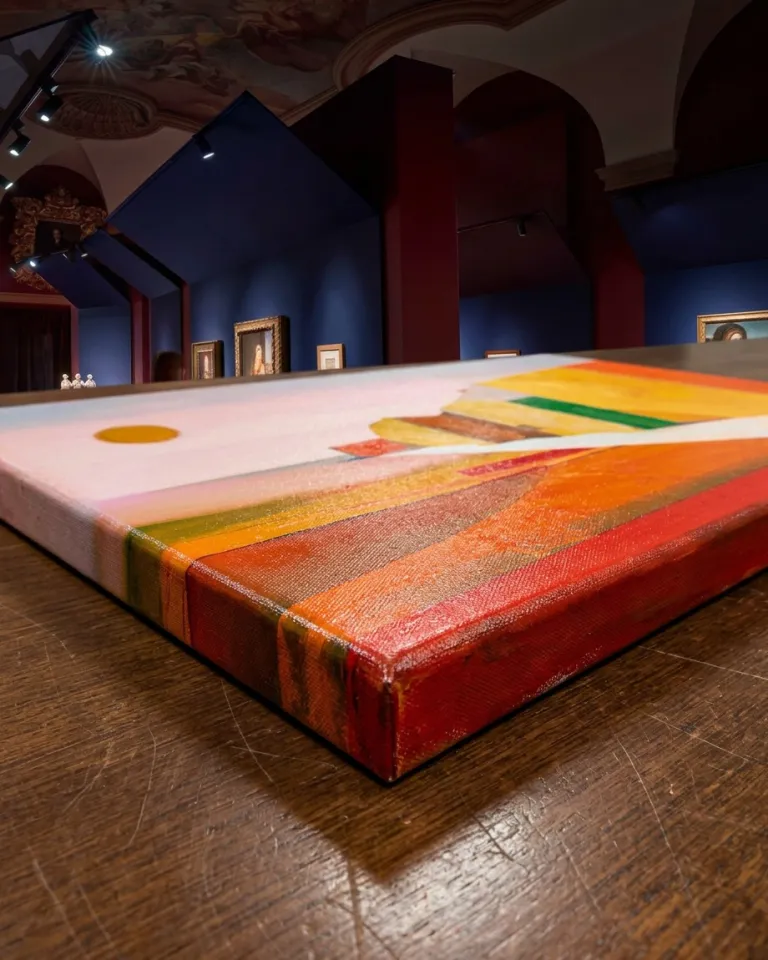
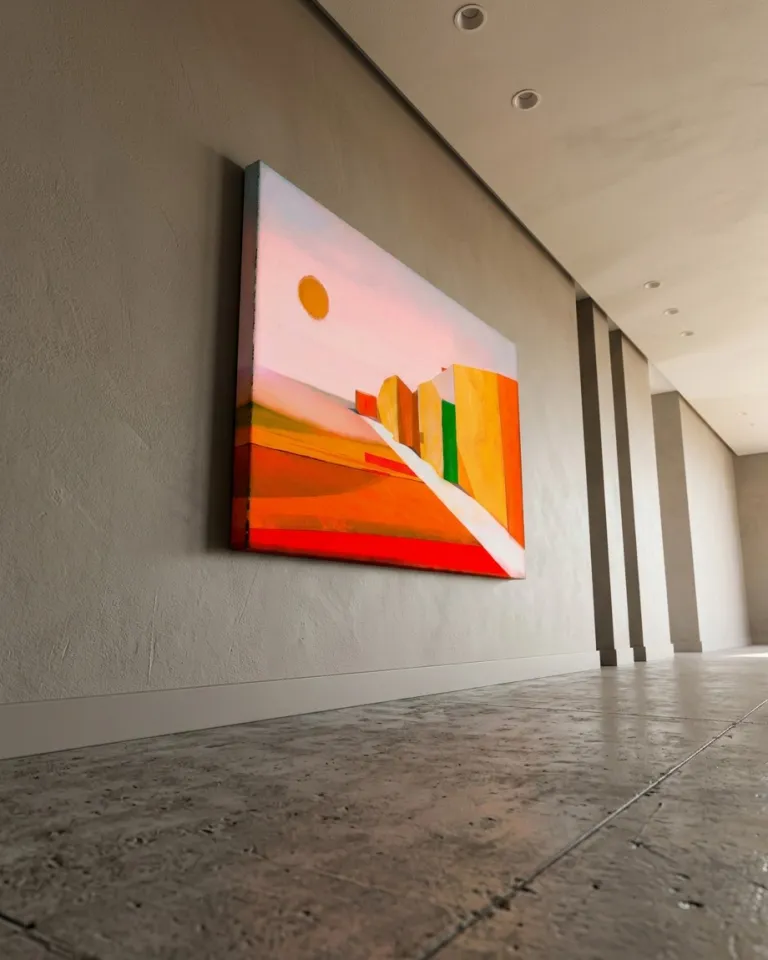
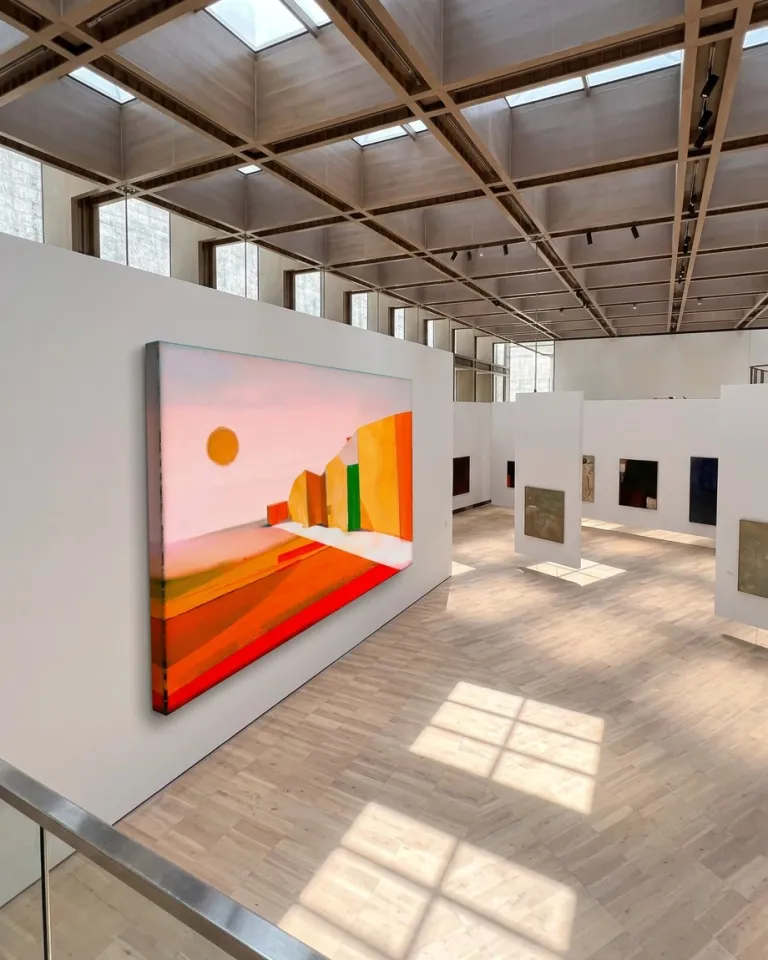
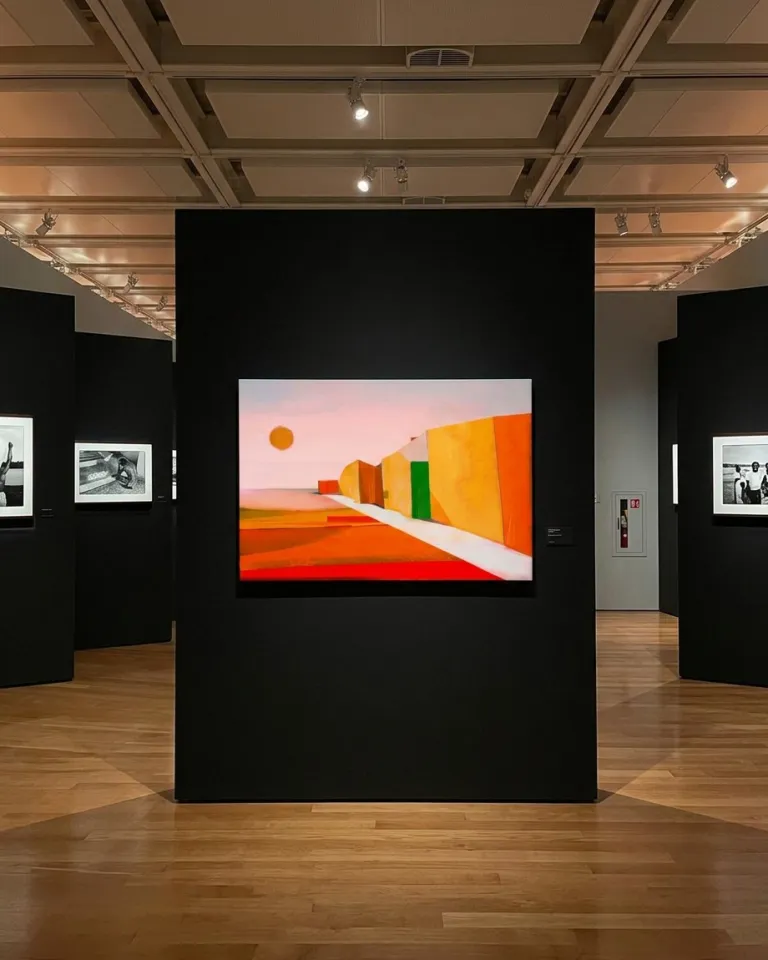
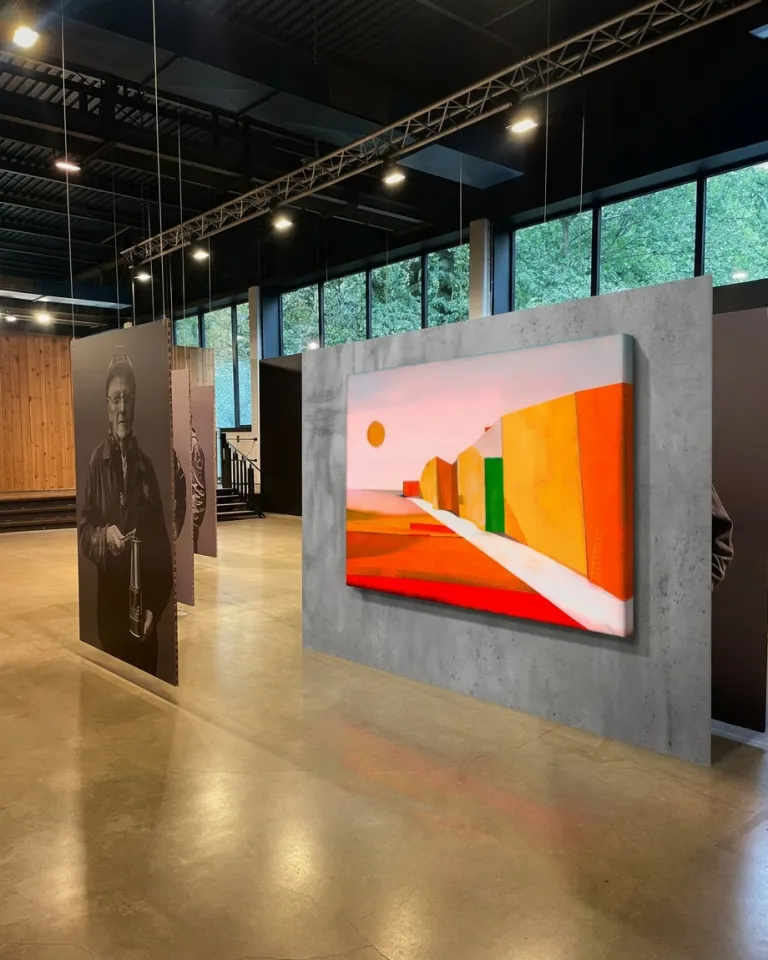
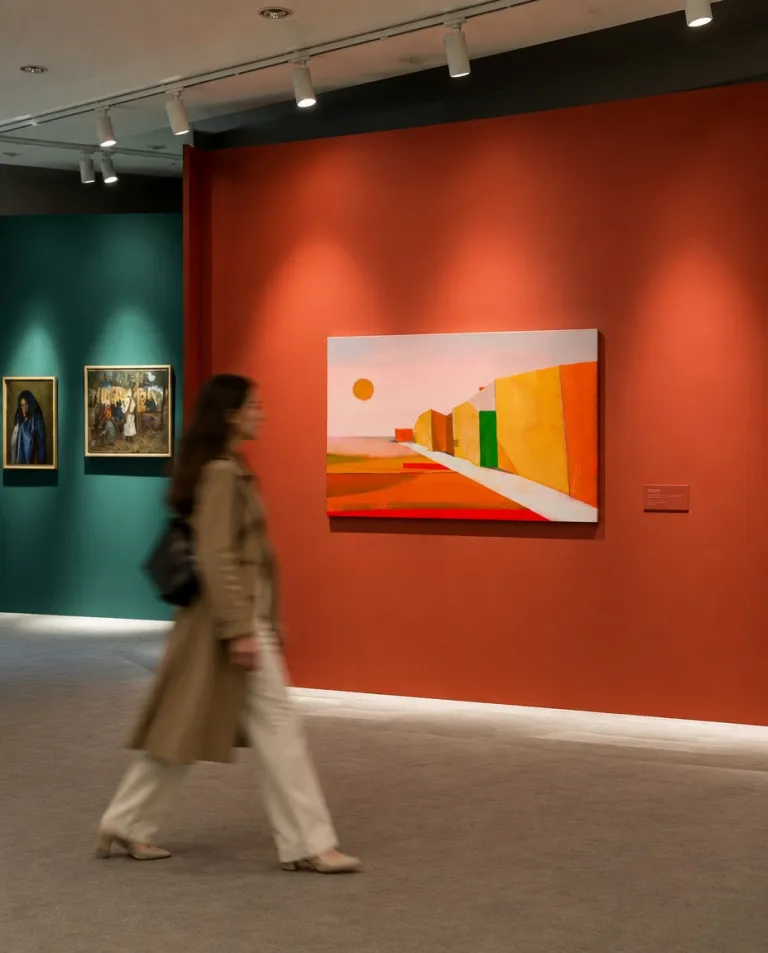
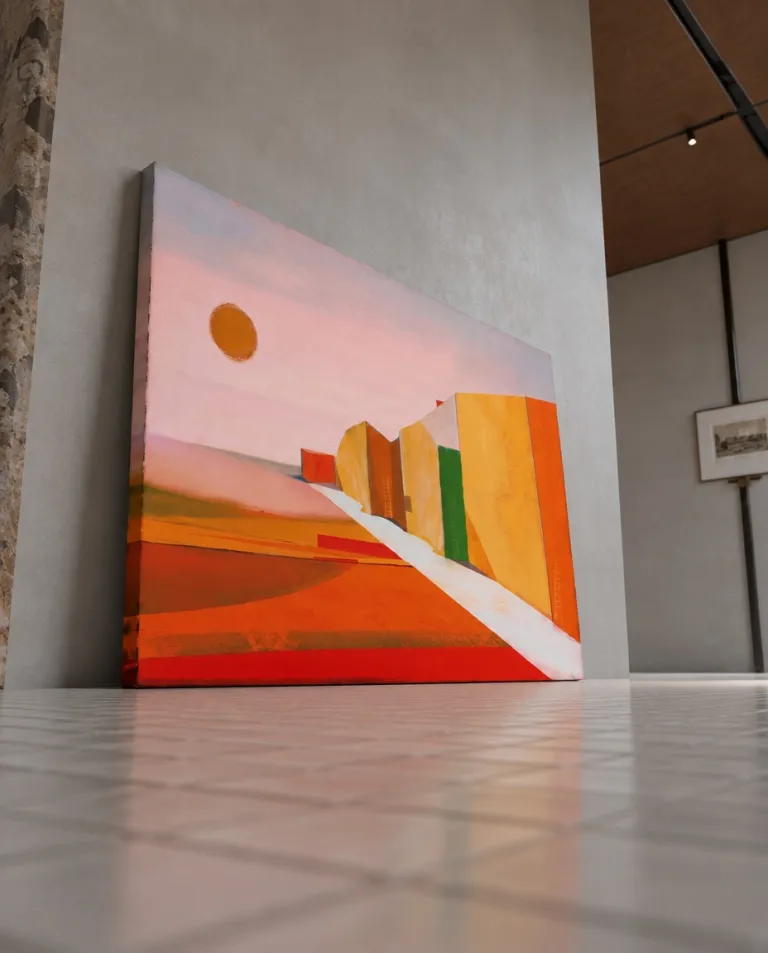
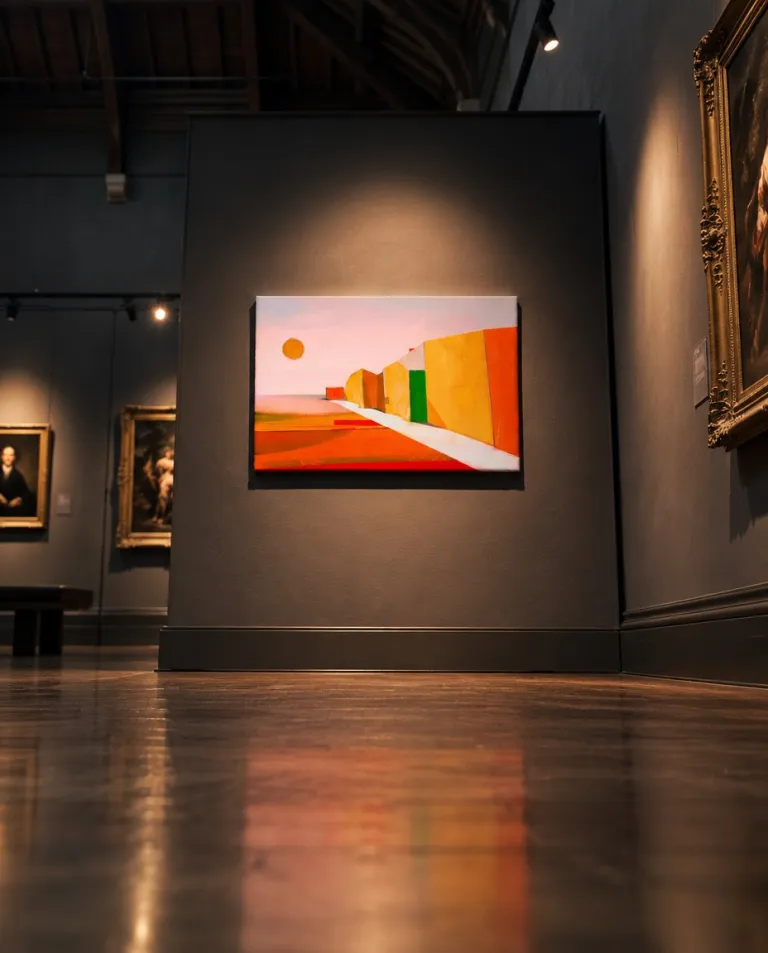
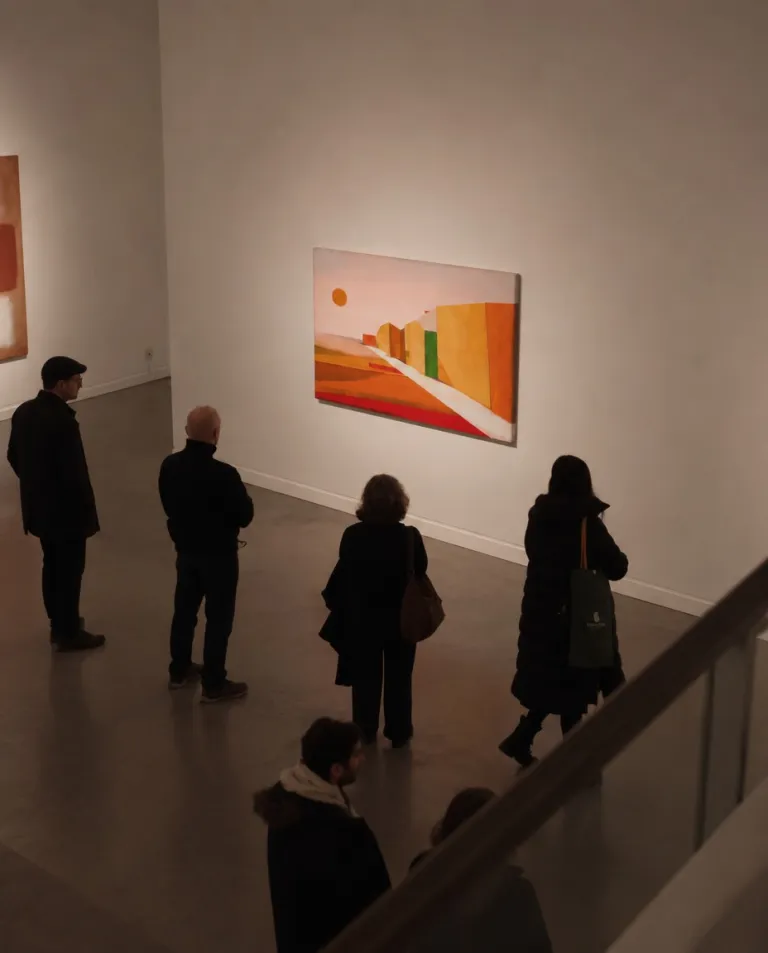
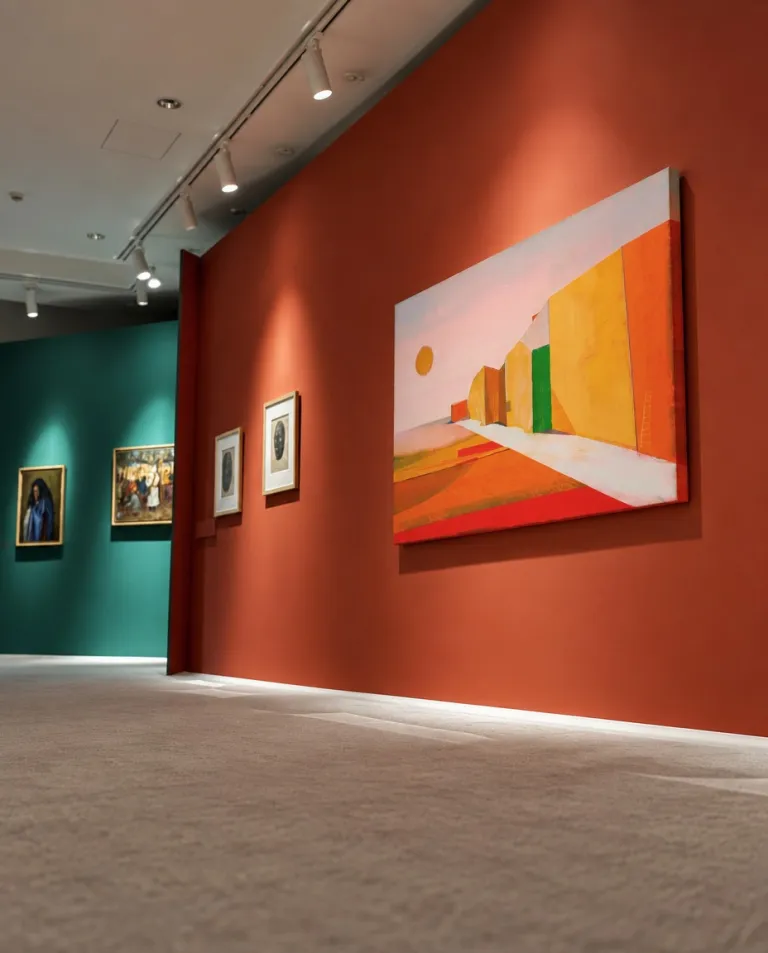
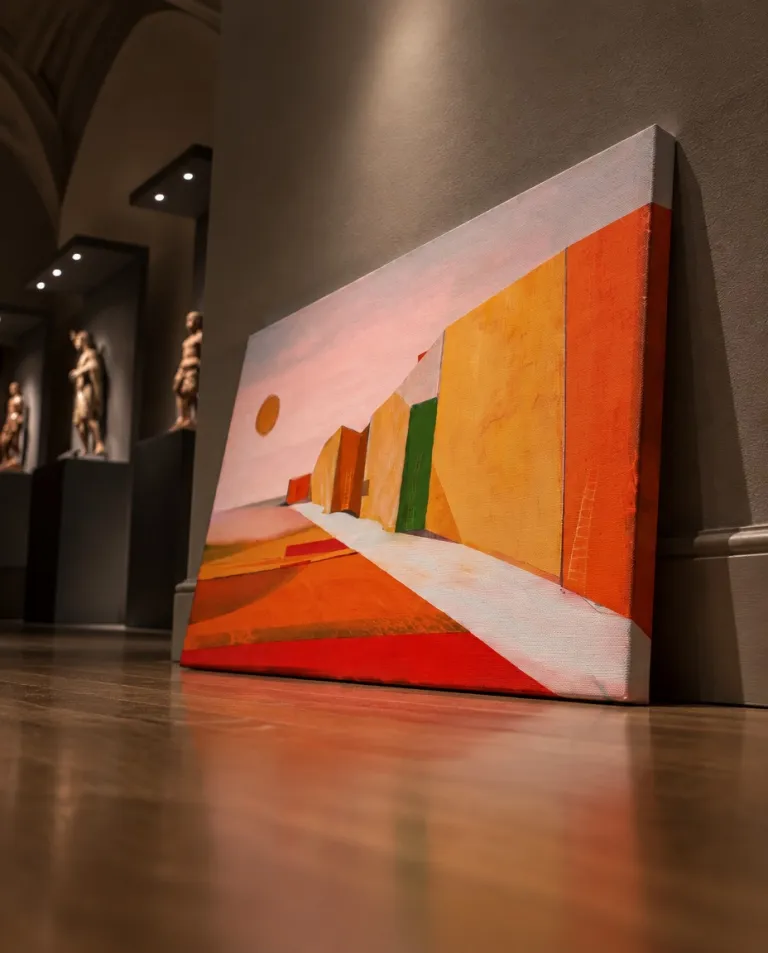
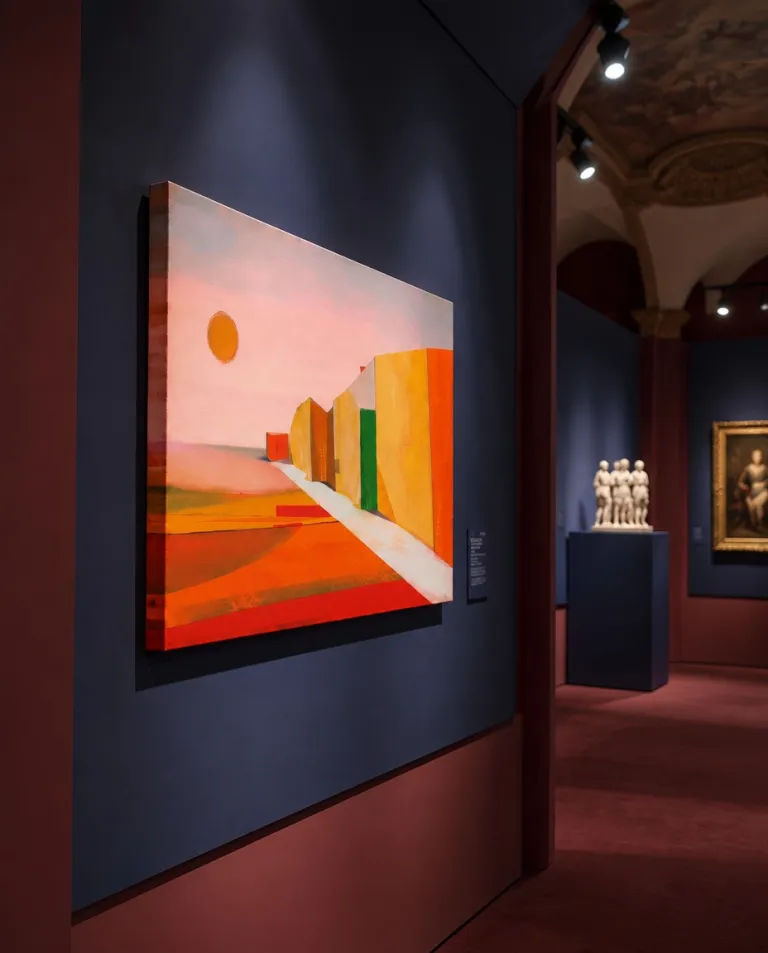
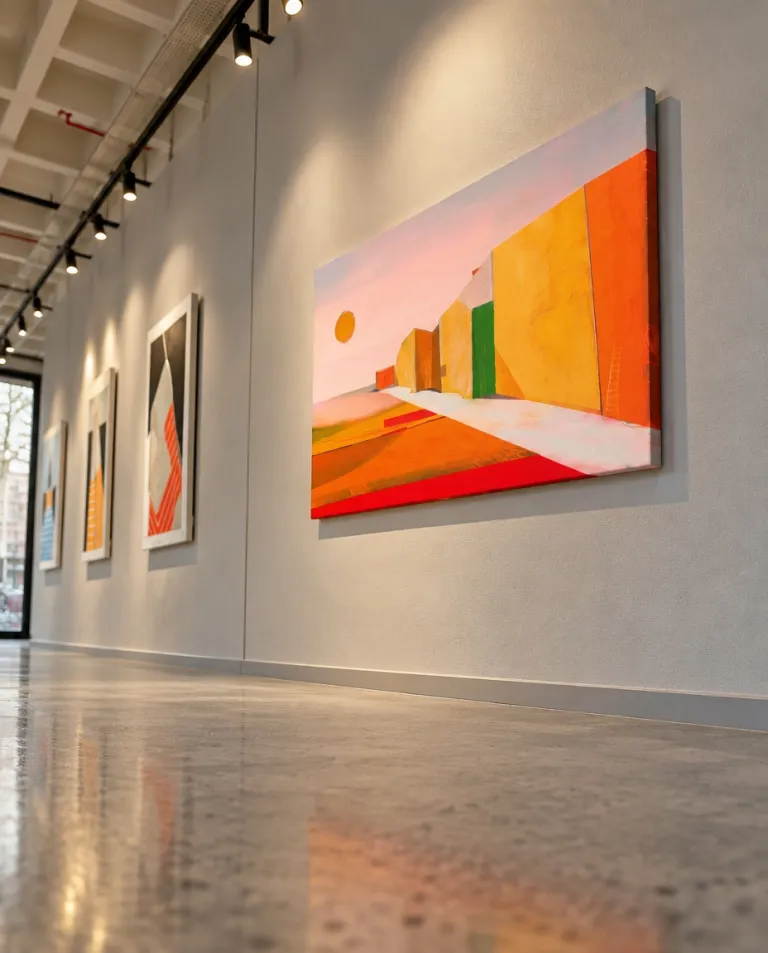
Light does not necessarily lead to arrival. In VIA SOLIS, Maurizio Valch sets a white path entering from the lower edge and narrowing toward an uncertain distance, between ground in reds and ochres and a succession of luminous volumes. The title directs the eye toward the sun, yet the orange orb suspended at the left does not function as a destination: it remains apart from the route. Within MARE SOMNIORUM, the work condenses a Mediterranean memory without depicting a coastline or locality; instead, it retains the exposure of the land, the low horizon, and the intense clarity that makes distances strange.
The large vertical planes might evoke walls, façades, or formations standing beside the passage. Yet their scale shifts as the path advances, making it impossible to establish a stable geography. A few small incised stairways appear on these surfaces, nearly absorbed by the colour: they introduce the possibility of access without clarifying where one climbs or what might be reached. The green band, compressed between yellows and oranges, disrupts the warm continuity of the volumes and sustains a presence that never quite becomes a recognisable doorway, shadow, or structure.
There is a particular affinity with Richard Diebenkorn’s territorial construction: abstraction retains a memory of passage and landscape through planes that organise depth. Valch departs from Diebenkorn’s more aerial openness by bringing the edges into a more frontal, compact clarity. Distance is not seen from above; it is experienced at the edge of a path that remains open, though its direction offers no conclusion.
The greyish pink of the sky slightly cools the scene’s radiance, while the white of the path both separates and connects the earthly field with the blocks at either side. Dense reds, burnt yellows, and oranges construct a territory with a strong physical presence; the incised lines restore a human, vulnerable scale to its surfaces. VIA SOLIS leaves a simple question suspended: what happens when a direction is visible, but the place it leads to remains outside the painting.