
Published work / MARE SOMNIORUM
LUX REMOTA
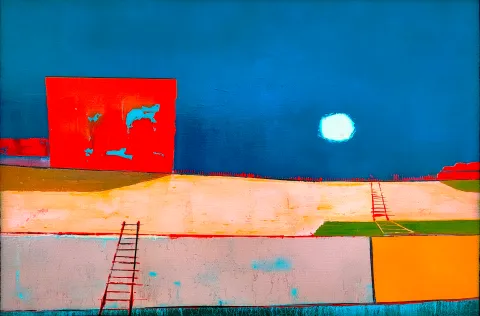
Stratified horizon, distant light and staircases in an abstract territory
- Size
- 47.2 × 31.5 in / 120 × 80 cm
- Series
-
MARE SOMNIORUM
 Painting series
MARE SOMNIORUM
MARE SOMNIORUM transforms Maurizio Valch’s Mediterranean experience into an open pictorial territory, where horizon, silence, and isolated structures retain the intensity of a place without describing it literally. His paintings sustain a distance between what has been lived and what has been imagined, between movement and stillness. View series
- Context studies
- 9
Conceptual Note
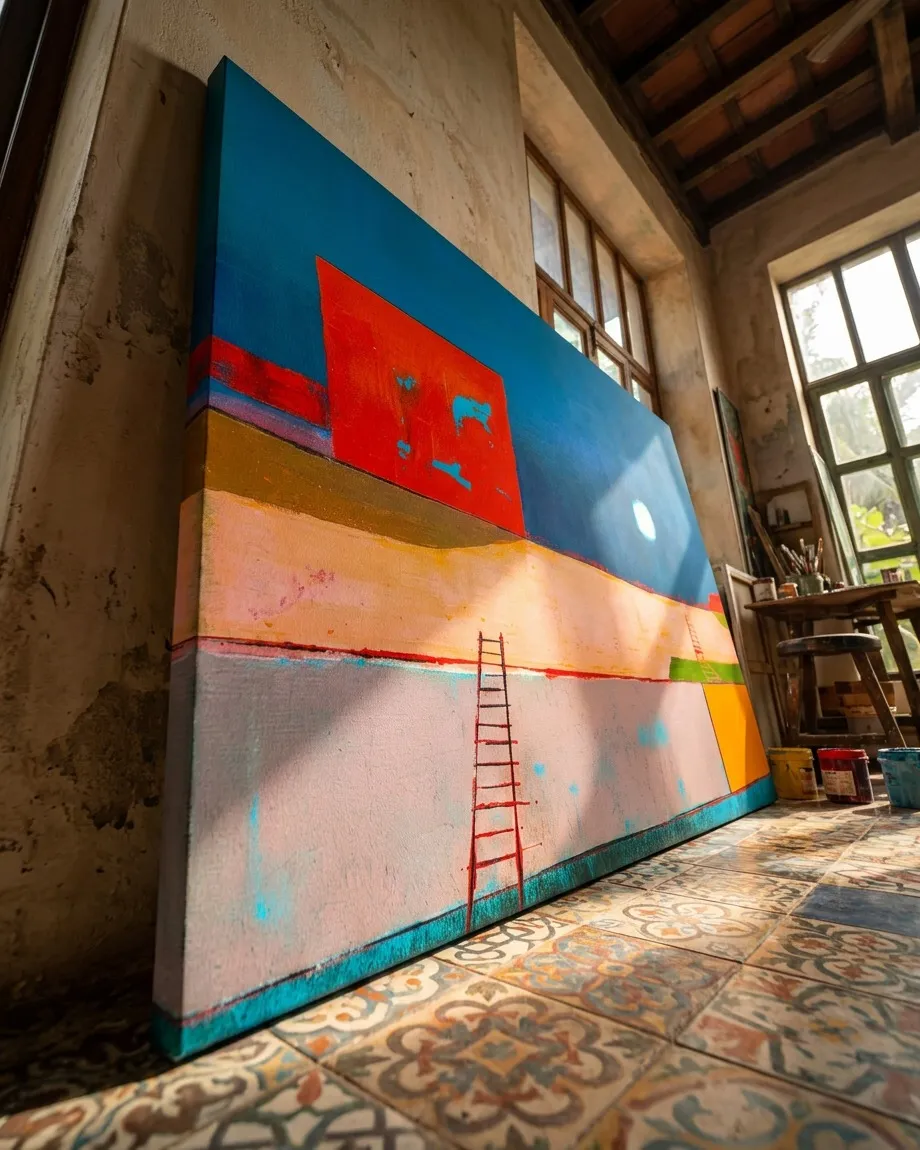
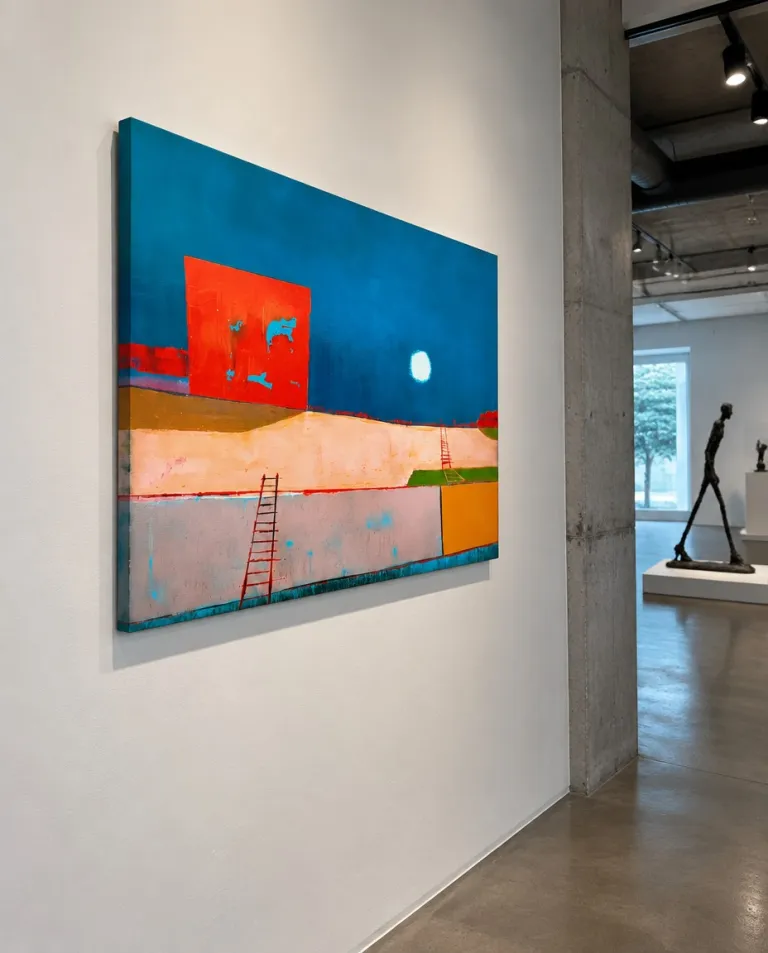
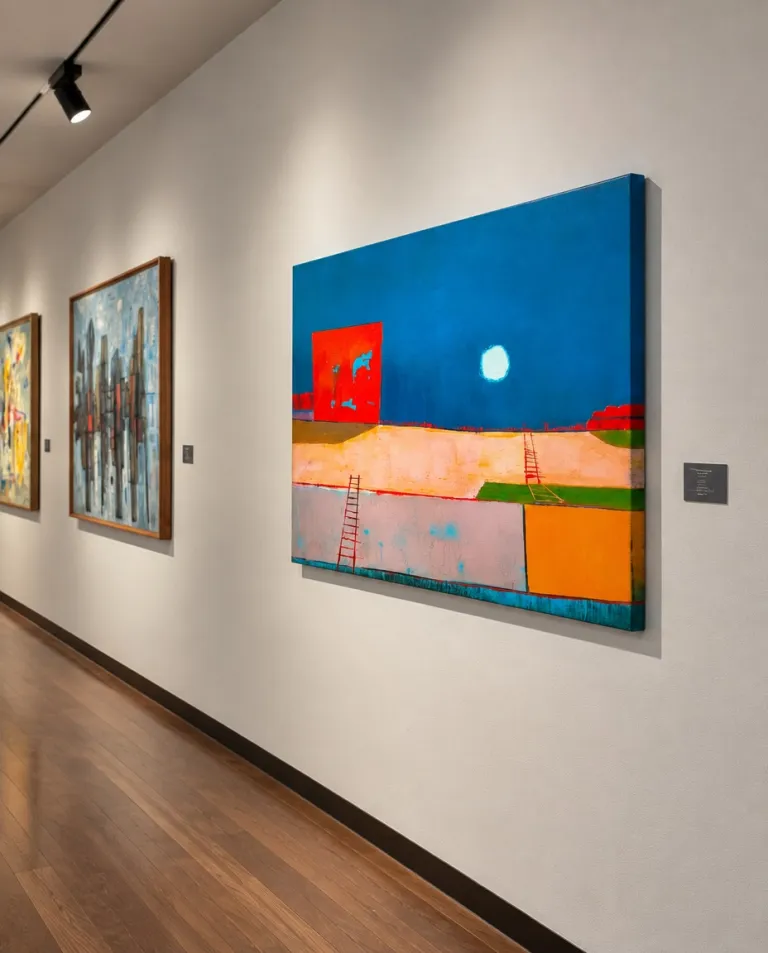
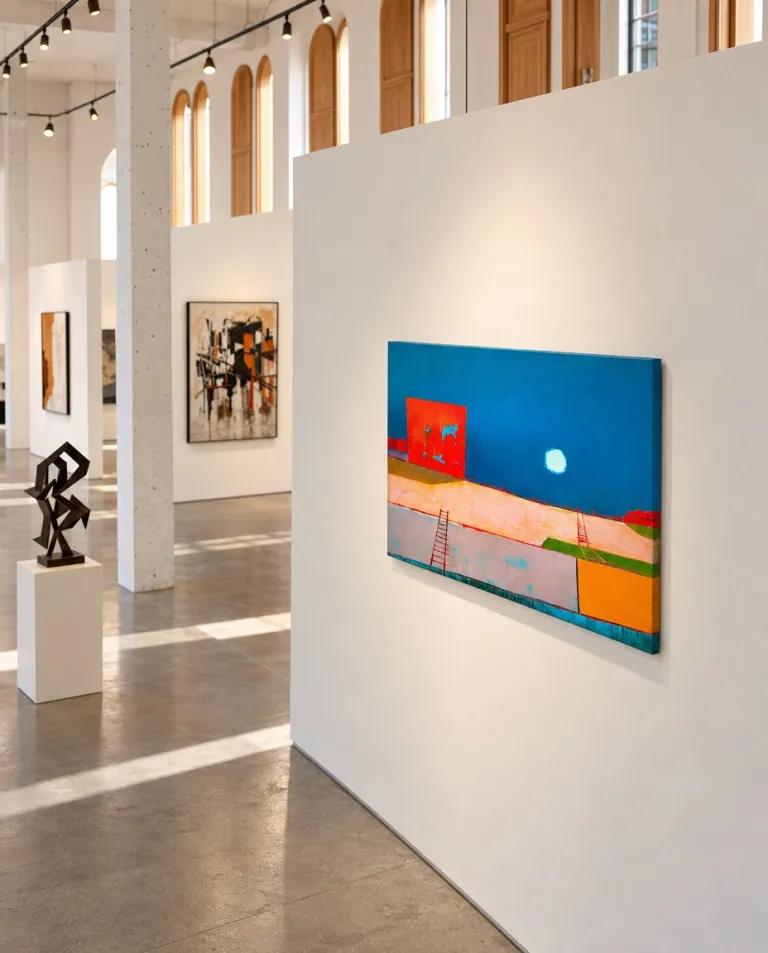
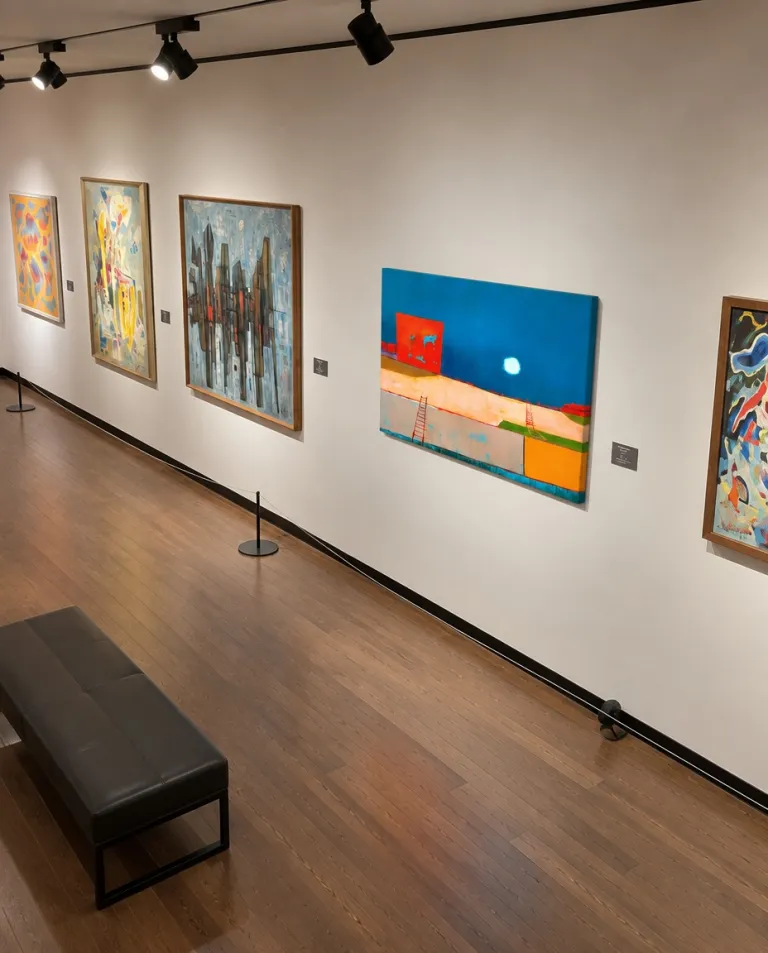
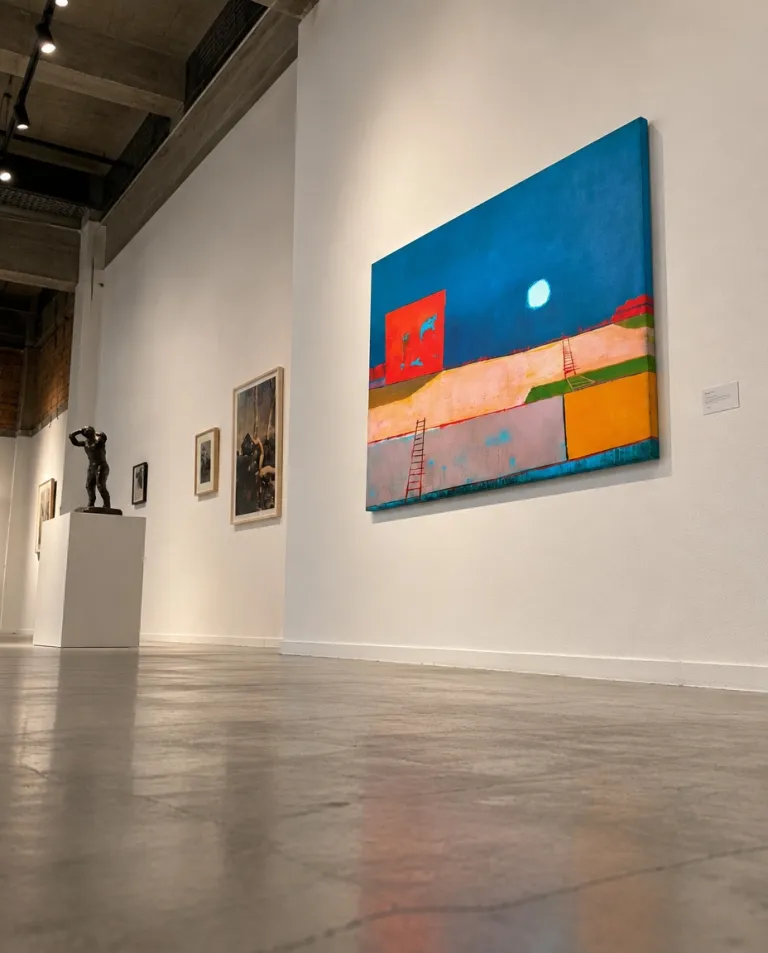
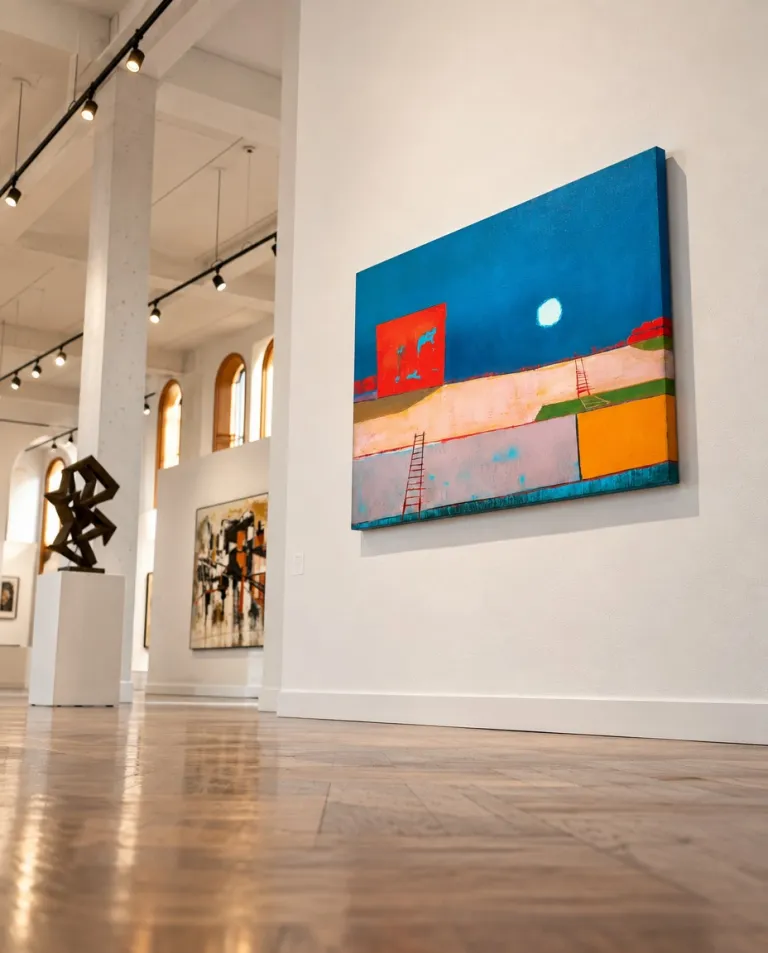
Light does not occupy the centre of LUX REMOTA: it remains at a distance, small and white, suspended in a field of nocturnal blue density. Before it, a compact, eroded red construction interrupts the horizon line; below, bands of pale pink, green, grey and orange extend outward. The scene retains something of landscape, yet resists becoming an identifiable place. Within MARE SOMNIORUM, Maurizio Valch places the gaze in a territory of waiting, where the forms seem to have arrived before—or after—the person observing them.
Two slender staircases introduce an unresolved direction. One rises from the lower edge and stops short of reaching the large pale plane; the other, farther away, rests on a green band and disappears towards the horizon. They neither guarantee access nor describe a story. They function as precarious measures of distance: making visible the separation between the painting’s strata while also posing a simple, persistent question about what it means to move forward when no clear arrival is offered.
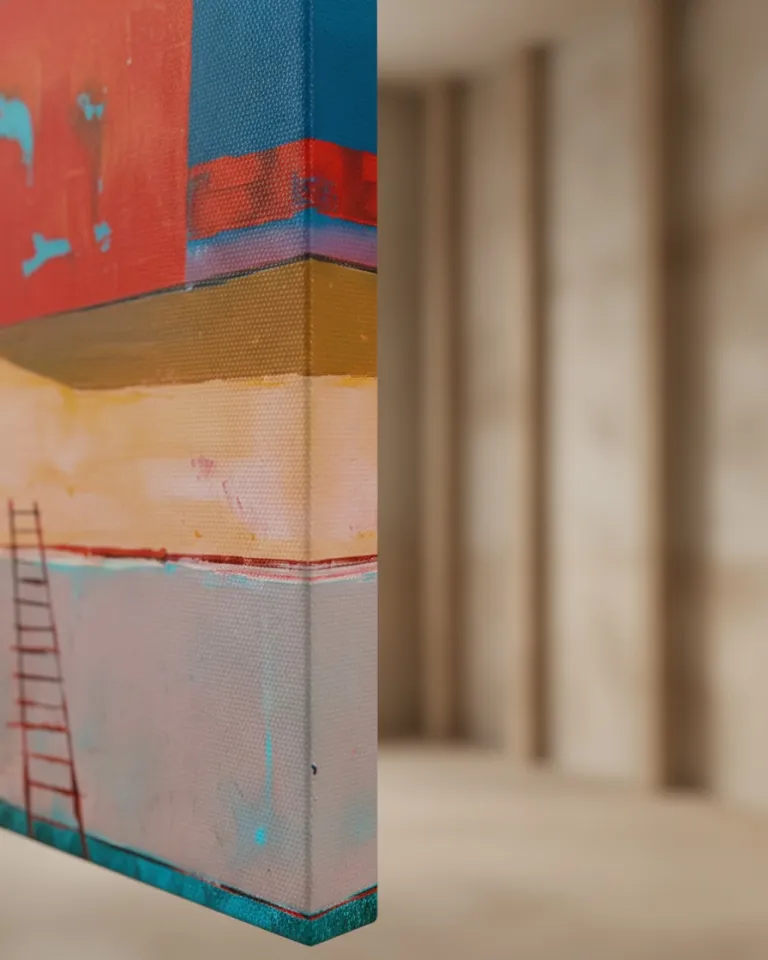
In a precise sense, the territorial organisation recalls the abstractions of Richard Diebenkorn: planes of colour that still retain a memory of expanse, incline and horizon. Valch, however, reduces the continuity of landscape until it becomes more isolated and nocturnal. The red mass does not act as descriptive architecture; it carries weight as an autonomous presence within an open space. Its scraped surface, punctuated by small voids, introduces a material temporality that prevents the geometry from becoming fully stable.
The deep blue is not a neutral background: it supports the almost cutting whiteness of the celestial body and brings the red to a frontal intensity. Beneath that dark band, the horizontal fields seem applied, dragged and slightly wounded at their edges; the luminous pink opens out into an expanse that never quite becomes either ground or water. Red contours, turquoise marks and irregular material retain the trace of painterly action. Thus, the calm of LUX REMOTA is not stillness: it is made of intervals, cuts and distances that keep the territory awake.