





Published work / MARE SOMNIORUM
SOL DIVISUS
Divided territories under a shared light
- Size
- 47.2 × 31.5 in / 120 × 80 cm
- Series
-
MARE SOMNIORUM
 Painting series
MARE SOMNIORUM
MARE SOMNIORUM transforms Maurizio Valch’s Mediterranean experience into an open pictorial territory, where horizon, silence, and isolated structures retain the intensity of a place without describing it literally. His paintings sustain a distance between what has been lived and what has been imagined, between movement and stillness. View series
- Context studies
- 14
Conceptual Note
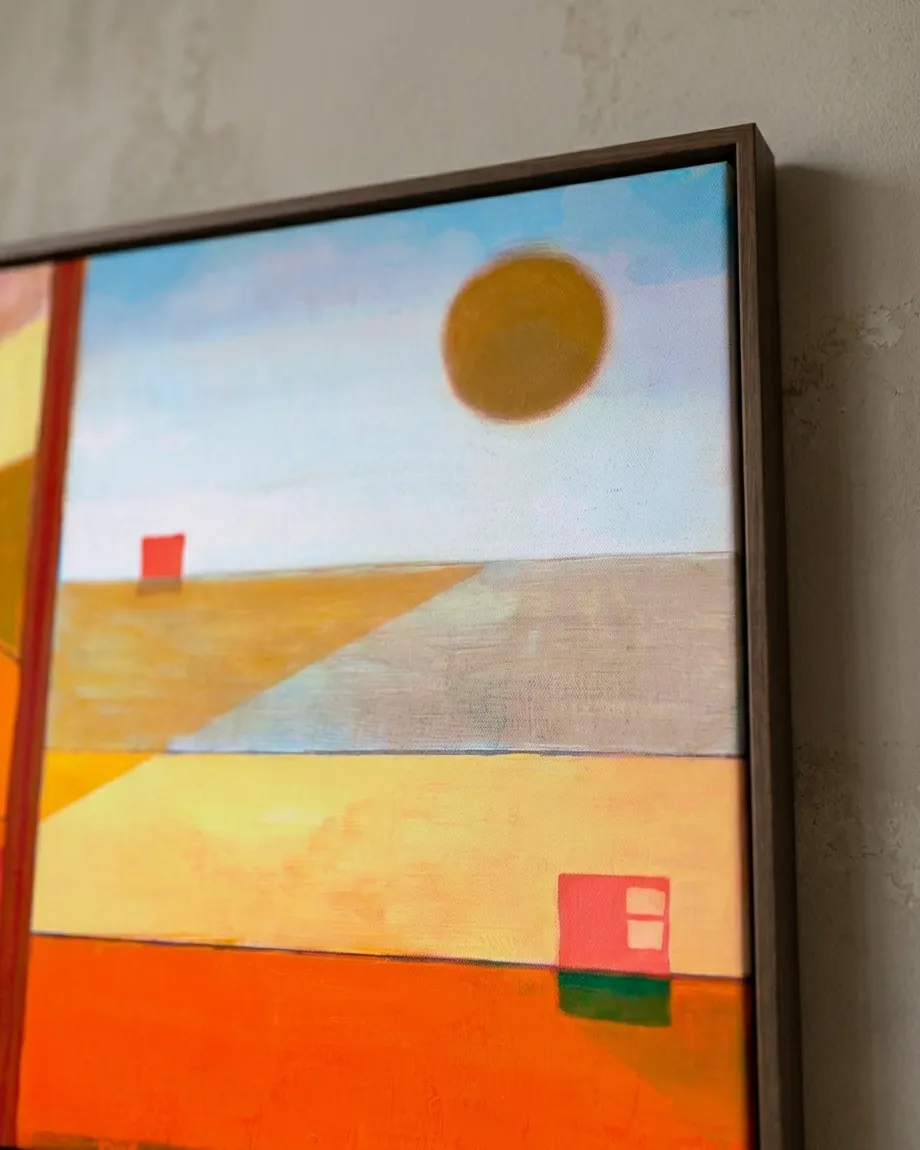
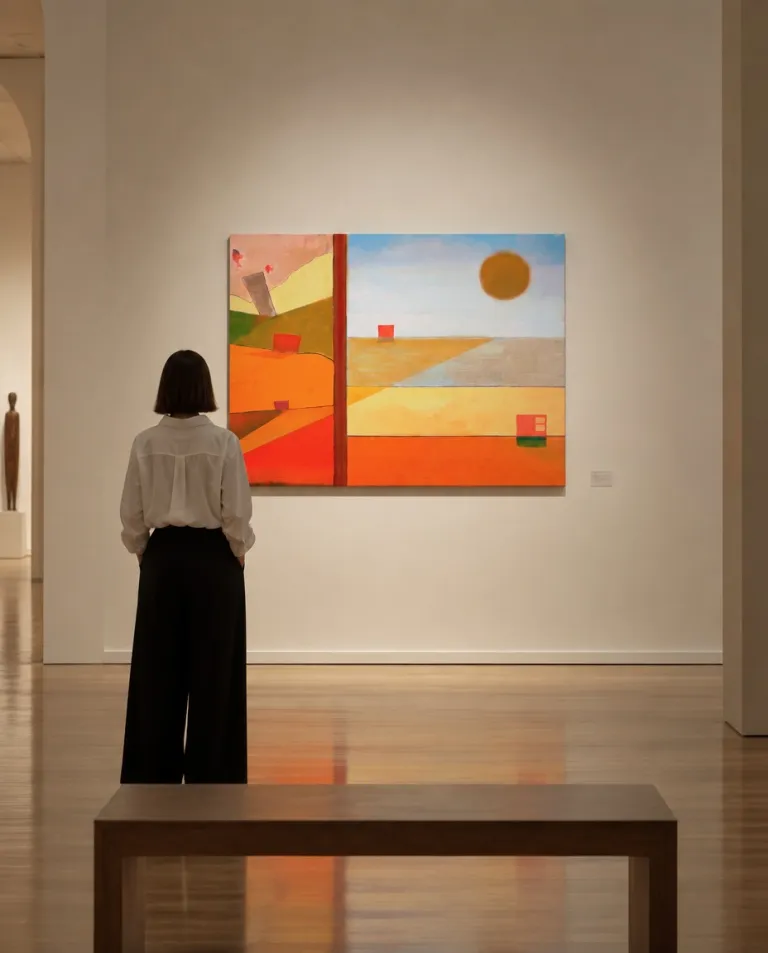
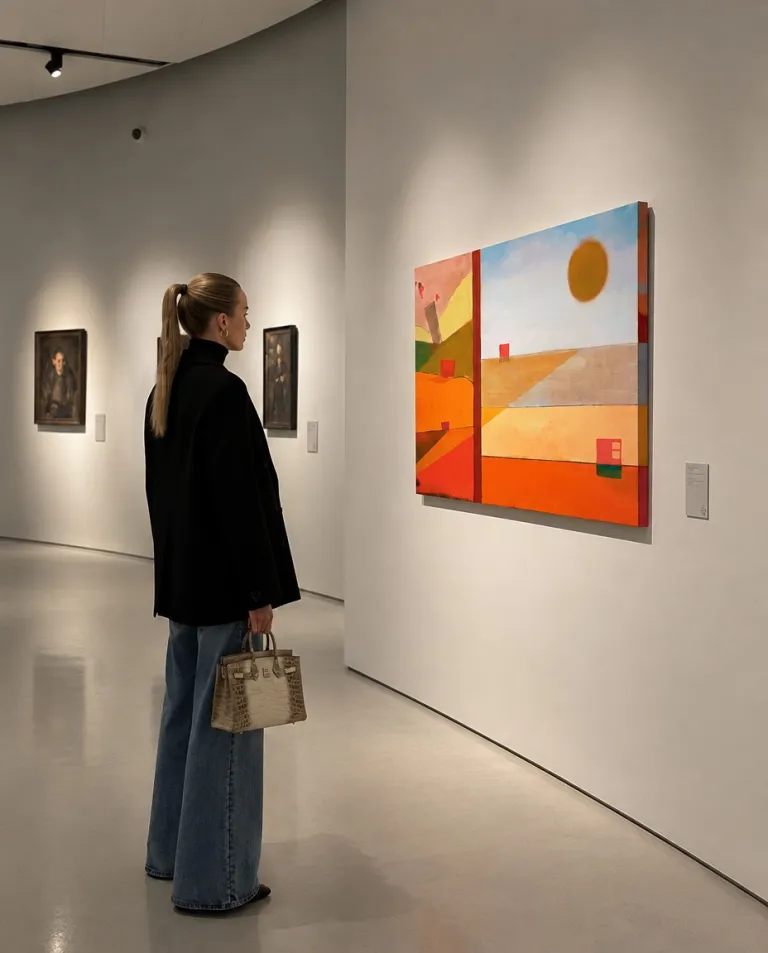
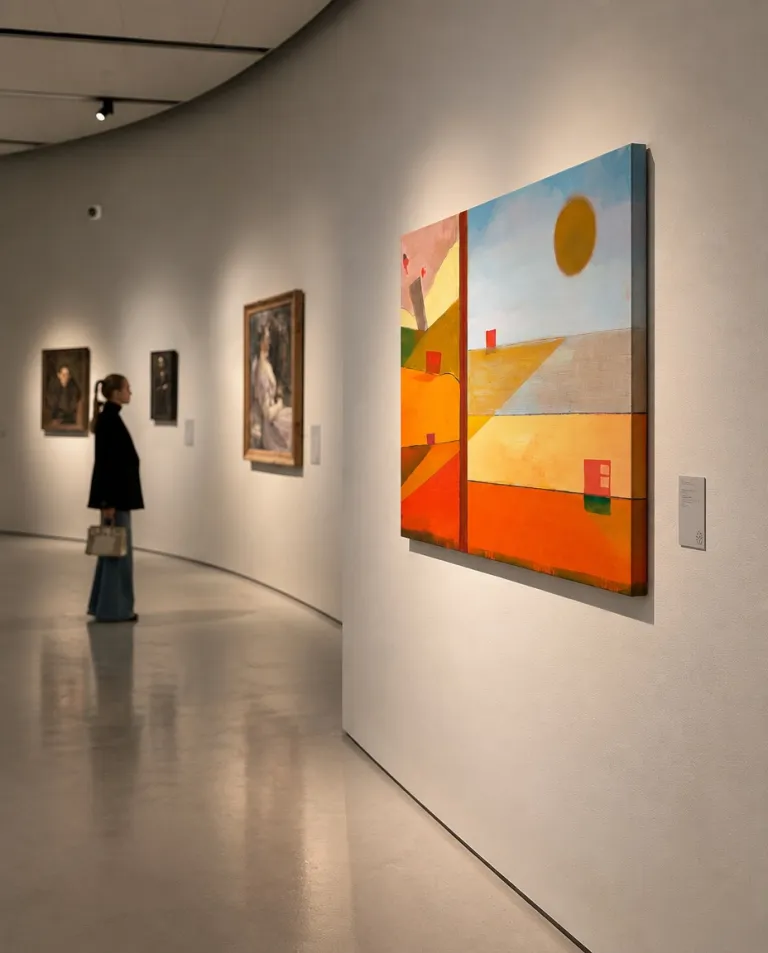
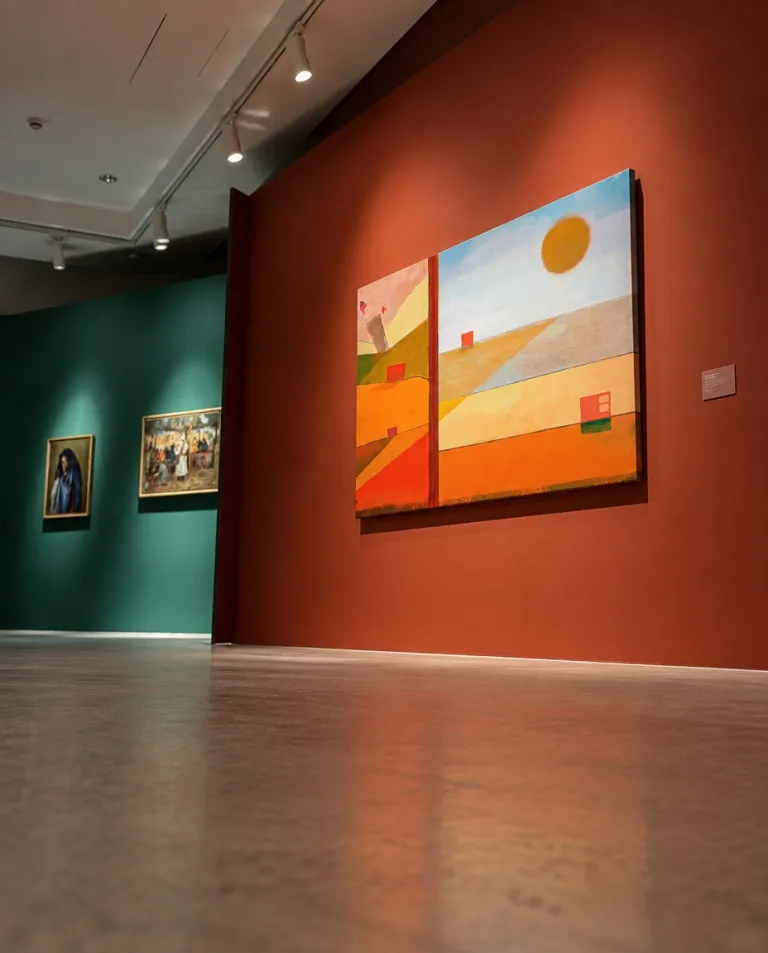
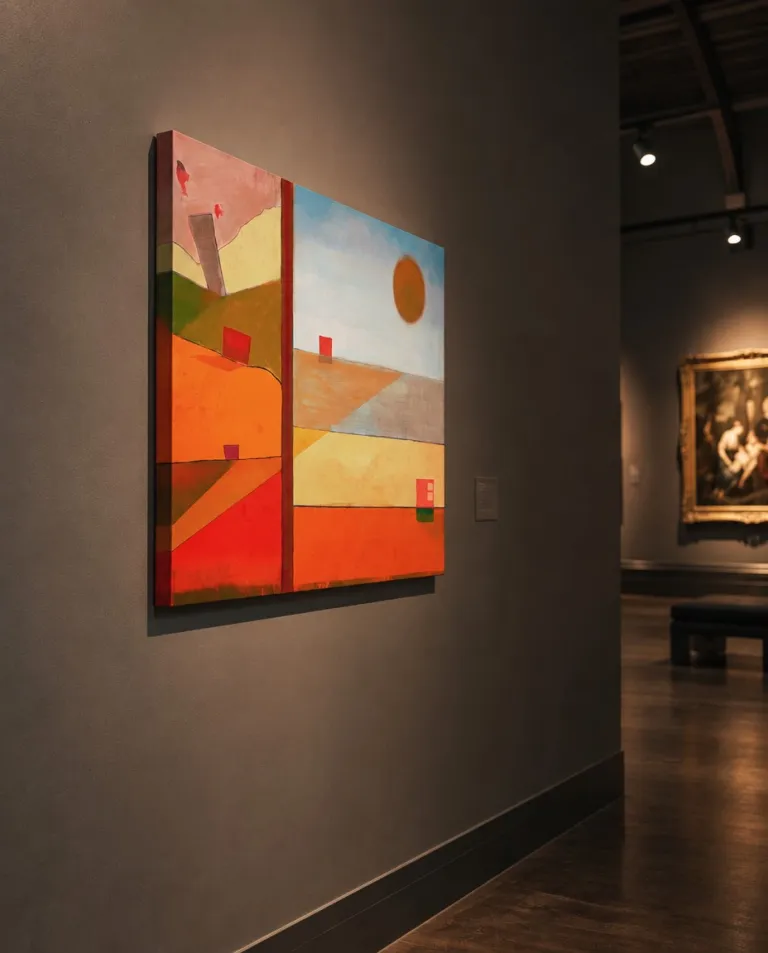
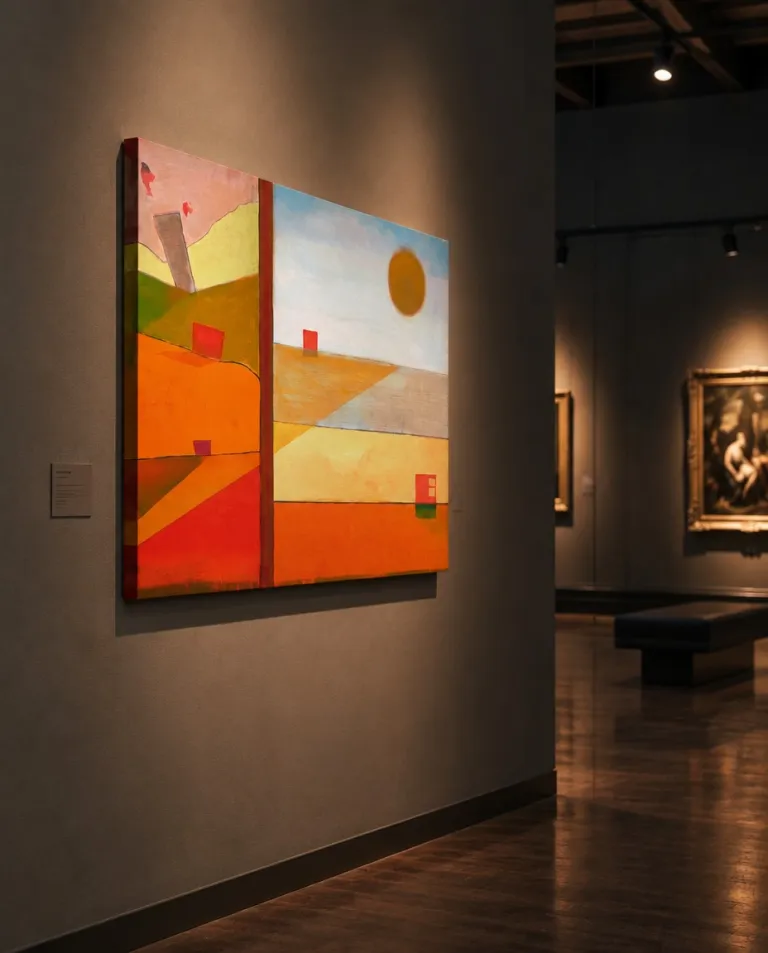
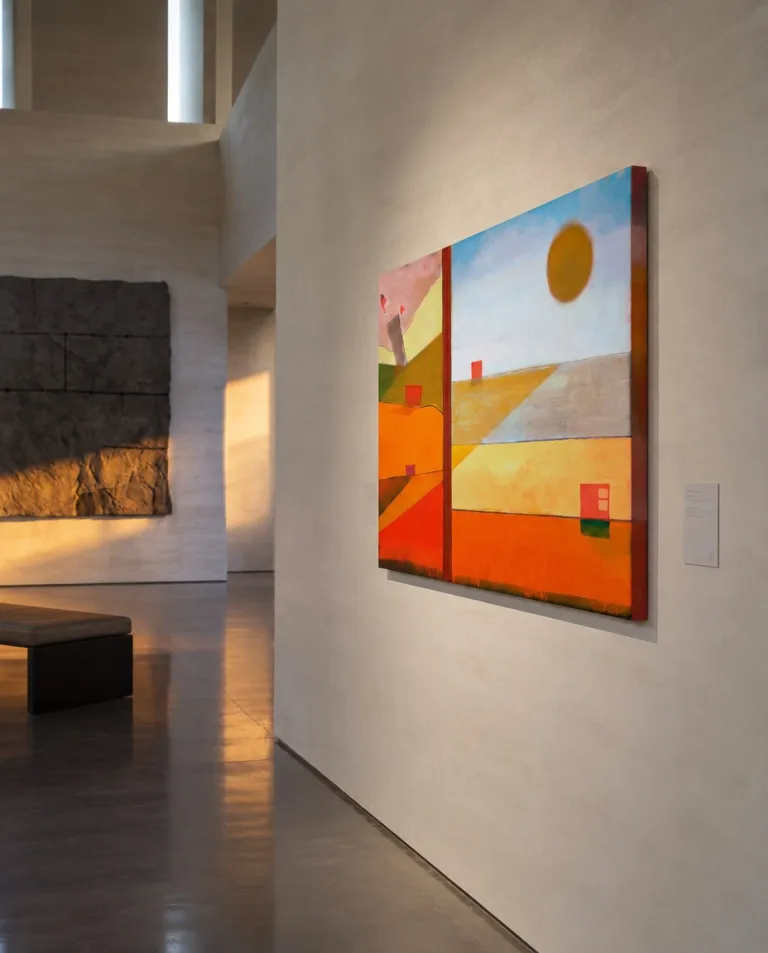
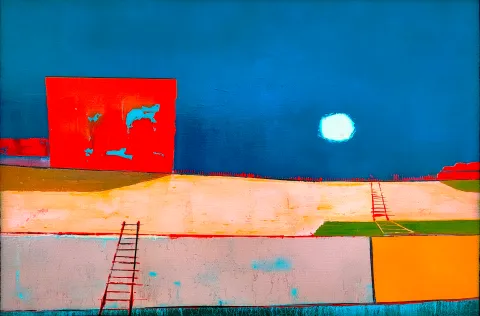
A dark, reddish vertical band divides the canvas without fully separating its two atmospheres. On the left, the ground folds through oranges, greens, and ochres beneath a pink sky; on the right, the expanse opens into planes of pale light, blue, and yellow beneath a dense solar disc. SOL DIVISUS belongs to the dreamlike territory of MARE SOMNIORUM, yet its title introduces a decisive division: not two landscapes, but two ways of perceiving distance. The painting allows both to remain close and, at the same time, irreducible.
The division does not operate as a resolved boundary. The eye moves from a more inclined area, populated by small blocks and an oblique slab-like form, to another in which the surfaces become broad and almost empty. Yet the same red reappears on both sides: as a low volume, as a small cube on the horizon, as minimal architecture at the lower edge. This recurrence prevents either half from being read as a closed world. What is separated retains a relation; luminosity does not cancel the strangeness of what remains on the other side.
A specific affinity with Richard Diebenkorn can be found in the way abstract planes retain a memory of ground, horizon, and passage. Valch nevertheless departs from an exclusively landscape-based organisation: his fields are more frontal, and the isolated blocks interrupt any naturalistic reading. The ochre disc, too, avoids becoming a fixed emblem. Its suspended weight orders the gaze, but does not explain the place.
The materiality reveals layers, glazes, and variations in brushwork that prevent the fields from closing into flat surfaces. A dark line undulates across the orange on the left; on the right, a large diagonal plane advances from the horizon and unsettles the horizontal calm. Between the vivid red of the lower register, the almost watery clarity of the sky, and the opaque sun, the composition sustains a simple, persistent question: what happens when the same light reaches territories that can no longer be seen from a single side.