



Published work / EMERSIO
CUSTODES
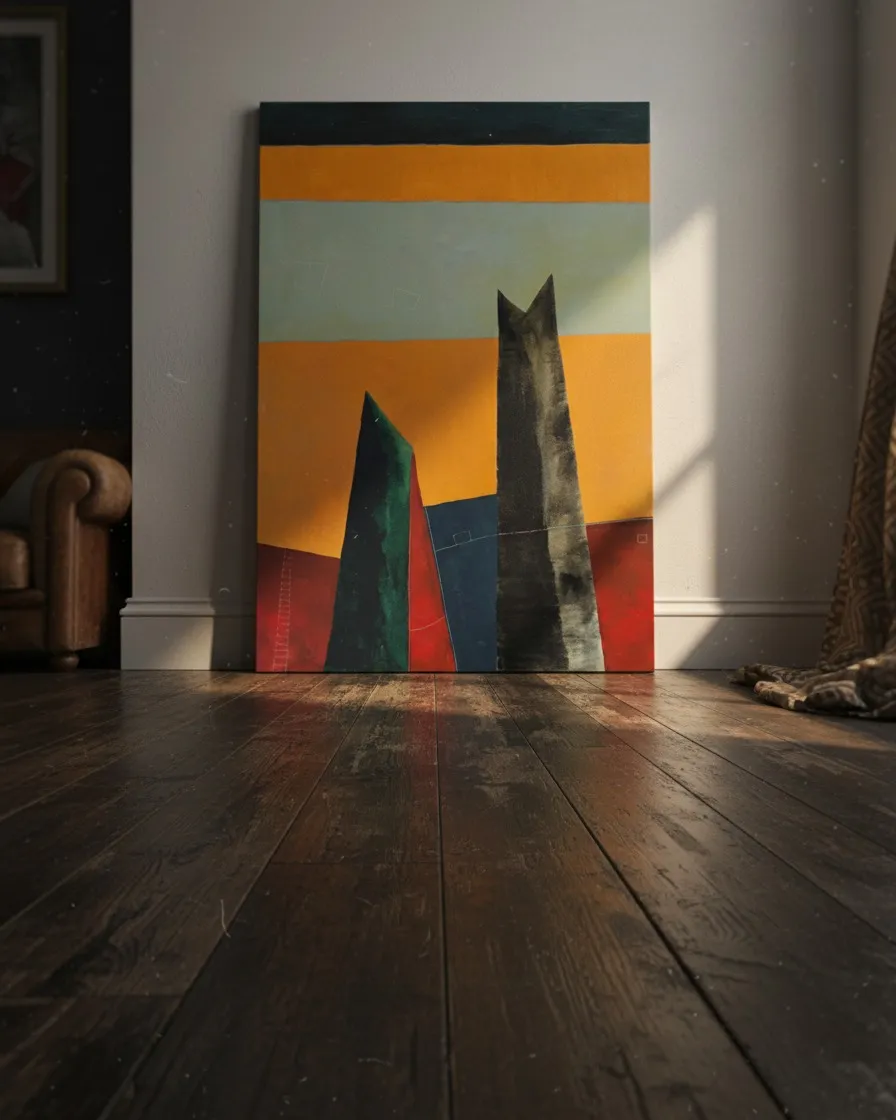
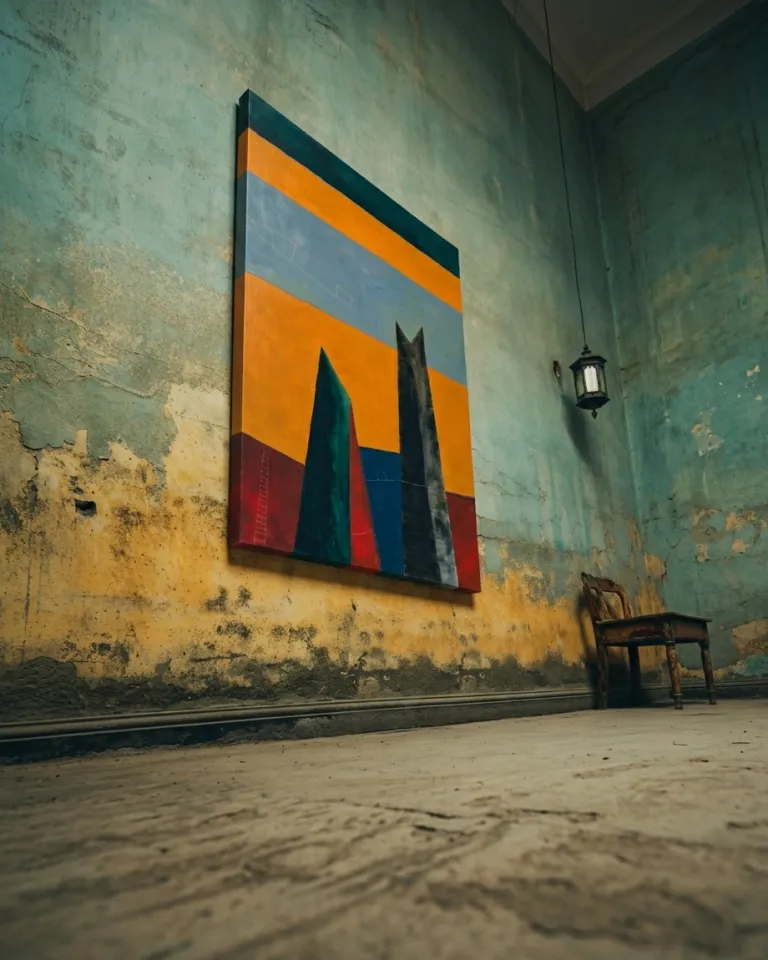
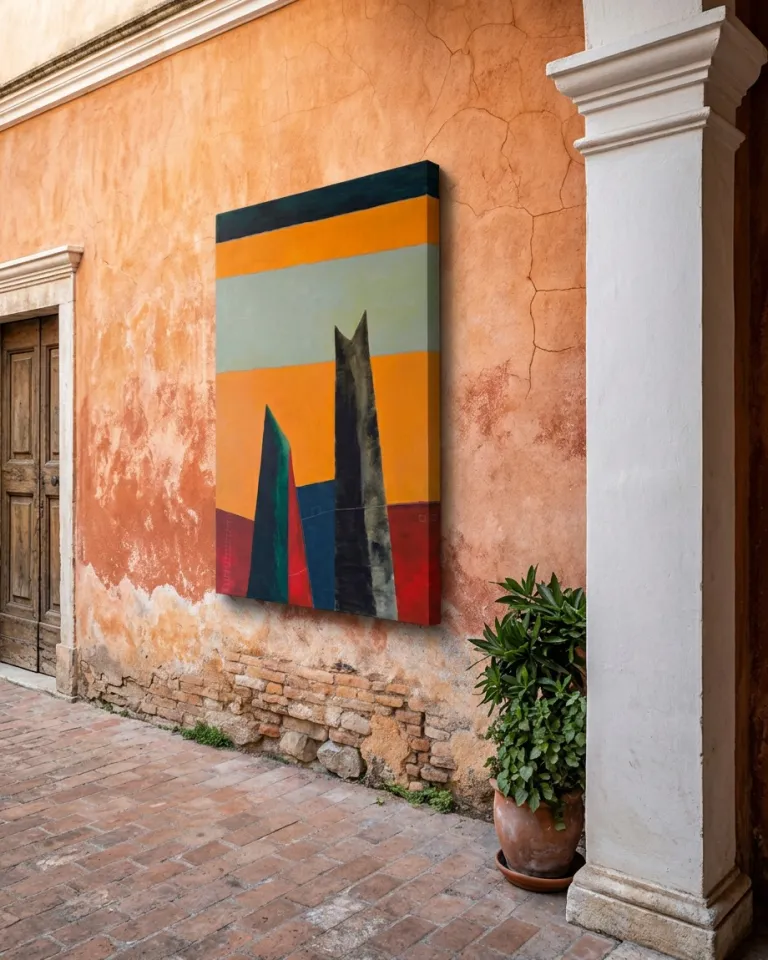
Two vertical presences in a territory of chromatic bands.
- Size
- 31.5 × 47.2 in / 80 × 120 cm
- Series
-
EMERSIO
 Painting series
EMERSIO
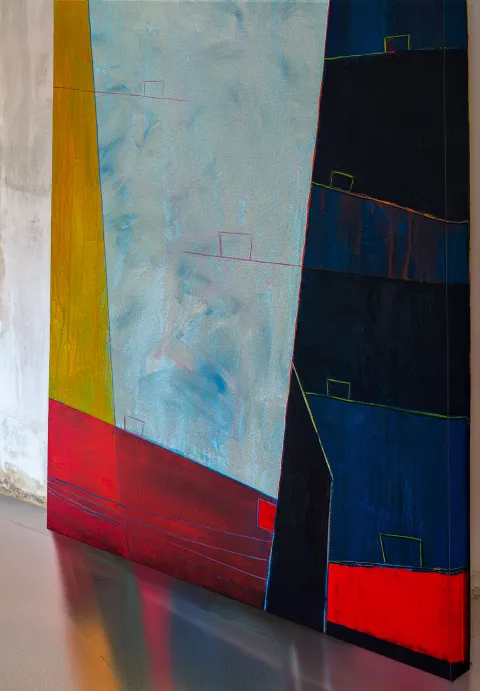
In EMERSIO, Maurizio Valch addresses the uncertain instant when a form begins to distinguish itself from the territory that contained it. Fields of colour, horizons, and structures under tension give substance to an emergence that remains vulnerable, situated between landscape, architecture, and presence. View series
- Context studies
- 10
Conceptual Note
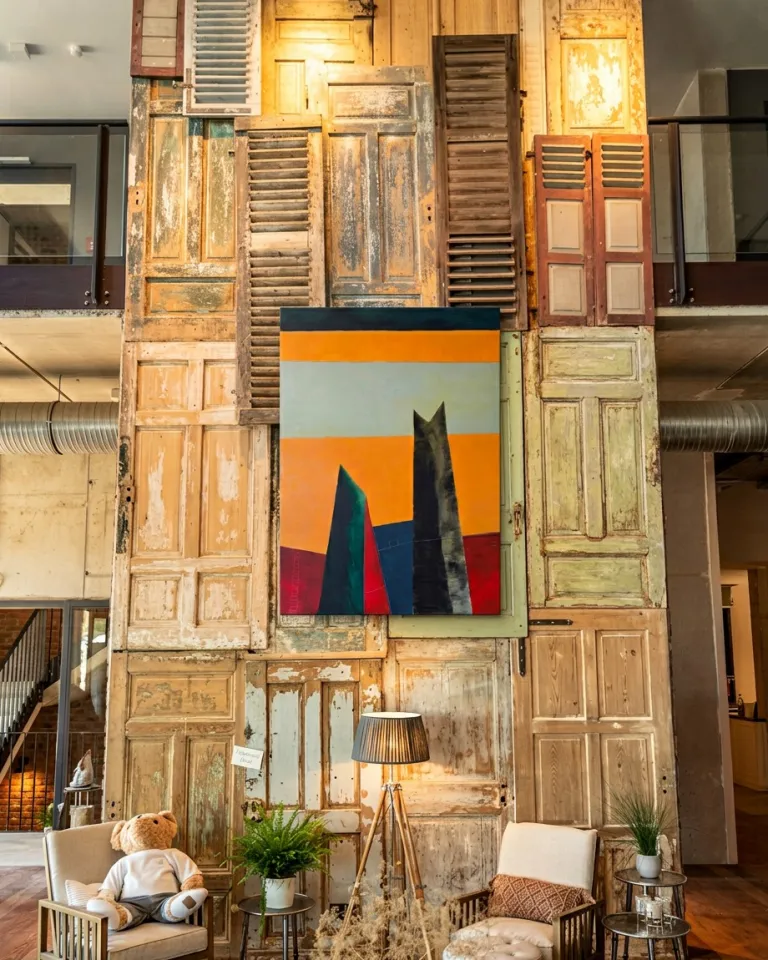
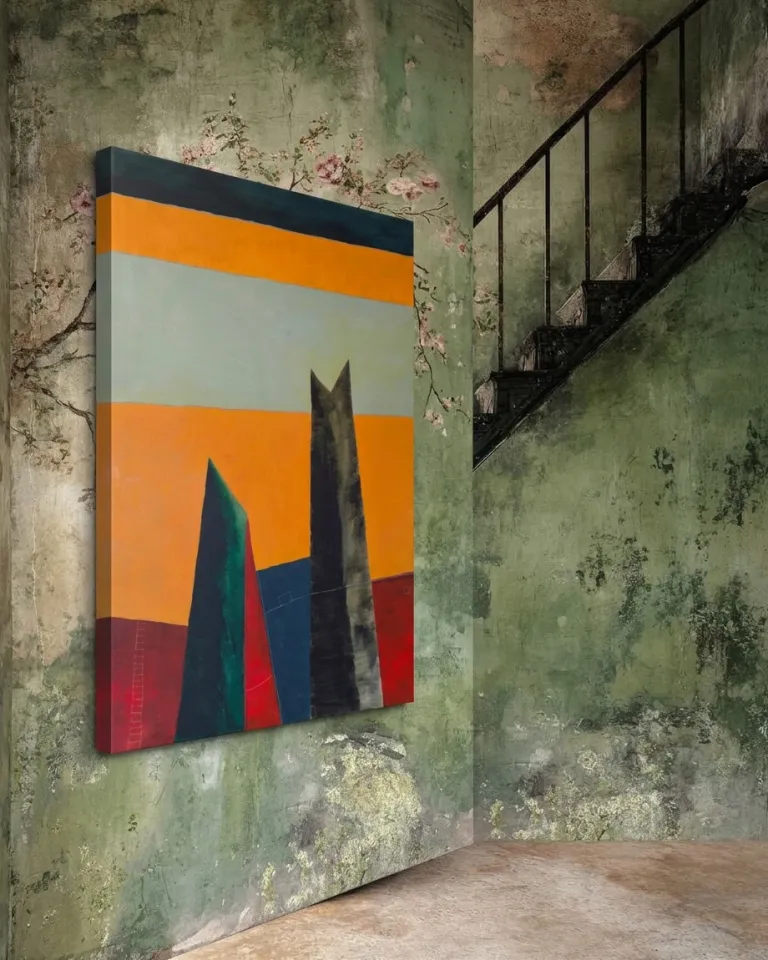
CUSTODES places two vertical presences before a territory divided into bands of colour. Without becoming narrative figures, both hold a condition of watchfulness: one a tall, dark mass split at its summit; the other lower and oblique, formed from deep green, red, and shadow. In EMERSIO, where forms begin to separate from their origin without attaining a fixed identity, these bodies seem to have acquired a weight of their own, though they still depend on the chromatic ground around them.
The question is not what they guard, but what is demanded of a form by the fact of remaining upright. Between the upper dark band, the orange fields, and the pale middle zone, the painting arranges a world of successive boundaries. The two masses do not dominate the landscape; they are exposed within it. Their steadiness retains something precarious, as though keeping watch also meant accepting distance, exposure, and a responsibility without a narrative.
There is a specific affinity with Nicolas de Staël in the ability of chromatic masses to oscillate between architecture, landscape, and presence. Valch departs, however, from a construction based on compact blocks, bringing these presences towards greater ambiguity: the tall silhouette may recall a tower, an animal, or a figure, yet it resists being fixed in any of these readings.
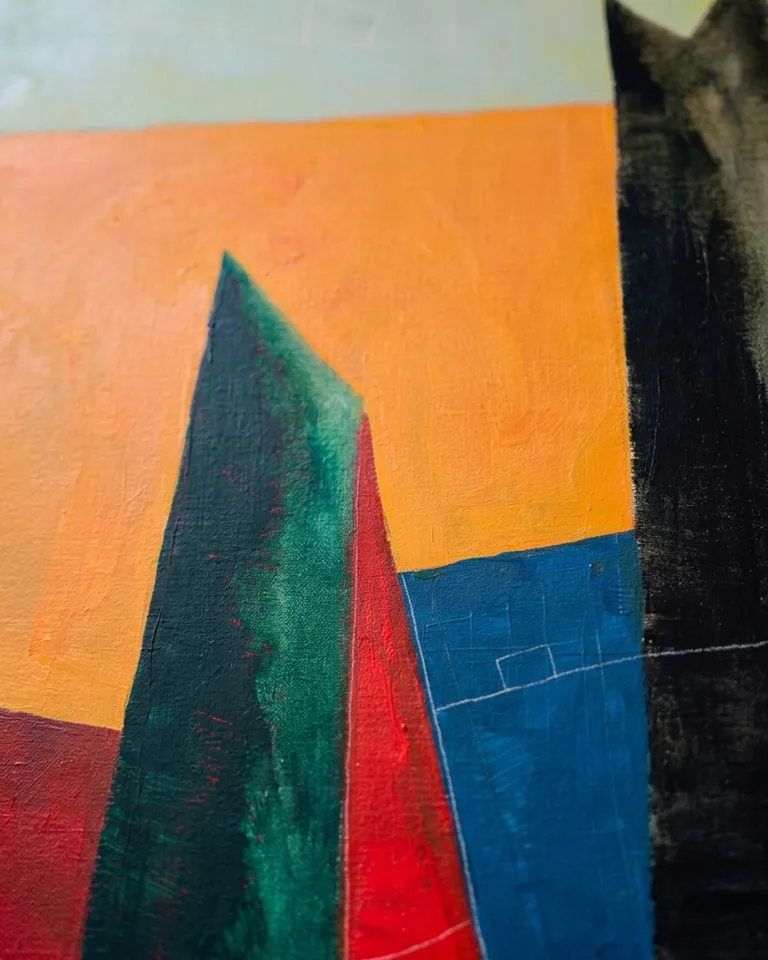
Applied in two warm expanses, orange creates a luminous pressure against which the blacks, greens, blues, and reds gain density. The greenish-grey band acts as a suspended distance, crossed by faint incised lines and small, barely visible geometric outlines. Below, the sloping areas disrupt horizontal stability and make the forms appear to emerge from a ground that also cuts through them, measures them, and contains them.
I am not interested in turning these presences into decipherable characters. I seek the moment when a form begins to sustain itself and, in doing so, loses the protection of remaining indistinguishable from the territory. Perhaps every appearance entails an act of guardianship: holding an uncertain position while the layers from which we come are still at work within us.